· Updated 2026-09-10
2026-07-23 US Tariff Deadline, Korea's 15% Cap, a 37°C Heatwave and China's 15-Trillion-Won DRAM IPO
Correction (2026-09-10): The scope, comparisons and interpretation of key figures have been reviewed and corrected below. The original publication date is retained.
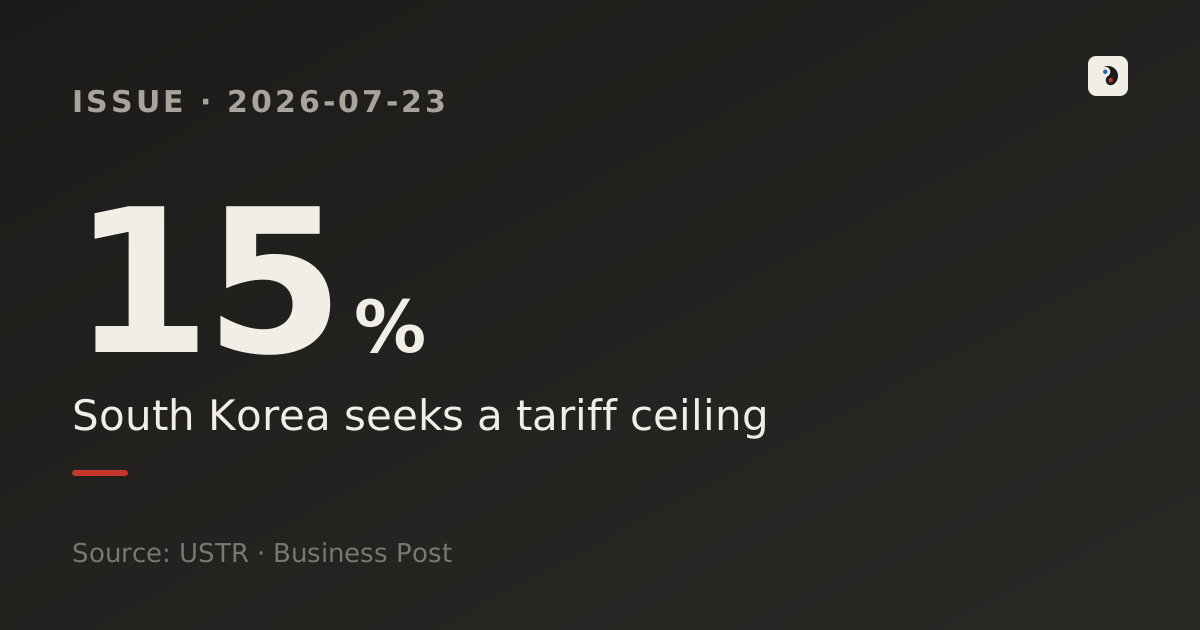
The 10% Tariff Dies July 24 — Can Korea Hold Its 15% Line?
The 10% global tariff on Korean exports reaches its legal expiry tomorrow. Reading the three numbers of the Section 301 regime that replaces it — 10%, 12.5% and 15% — tells you exactly what to look for in the announcement.
Tomorrow, the 10% tariff that has sat on Korean exports for five months reaches the end of its legal life.
The 10% global tariff the US has imposed since February 24 under Section 122 of the Trade Act hits its 150-day statutory limit on July 24. After the US Supreme Court ruled the IEEPA-based reciprocal tariffs unlawful, the Trump administration's replacement tool is Section 301 — and the US Trade Representative (USTR) has already proposed a 12.5% tariff on 45 economies over insufficient forced-labor import controls (Financial News). Korea is also among the 16 economies under the manufacturing-overcapacity investigation opened on March 11.
By the end of this piece you will know what each of the three numbers — 10%, 12.5%, 15% — actually means, and what to check in the post-deadline announcement.
Three numbers, three different tariffs
10% is the temporary tariff about to vanish; 12.5% is the proposed rate of the Section 301 forced-labor track that would fill the gap. If the overcapacity track stacks on top, the rate could climb further — which is why Korea's defensive line is the 15% cap fixed in last year's Korea–US negotiation. According to Business Post, Seoul's goal is to keep the combined rate of both tracks under 15%.
The cards on the table
Trade Minister Kim Jung-kwan flew to Washington on the 22nd for final-stage talks. Korea's leverage: large-scale corporate investment in the US and the MASGA Korea–US shipbuilding cooperation project. The presidential office also publicly acknowledged on the 22nd that "the US may impose additional tariffs under Section 301 or other provisions" (Kyunghyang Shinmun), signaling the market in advance.
What to check after July 24
The thing to watch is not the headline rate but whether the words "combined" and "cap" survive in the announcement. If the cap language disappears, the two tracks get counted separately and a 12.5%-plus stacking risk opens up; if it stays, even the worst case holds at last year's agreed level.
The end of the 10% tariff is not the end — it is the start of the fight to keep the words "15% cap" alive.
37°C heat and surveillance data for July 20–31
July 20–31, 2025 covers 12 calendar days inclusive. The 1,341 heat-illness cases were about 30% of the annual 4,460. This calendar interval had already begun when the article was written on July 23, 2026; it does not predict the same share this year.
On the 23rd — Daeseo, the "great heat" solar term — daytime highs across Korea reach up to 37°C, and an extreme-heat impact advisory is in place for the east coast including Gangneung, where the apparent temperature will top 35°C (Gangwon Regional Meteorological Office). The Korea Disease Control and Prevention Agency's (KDCA) emergency-room surveillance counts 535 heat-illness patients and 2 suspected deaths this year through July 10. Next to last year's total of 4,460 that sounds like the warm-up — but the statistics point the other way.
Who is most at risk
Severe outcomes concentrate among the elderly and people with chronic conditions — which is why the KDCA has distributed eight tailored prevention guides for vulnerable groups since July 6. Elderly people living alone without cooling, outdoor workers and the chronically ill are the first people to check on.
Starting today
- Move outdoor work and exercise out of the hottest hours (noon–5 p.m.) to morning or evening
- Drink water on a schedule, before you feel thirsty
- Call an elderly family member or neighbor who lives alone once a day
- At the first dizziness or nausea, rest somewhere cool immediately — call 119 if it worsens
China's DRAM Champion Loads a 15-Trillion-Won War Chest — the Warning in the July 27 IPO
CXMT, China's top DRAM maker, raises up to 66.6 billion yuan (about 15 trillion won) in its Shanghai listing on July 27 — double its original target. Here is the lesson that oversubscribed IPO leaves for Samsung Electronics and SK Hynix.
Four days from now, the largest IPO in Chinese semiconductor history rings the bell in Shanghai.
ChangXin Memory Technologies (CXMT), China's no. 1 DRAM maker, lists on Shanghai's STAR Market on July 27. At an offer price of 8.66 yuan it raises 57.91 billion yuan, and with the greenshoe (over-allotment) option up to 66.6 billion yuan — about 15 trillion won (Aju Business Daily, Seoul Economic Daily). That is double its original 29.5-billion-yuan target, Asia's biggest IPO this year, and the largest mainland listing ever by a Chinese chipmaker.
By the end of this piece you will know where the 15 trillion won is going — and what warning it carries for Samsung Electronics and SK Hynix.
Follow where the money goes
The proceeds go into production-line upgrades and R&D on next-generation DRAM (ET News). Founded in Hefei, Anhui province in 2016, CXMT reached DDR4 mass production in September 2019 and has climbed to world no. 4 in DRAM by capacity. This listing is less a leap across the technology gap than a war chest for capacity expansion and R&D — the opening signal of "chip self-reliance, season two."
The formula: topple legacy first
Industry reports say CXMT is supplying commodity DDR4 at roughly half the market price to claw out share. It is the same formula seen in LCDs and batteries: fill the legacy market Korean firms vacated as they moved upmarket to HBM and other high-value products — now repeating in DRAM.
The lesson for Korea
Shinhan Securities calls the CXMT listing "a new variable in memory investment." Since the cycle of funding next-generation R&D with legacy profits can be shaken, what matters is how fast Samsung and SK Hynix widen the gap in HBM and leading-edge nodes.
The real weight of the 15 trillion won is not today's technology gap — it is the time CXMT just bought to close it.
Each issue is nuloq's own analysis, drawing on the original reporting and public data (official statistics and institutional sources), written with the help of AI. See each card's link and in-text citations for sources.
Related posts
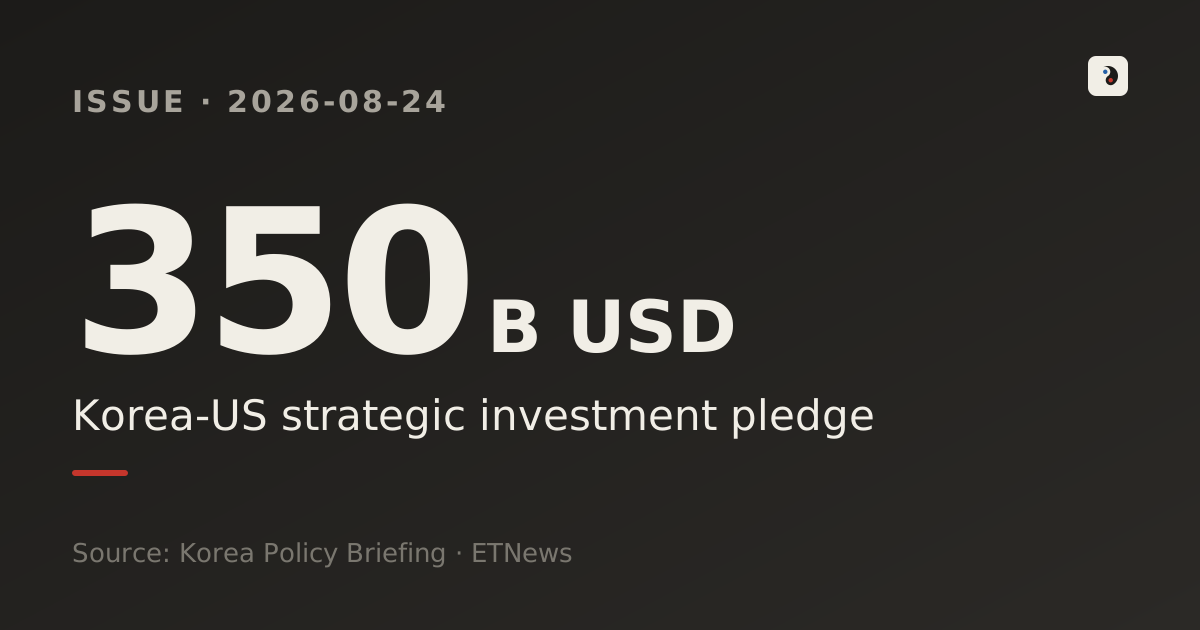
$350 Billion US Investment — No ‘First Project’ Confirmed as of September 7
We split the $350 billion into $200 billion of investment and $150 billion of shipbuilding cooperation investment, and worked out what a cap of $20 billion a year actually means. On September 7, 2026 the Ministry of Trade and Industry said the Encinal project had not been confirmed.
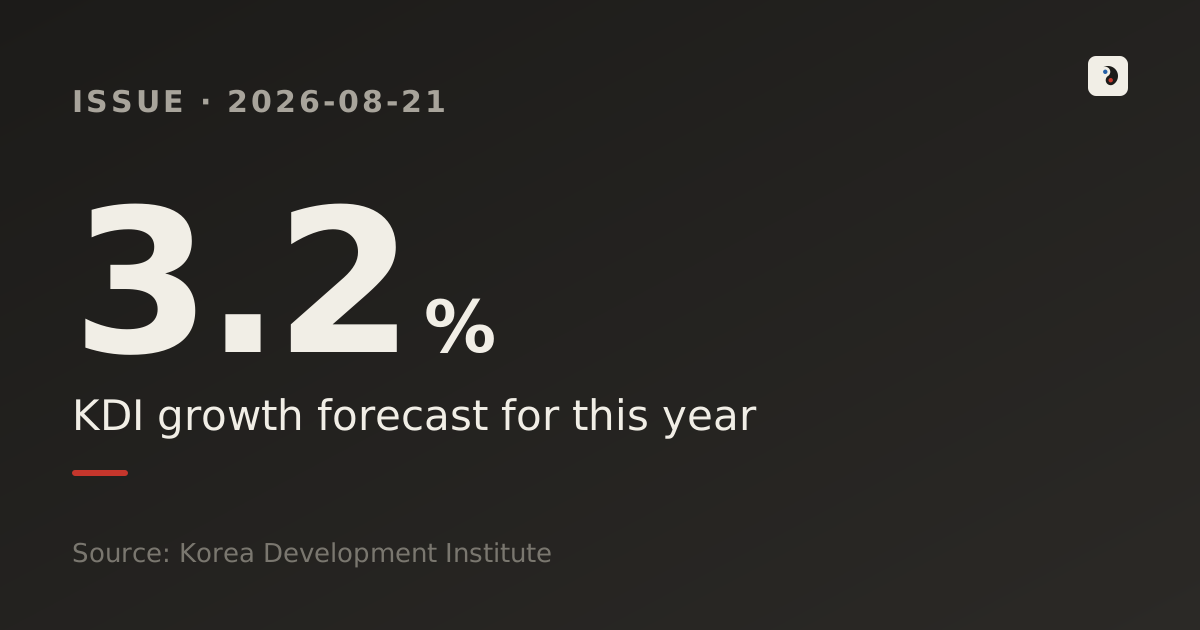
Korea's Growth Forecast Hits 3.2% — So Why Are New Jobs Falling?
KDI raised South Korea's 2026 growth forecast to 3.2% in 3 months on a chip boom — but new-jobs forecast fell from 170,000 to 110,000. The numbers, explained.
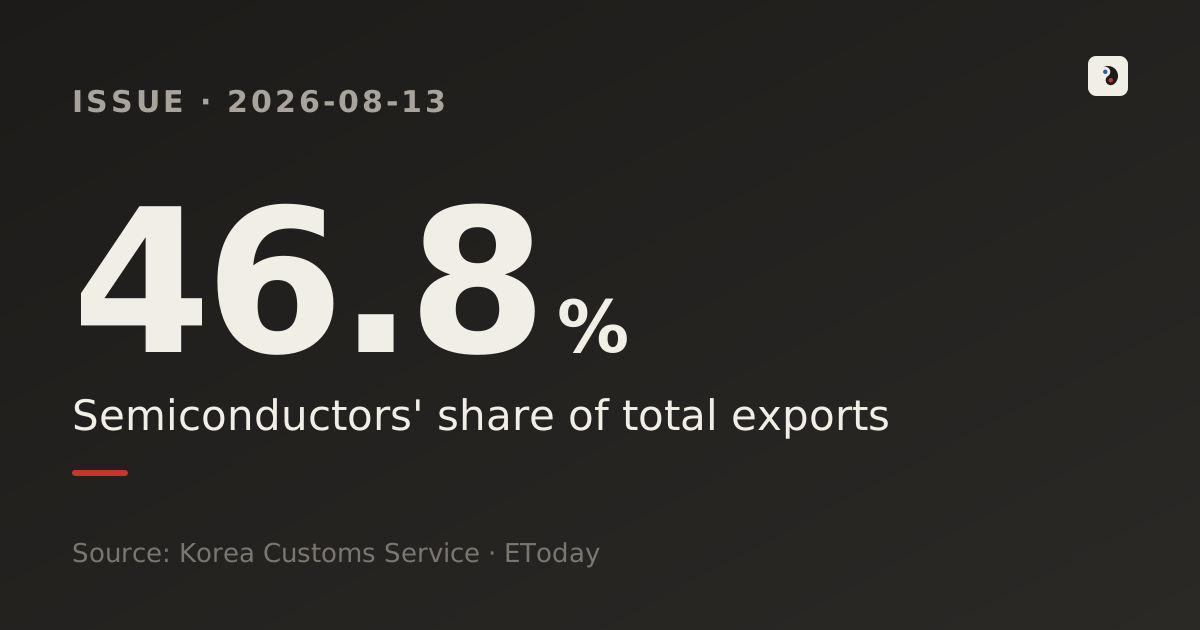
Chips Hit 46.8% of Korea's Exports — Inside a Record-High Warning Sign
Korea's exports hit a record $21.3B in early August, and 46.8% of it was chips alone. Here's the data behind how a share once in the low 20s doubled in two years — and why the boom itself is a red flag.
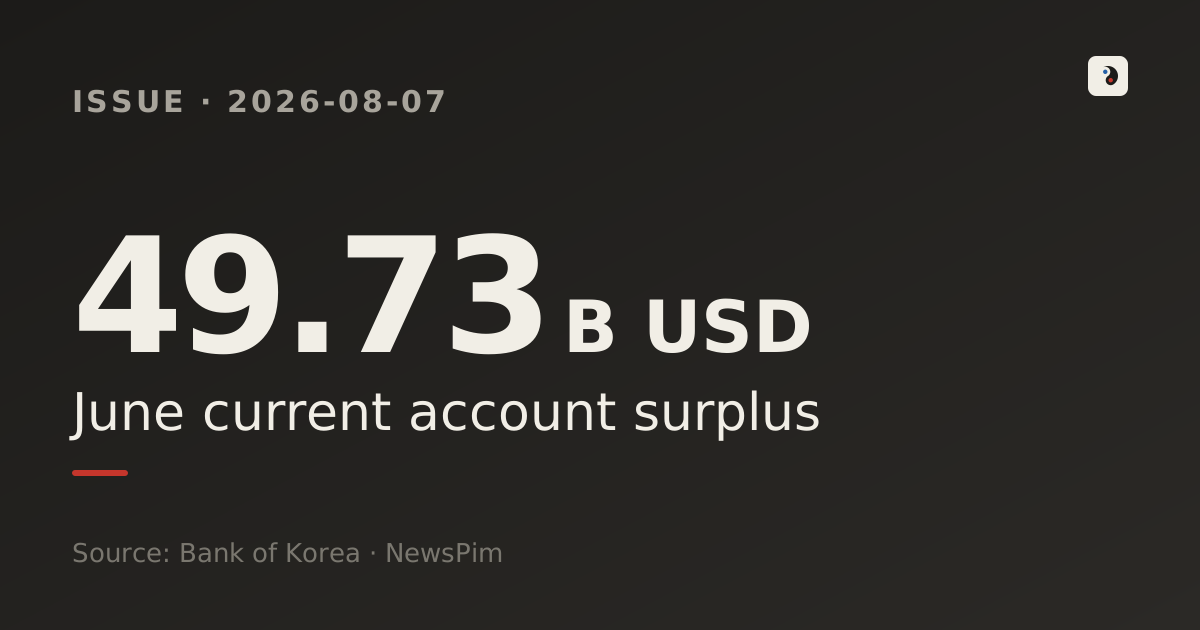
Korea's Current Account Hits Record $49.7B — Why the Chip Boom Isn't in Your Paycheck
South Korea's current account hit a record $49.7 billion in June, powered by a semiconductor export boom. Here's why the Bank of Korea itself is warning the windfall isn't reaching ordinary paychecks.