Chips Hit 46.8% of Korea's Exports — Inside a Record-High Warning Sign
The headline numbers look like fireworks — but pull them apart and an old worry about Korea's economy resurfaces.
- Exports for August 1-10 hit $21.3 billion, a record for the period, with chip exports up 155.4% year-on-year.
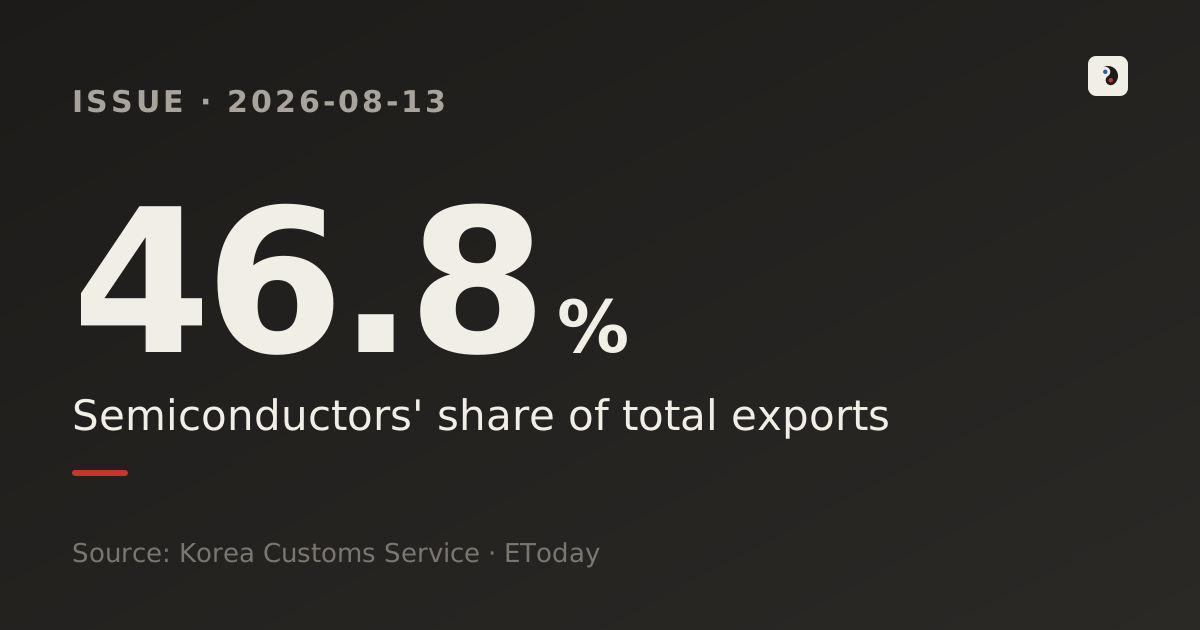
- Semiconductors' share of total exports jumped to 46.8% — a completely different structure from the roughly 20% share of a few years ago.
- Analysts warn the boom may be a warning sign of "K-shaped" divergence, where the economy leans too heavily on a single industry.
What happened
According to preliminary data released by the Korea Customs Service on August 11, exports for August 1-10 reached $21.3 billion — a record for the period — up 45.3% from a year earlier. Most of that increase came from a single category: semiconductors. Chip exports over the same ten days totaled $9.95 billion, up 155.4% year-on-year, pushing their share of total exports to 46.8%. In effect, roughly one of every two dollars Korea earned from exports over those ten days came from chips.
Why now — the AI supercycle and memory prices
The driver is the global race among Big Tech to build AI data centers. High-performance AI servers consume huge volumes of high-bandwidth memory (HBM) and high-capacity DRAM and NAND, and demand has far outpaced supply, sending prices up. Bank of America projects DRAM average selling prices (ASP) will rise 33% in 2026, while Mizuho Securities estimates DRAM prices have climbed a cumulative 355% since the AI data-center investment rally took off.
Semiconductors' share of Korea's exports used to hover around 20%. Last year (2025) it climbed to 24.4%; this past May it jumped to a then-record 42.3%; now it has been broken again at 46.8%. In less than two years, the share has more than doubled.
By the numbers
Lined up side by side, the pace of change becomes clearer.
It's also worth comparing how chip export value and share moved year-over-year.
The competitive map among chipmakers is shifting too. According to market researcher Counterpoint Research, global DRAM revenue share in Q2 2026 stood at Samsung Electronics 39%, SK Hynix 26%, US-based Micron 25%, and China's CXMT 7%. A year earlier (Q2 2025), SK Hynix led with 39% and Samsung was second at 33% — the two Korean rivals have effectively swapped places. Looking ahead, UBS forecasts SK Hynix will capture roughly 70% of the HBM4 market feeding Nvidia's next-generation "Rubin" platform — a sign the competition isn't just about memory prices, but about who controls the next generation of chip technology.
Points of contention / different views
Opinions on this boom diverge sharply.
The worried camp points to so-called "K-shaped" divergence. While semiconductors account for roughly 42% of annual exports, other core manufacturing sectors like steel and petrochemicals are growing only 1-2% a year, or shrinking outright. The argument is that the boom's warmth may stay confined to a handful of large firms and their supply chains rather than spreading across the economy.
The counterargument is that strong chip earnings ultimately lift the whole economy. This year's growth forecast for Korea has been revised up to 2.5-2.7%, largely thanks to the chip export boom — which in turn supports tax revenue, investment, and currency stability that ripple outward.
An international comparison shows Korea isn't alone in this. In Taiwan, semiconductors and electronics make up 64% of total exports, and TSMC alone accounts for 34% of the entire Taiwanese stock market's value — a far more extreme concentration than Korea's. The two economies are also growing more intertwined in the chip supply chain: Taiwan's share of Korea's total semiconductor exports rose from 9.0% in 2022 to 19.9% last year, more than doubling. Analysts describe a hardening division of labor in which HBM is made in Korea and AI-chip packaging happens in Taiwan.
What's next / what it means
If the AI investment cycle keeps running, chips will likely keep lifting Korea's exports and growth for some time. But memory chips have historically alternated between boom and bust. If today's price surge isn't permanent, the bigger the chip sector's share, the bigger the shock when the cycle turns down.
Under these conditions, government and industry face two priorities. First, policy support to let the warmth of growth reach non-chip manufacturers and domestic-demand industries as well. Second, defending Korea's lead in high-value technology like HBM within the chip sector itself, to cushion the impact of the next price downturn. This is worth keeping in mind for individual investors and general readers too — a trade surplus or an export record doesn't automatically translate into how the economy feels on the ground, and the volatility of domestic stocks and the won can be heavily driven by the fortunes of this one industry.
- Early-August exports hit record $21.3B, chips surge 155% [comprehensive] — eToday (2026.08.11)
- Early-August exports hit record $21.3B, chips nearly half — Financial News (2026.08.11)
- Early-August exports break $20B for the first time, chips 46.8% — CBC News (2026.08.11)
- Korea's 2026 growth forecast at 2.7%: "Chip concentration is an economic risk" — Financial News (2026.06.25)
- Q2 2026 DRAM market reshaped by AI demand: Samsung leads with 39% share — Counterpoint Research (2026.08)
- "Nvidia, TSMC, and Samsung/SK Hynix together": Taiwan's exports jump from 9% to 20% — Herald Economy (2026.07)
- Exports May 1-20: chip share climbs to 42% — Datasom (2026.05)
This is nuloq's own analysis, written with the help of AI tools, based on the Korea Customs Service data and public reporting listed under Sources. It is for information only, not the basis for investment or policy decisions, and reflects the situation at the time of writing (August 2026). We correct the text if the underlying figures are revised.
Related posts
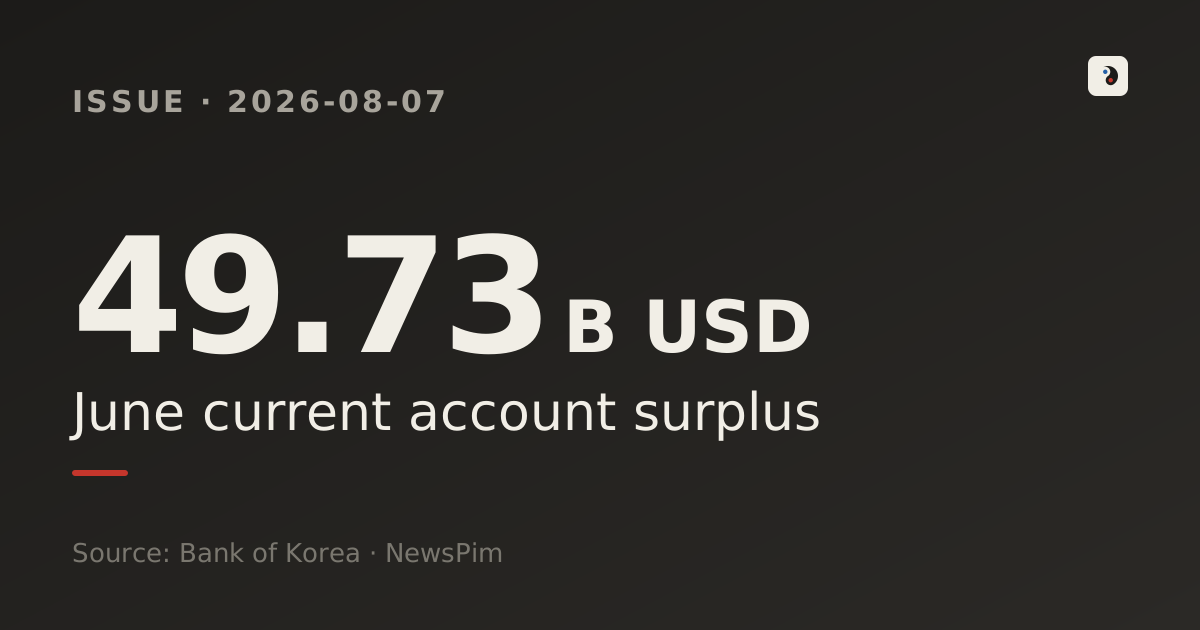
Korea's Current Account Hits Record $49.7B — Why the Chip Boom Isn't in Your Paycheck
South Korea's current account hit a record $49.7 billion in June, powered by a semiconductor export boom. Here's why the Bank of Korea itself is warning the windfall isn't reaching ordinary paychecks.
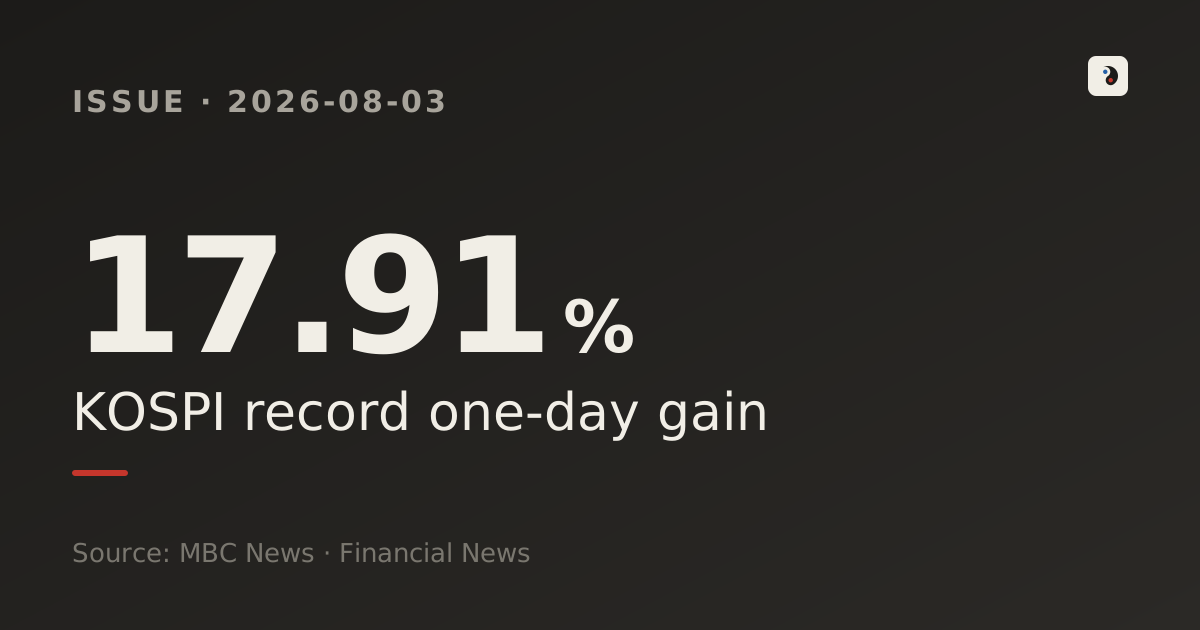
KOSPI Surged a Record 17.91% in One Day — What SK Hynix's Limit-Up Really Means
KOSPI jumped a record 17.91% in one day and SK Hynix hit its price limit for the first time in 17 years. Here's the data behind Korea's wild semiconductor rally.
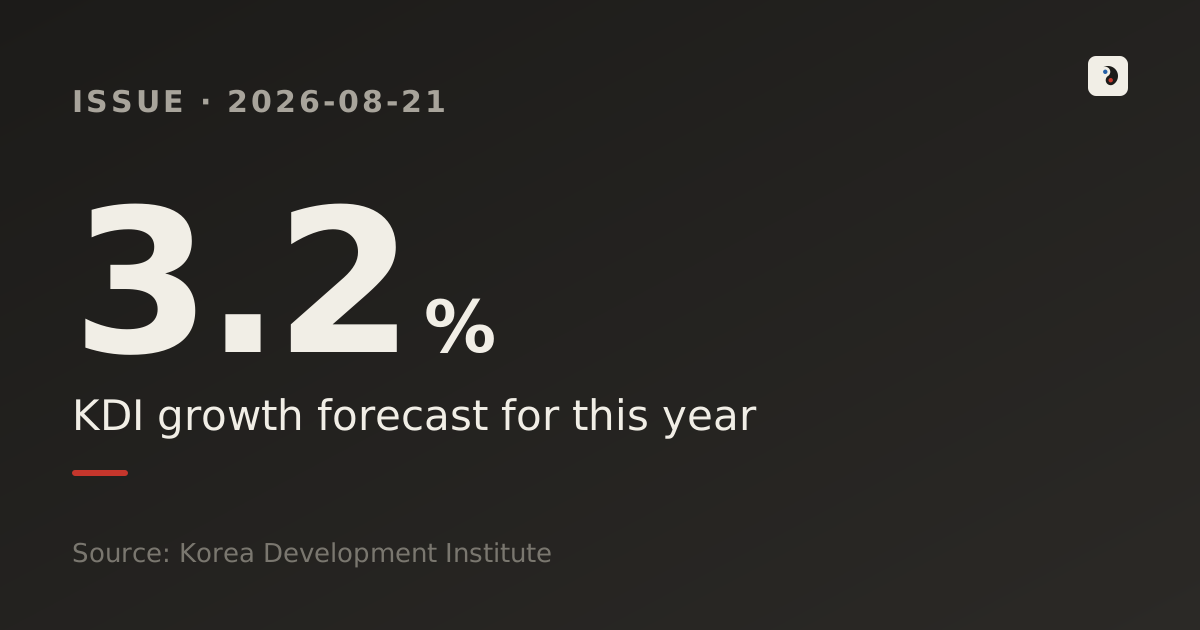
Korea's Growth Forecast Hits 3.2% — So Why Are New Jobs Falling?
KDI raised South Korea's 2026 growth forecast to 3.2% in 3 months on a chip boom — but new-jobs forecast fell from 170,000 to 110,000. The numbers, explained.
Homeplus Creditor Vote: MBK's ₩4.1 Trillion Exit, ₩1.9 Trillion Accounting Mystery
Creditors voted Sept. 2 on Homeplus's fate. Here's how MBK drained ₩4.1 trillion from the retailer over eight years, then turned ₩1.9 trillion of debt into equity six days before its rehabilitation filing.