Korea's Current Account Hits Record $49.7B — Why the Chip Boom Isn't in Your Paycheck
Behind a record trade headline is a story the numbers alone don't tell.
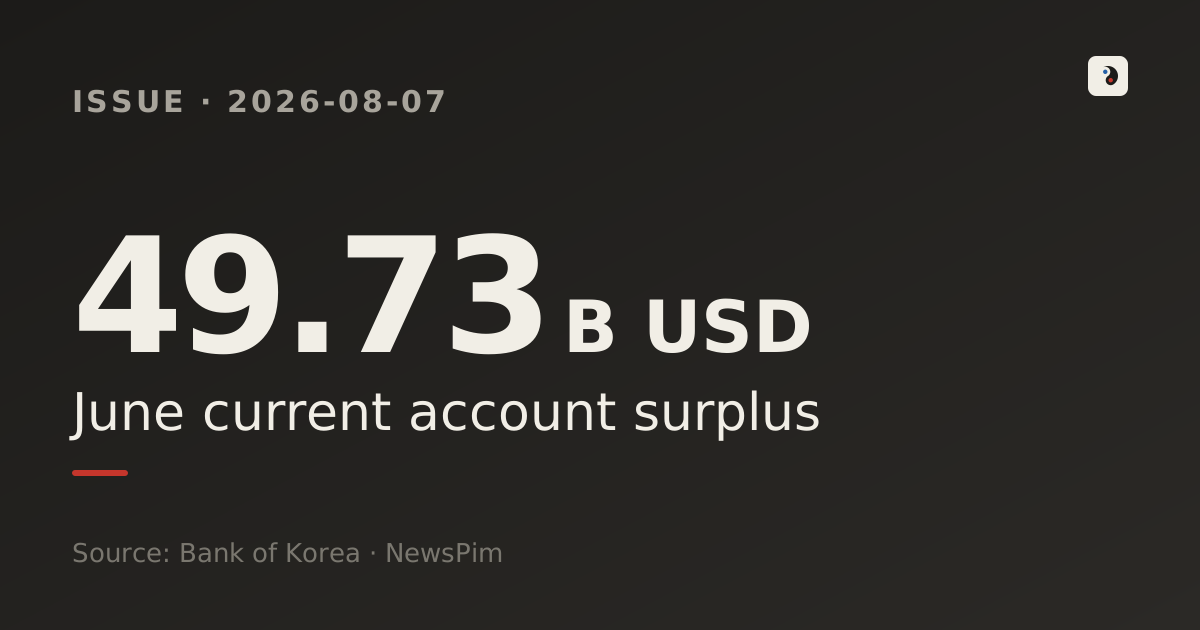
- South Korea's June current account surplus hit a record $49.73 billion, a second straight monthly record, as exports topped $100 billion in a single month for the first time.
- Semiconductor and SSD exports surged 196.9% and 282.7% respectively — yet foreign investors were net sellers of $31.6 billion in Korean stocks over the same period.
- The Bank of Korea itself warned the boom's gains are concentrated in one industry and could trigger a "Korean Dutch disease" — whether the windfall ever reaches paychecks is the real test ahead.
What happened
According to the Bank of Korea's preliminary June 2026 balance of payments, released August 6, the current account posted a $49.73 billion surplus — up $11.12 billion (28.8%) from May's then-record $38.61 billion, breaking the all-time high for the second month running. The goods balance hit a record $47.89 billion, and exports surged 84.5% year-on-year to $112.37 billion, crossing $100 billion in a single month for the first time ever. IT products, up 160.4% year-on-year, drove the gain, led by SSDs (+282.7%), semiconductors (+196.9%), and wireless communication devices (+60.6%). The surplus streak now stands at 38 straight months — the second-longest since the 2000s.
Why it matters — one industry is moving the whole economy
The current account is a country's report card with the rest of the world, and two straight record months is genuinely good news. But what stands out this time is how narrow the source of that money is. A single industry — semiconductors, and within it, high-end memory chips (SSDs and the like) feeding AI servers — generated most of the increase. A Bank of Korea official put it plainly: the improvement in the goods balance from strong chip exports accounts for most of the current account's expansion.
This concentration is not new for Korea. Since the 1997 Asian financial crisis, the country has lived with the saying that "when semiconductors sneeze, the Korean economy catches a cold." Right now chips are doing so well that the underlying fragility is hidden — but the structure, where one industry's cycle can swing the whole national scorecard, hasn't changed.
Numbers to watch
Lined up side by side, the export growth by product category shows the real face of this boom. SSDs and semiconductors dominate, while non-IT products crawl along in single digits. Korea's export scorecard is, in effect, being written almost entirely by two words: semiconductors.
The concentration looks even sharper in cumulative terms. Korea's current account surplus for January–May alone already exceeded all of last year's annual surplus ($123.05 billion), and June's monthly surplus ($49.73 billion) grew a further 28.8% from May. What's striking is that over the same stretch, foreign investors were net sellers of $31.6 billion in Korean equities — capital was flowing out even as trade brought in so much more that the current account still hit an all-time high.
The debate — boom or warning sign?
Unusually, the Bank of Korea itself has flagged the downside of its own good news. If semiconductor profits keep concentrating in specific firms and high-income households, and if production resources and policy attention keep tilting toward chips, the growth foundation of other core industries could weaken. Some commentators call this "Korea's version of Dutch disease" — when a single sector's windfall distorts exchange rates and resource allocation enough to actually hollow out the rest of the economy.
Foreign investment banks, by contrast, read the same numbers optimistically. Some have raised their 2026 growth forecast for Korea to as high as 3.2%, arguing the chip boom is running longer and stronger than expected. So the same data supports two opposite diagnoses — "dangerous overconcentration" versus "stronger-than-expected growth engine." Both point to the same underlying fact: when the semiconductor cycle turns, the whole Korean economy could turn with it.
What's next — can the numbers reach paychecks?
A bigger export figure at a chip conglomerate doesn't automatically mean a bigger paycheck for ordinary workers. The Bank of Korea itself has acknowledged that consumption growth from this boom may lag behind income growth. If the chip rally continues, Korea's growth forecast will likely be revised up further — but if that warmth doesn't spread to non-IT manufacturing, small businesses, and regional economies, the gap between "record surplus" headlines and how people actually feel about the economy could widen further. The real thing to watch from here isn't the size of the surplus itself, but whether the government and the central bank can turn this boom into policies that spread its benefits to other industries and regions.
- June current account surplus hits $49.7B, record for second straight month — Herald Corp (Aug 6, 2026)
- June current account surplus at record $49.7B, monthly exports top $100B for first time — Electronic Times (Aug 6, 2026)
- Bank of Korea: current account surplus "another record," 2nd among major OECD economies, driven by chip exports — Etoday (Aug 6, 2026)
- Foreigners net-sold $31.6B in Korean stocks, yet June current account surplus hit $49.73B — Newspim (Aug 6, 2026)
- "Record current account" defies peak-chip fears — foreign banks raise Korea's growth forecast to 3.2% — Herald Corp (Aug 6, 2026)
- May current account surplus hits record $38.61B on unrelenting chip strength — Herald Corp (Jul 8, 2026)
- May current account surplus a record $38.6B, this year's cumulative surplus already $141.2B — Newspim (Jul 8, 2026)
- A warning for Korea: fears of "Dutch disease" after the boom fades — Korea Daily (US) (Jul 19, 2026)
- Korea's semiconductor export map shifts: less reliance on China, more on the US and Taiwan — Korea International Trade Association (KITA)
This is nuloq's own analysis, verifying and interpreting figures from the Bank of Korea's official release and the news reports listed under Sources, written with the help of AI tools. It is for information only — not investment or policy advice — and reflects the data as released by the Bank of Korea on August 6, 2026. We correct the text if the underlying statistics are later revised.
Related posts
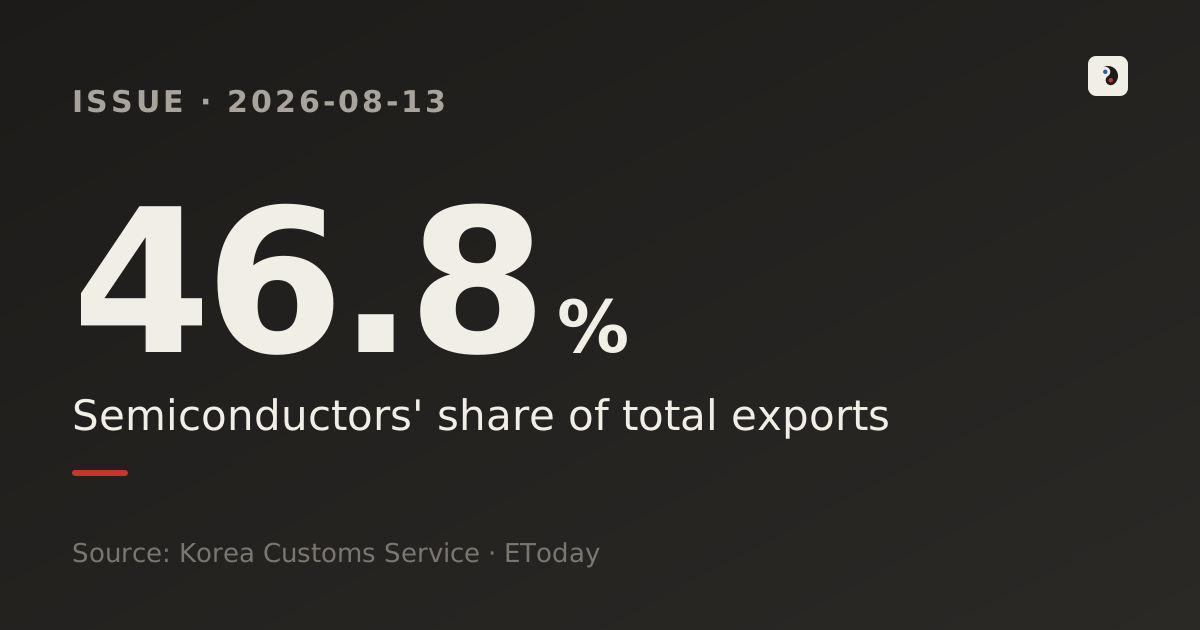
Chips Hit 46.8% of Korea's Exports — Inside a Record-High Warning Sign
Korea's exports hit a record $21.3B in early August, and 46.8% of it was chips alone. Here's the data behind how a share once in the low 20s doubled in two years — and why the boom itself is a red flag.
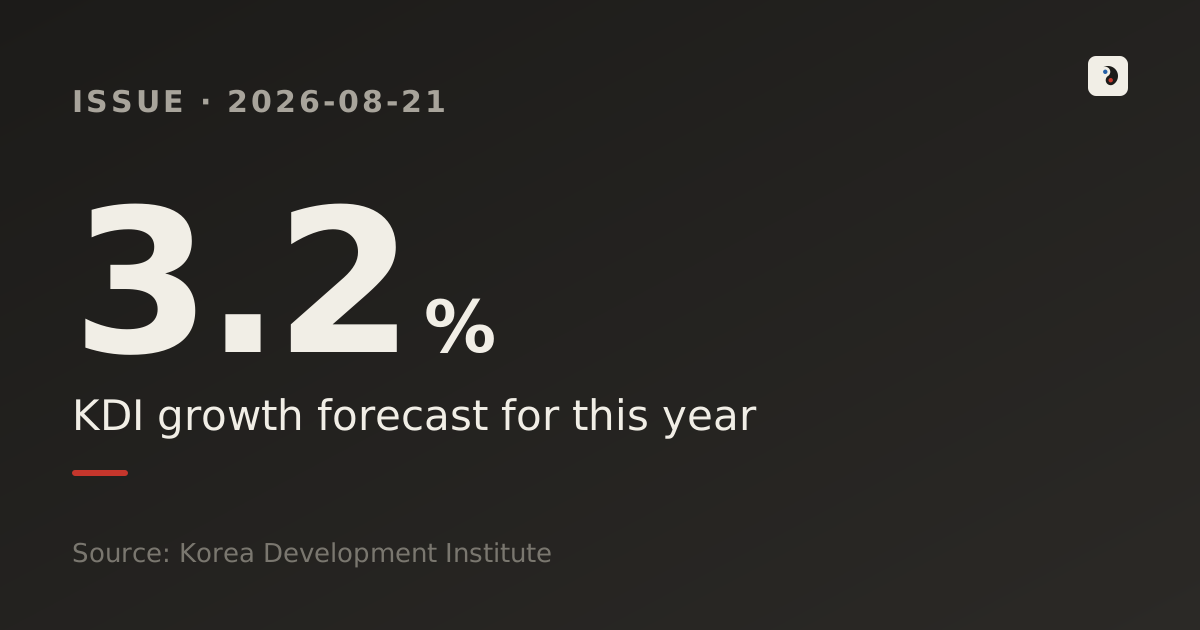
Korea's Growth Forecast Hits 3.2% — So Why Are New Jobs Falling?
KDI raised South Korea's 2026 growth forecast to 3.2% in 3 months on a chip boom — but new-jobs forecast fell from 170,000 to 110,000. The numbers, explained.
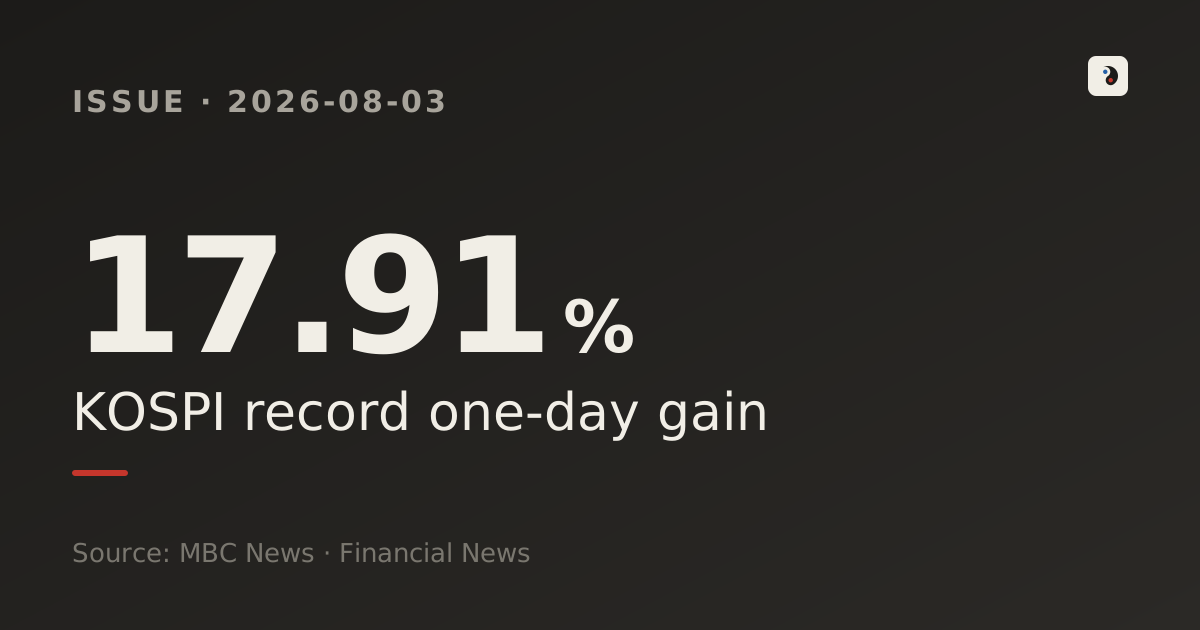
KOSPI Surged a Record 17.91% in One Day — What SK Hynix's Limit-Up Really Means
KOSPI jumped a record 17.91% in one day and SK Hynix hit its price limit for the first time in 17 years. Here's the data behind Korea's wild semiconductor rally.
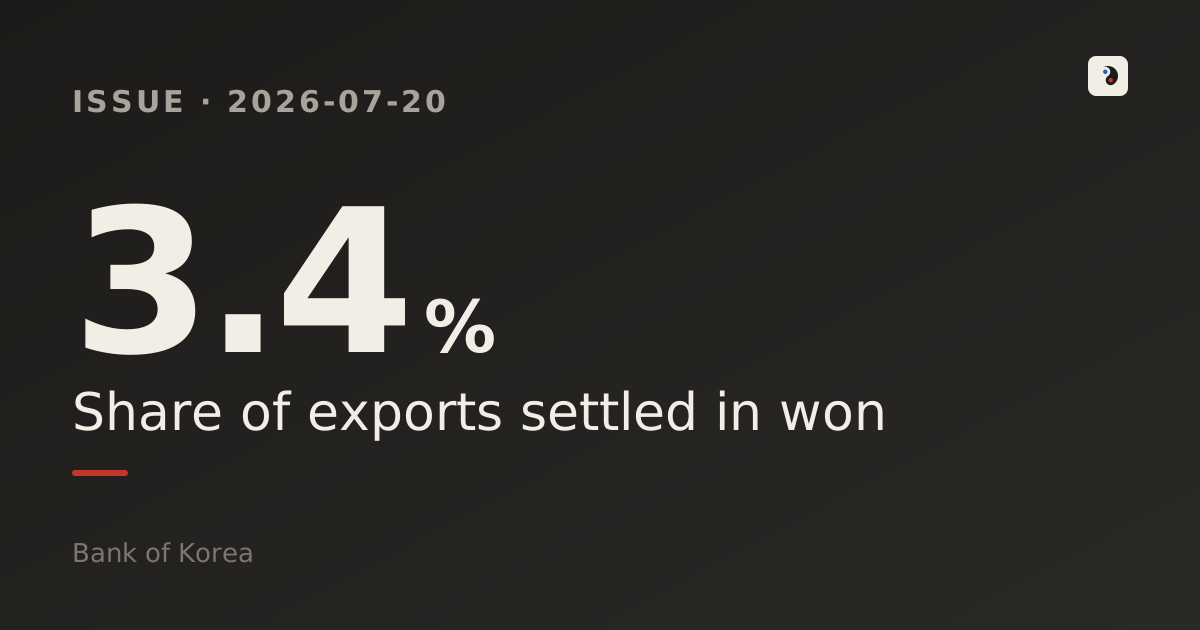
3.4% of Korea's Export Payments Were Settled in Won — What Is That a Share Of?
A plain-language explanation of what the 3.4% won settlement share in the Bank of Korea's finalized 2025 statistics is actually a share of. It also covers why the 2.7% and 3.4% shown in the table differ from the 0.8 percentage point change the Bank of Korea published, and how to keep the offshore won settlement system's target schedule apart from actual usage.