Korea's Growth Forecast Hits 3.2% — So Why Are New Jobs Falling?
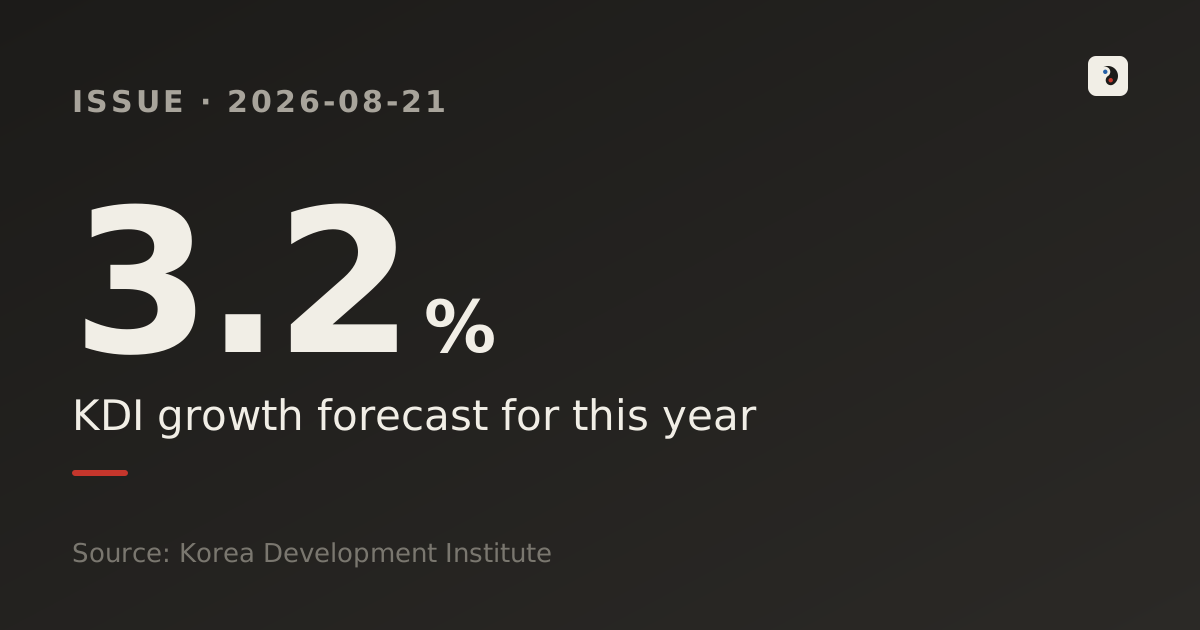
South Korea's economy is now split between two numbers: a soaring growth forecast and a stagnant sense of everyday prosperity.
- On August 19, the Korea Development Institute (KDI) raised its 2026 GDP growth forecast from 2.5% to 3.2%, citing a semiconductor export and investment boom.
- Yet KDI simultaneously cut its forecast for new jobs this year from 170,000 to 110,000, and raised its private consumption forecast by just 0.1 percentage point.
- Outside chips, sectors like steel and petrochemicals are growing just 1-2% or shrinking, entrenching a “K-shaped” divide in how the recovery is felt.
What happened
On August 19, the Korea Development Institute (KDI) — the country's top state-run think tank — raised its 2026 GDP growth forecast to 3.2%, up 0.7 percentage points from the 2.5% it projected in May. It also lifted its 2027 forecast from 1.7% to 2.2%. The new figure tops both the government's official 3.0% forecast and the IMF's 2.6% projection, making it one of the more aggressive calls among major institutions. KDI attributed roughly 0.6 of the 0.7-point upgrade directly to semiconductors. Alongside the growth number, it raised its export growth forecast to 8.7% (up 4.1 points), facility investment growth to 7.9% (up 4.6 points), and its current-account surplus forecast to roughly $360 billion, up $120 billion from May.
Why it matters — the backdrop
This is the third straight upward revision. Korea's 2026 growth forecast went from 1.8% last November, to 1.9% in February, to 2.5% in May, and now 3.2% — a rapid climb in under a year. The driver is a global surge in AI infrastructure investment: as data centers are built simultaneously around the world, demand and prices for memory chips have risen faster than expected, pulling related capital spending up with them. The catch is structural. KDI itself noted that “semiconductor production generates relatively few jobs” — chip fabs are capital-intensive but hire comparatively few people for the scale of investment involved. The result: the economy's total size (GDP) grows, but the channel connecting that growth to household income and jobs stays narrow.
By the numbers
The gap shows up starkly in the details. In the same revision, KDI cut its forecast for new jobs created this year from 170,000 to 110,000 — a reduction of 60,000 — citing weak hiring in construction and non-chip manufacturing, plus slowing job growth in services. Its private consumption growth forecast barely moved, from 2.2% to 2.3%, suggesting that semiconductor-driven income gains aren't translating into broader real wage growth.
Lined up side by side, other institutions' forecasts show how aggressive KDI's call is: the IMF at 2.6% and the government at 3.0% sit on the conservative end, while KDI's 3.2%, Moody's 3.5%, and ING's 4.0% sit on the bullish end. That a single industry's performance can swing national growth forecasts this much is itself a measure of how concentrated Korea's economy has become.
The debate: illusion or real recovery?
Views split sharply. Optimists point out that the chip boom is delivering real gains — exports, the current-account surplus, and won stability have all benefited, and Korea has already outperformed the government's own 3.0% target. Skeptics call the headline number a “semiconductor illusion”: strip out Samsung Electronics' and SK hynix's earnings, some analysts argue, and growth in the rest of the economy looks little different from a year ago. Sectors exposed to weak global demand, like steel and petrochemicals, are growing just 1-2% or contracting — evidence, critics say, of a “K-shaped” divide opening up between chip-linked and non-chip sectors. Even KDI conceded the gap between headline growth and how ordinary households experience the economy “is likely to persist for a considerable period.”
What comes next
Attention now turns to the Bank of Korea's rate decision on August 27. The BOK ended a 3.5-year pause on July 16, raising its base rate from 2.50% to 2.75%. A stronger growth forecast tilts the case toward another hike, but the fact that growth is concentrated in chips while domestic demand and hiring stay weak gives the case for caution too — critics warn that hiking rates on the strength of a chip-driven headline number would squeeze already-struggling non-chip firms and households further. There's a deeper structural risk as well: today's boom rests on a global AI investment cycle that Korea doesn't control. If that cycle slows, the very concentration lifting growth today could drag it down just as fast. That's why economists argue that now — while the chip boom lasts — is the moment to build policy support for non-chip industries, small businesses, and job-creating investment, rather than after the cycle turns.
- Economic Outlook, August 2026 revision — Korea Development Institute (KDI) (2026.08.19)
- KDI raises South Korea's 2026 growth forecast to 3.2% on AI chip boom — Korea JoongAng Daily (2026.08.20)
- Korea's growth outlook keeps improving, but people aren't feeling it — The Korea Times (2026.08.20)
- KDI raises 2026 growth forecast from 2.5% to 3.2%, citing ~0.6pt semiconductor effect — Newspim (2026.08.19)
- Chips drove the upgrade, but jobs and consumption stayed cold — Segye Ilbo (2026.08.19)
- KDI projects 3.2% growth, $360bn current-account surplus on chip boom — Asia Economy (2026.08.19)
- The semiconductor growth illusion: Korea's K-shaped divide deepens — Dailian (2026.05.22)
- Bank of Korea raises base rate from 2.50% to 2.75%, unanimous vote — ZDNet Korea (2026.07.16)
This is nuloq's own analysis, written with the help of AI tools, based on the KDI release, news reporting, and official data listed under Sources. It's for information only, not investment, legal, or medical advice, and reflects the situation as of August 21, 2026 — we'll correct it if facts change or errors are found.
Related posts
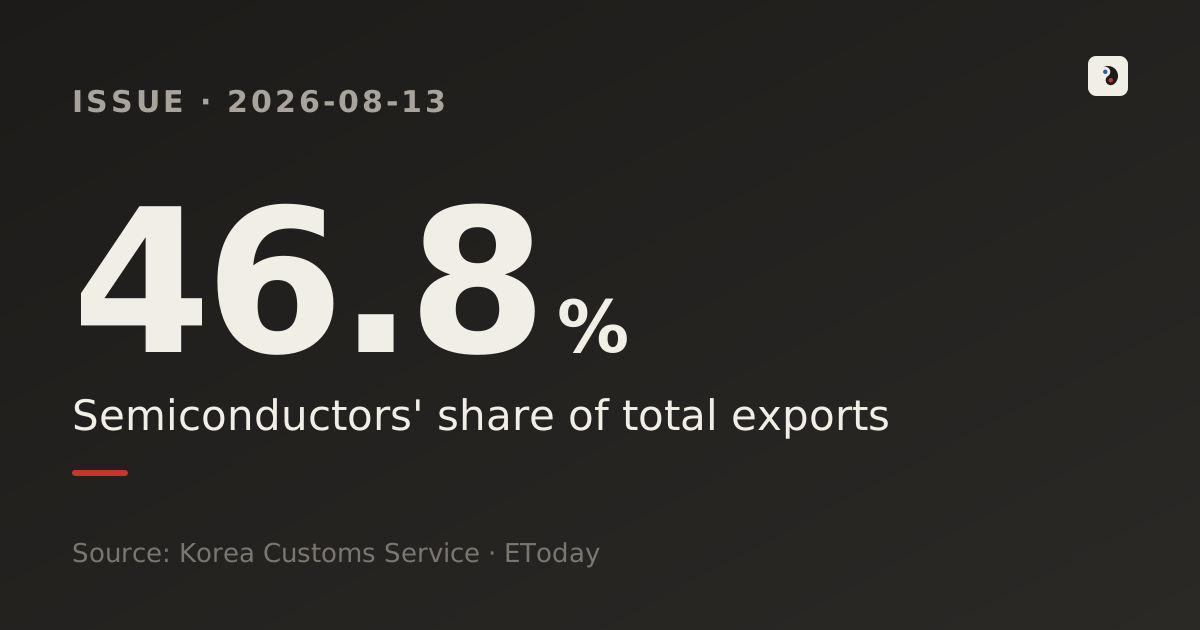
Chips Hit 46.8% of Korea's Exports — Inside a Record-High Warning Sign
Korea's exports hit a record $21.3B in early August, and 46.8% of it was chips alone. Here's the data behind how a share once in the low 20s doubled in two years — and why the boom itself is a red flag.
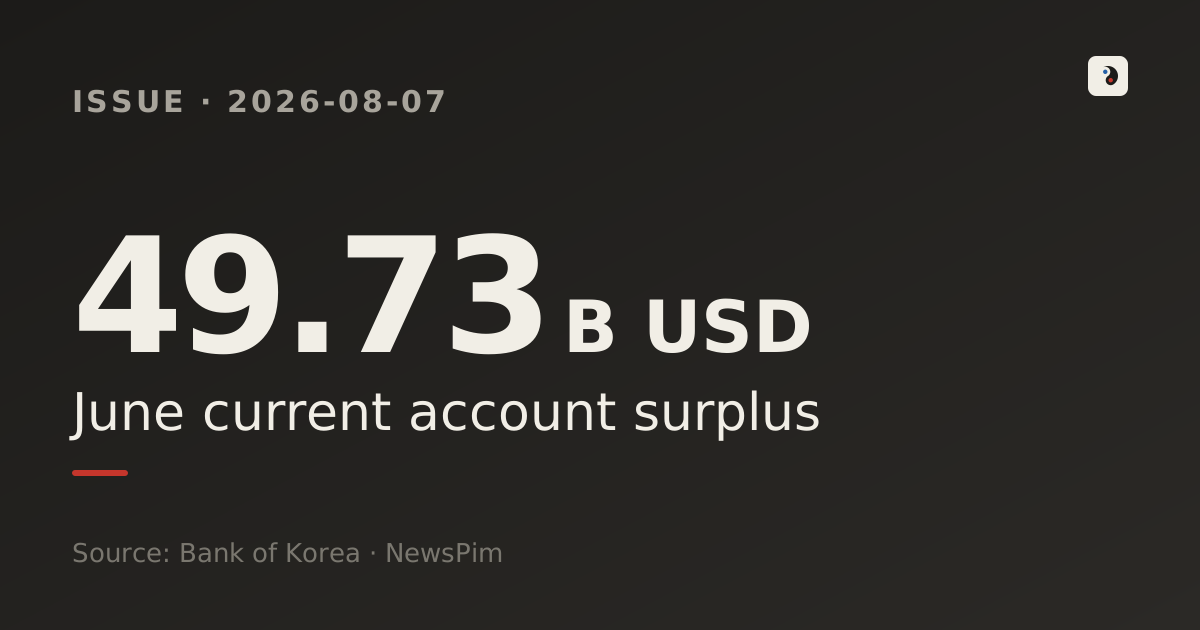
Korea's Current Account Hits Record $49.7B — Why the Chip Boom Isn't in Your Paycheck
South Korea's current account hit a record $49.7 billion in June, powered by a semiconductor export boom. Here's why the Bank of Korea itself is warning the windfall isn't reaching ordinary paychecks.
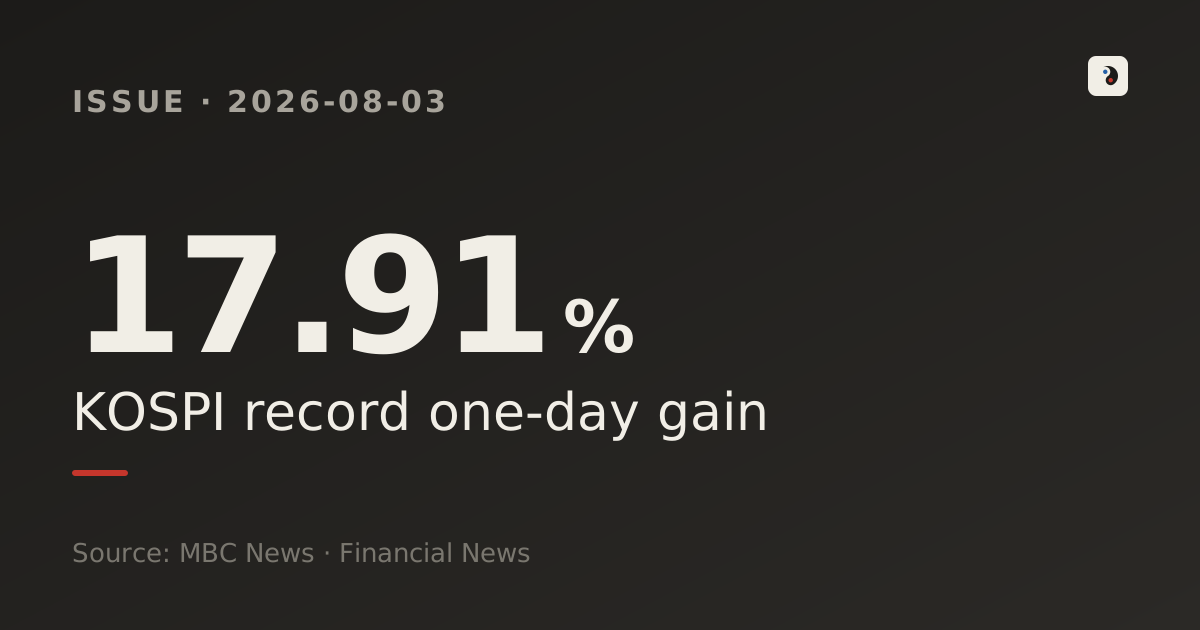
KOSPI Surged a Record 17.91% in One Day — What SK Hynix's Limit-Up Really Means
KOSPI jumped a record 17.91% in one day and SK Hynix hit its price limit for the first time in 17 years. Here's the data behind Korea's wild semiconductor rally.
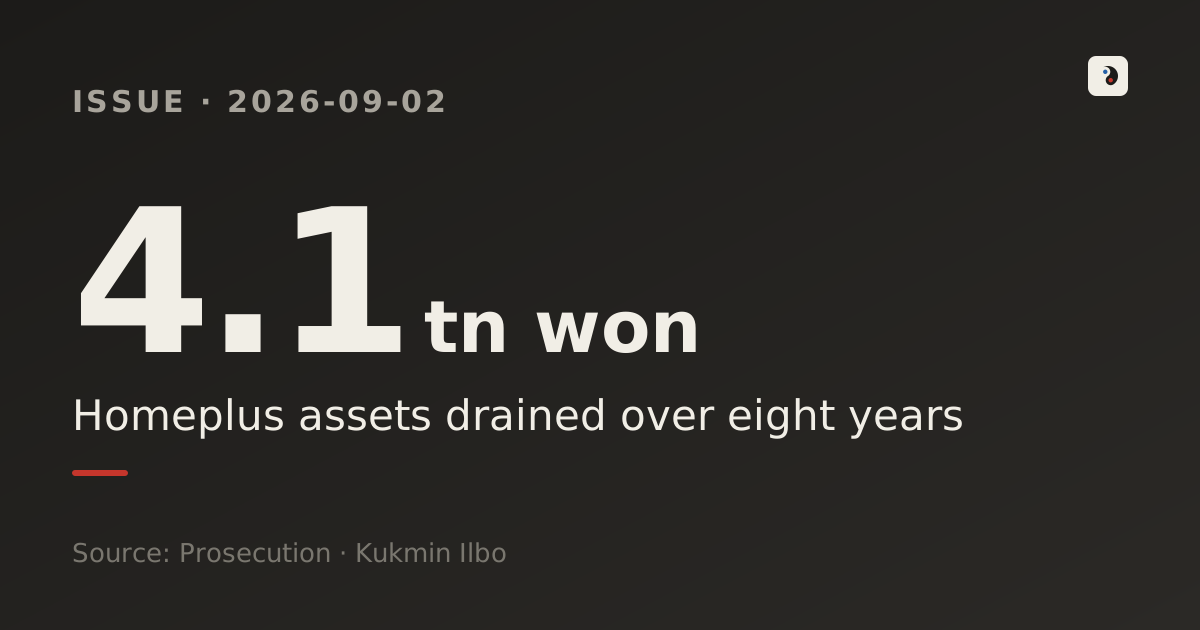
Homeplus Creditor Vote: MBK's ₩4.1 Trillion Exit, ₩1.9 Trillion Accounting Mystery
Creditors voted Sept. 2 on Homeplus's fate. Here's how MBK drained ₩4.1 trillion from the retailer over eight years, then turned ₩1.9 trillion of debt into equity six days before its rehabilitation filing.