2026-07-17 Korea Triples Leveraged-Product Deposits, Pushes an Under-14 Social Media Ban, and K-pop Exports Hit a $257M Record
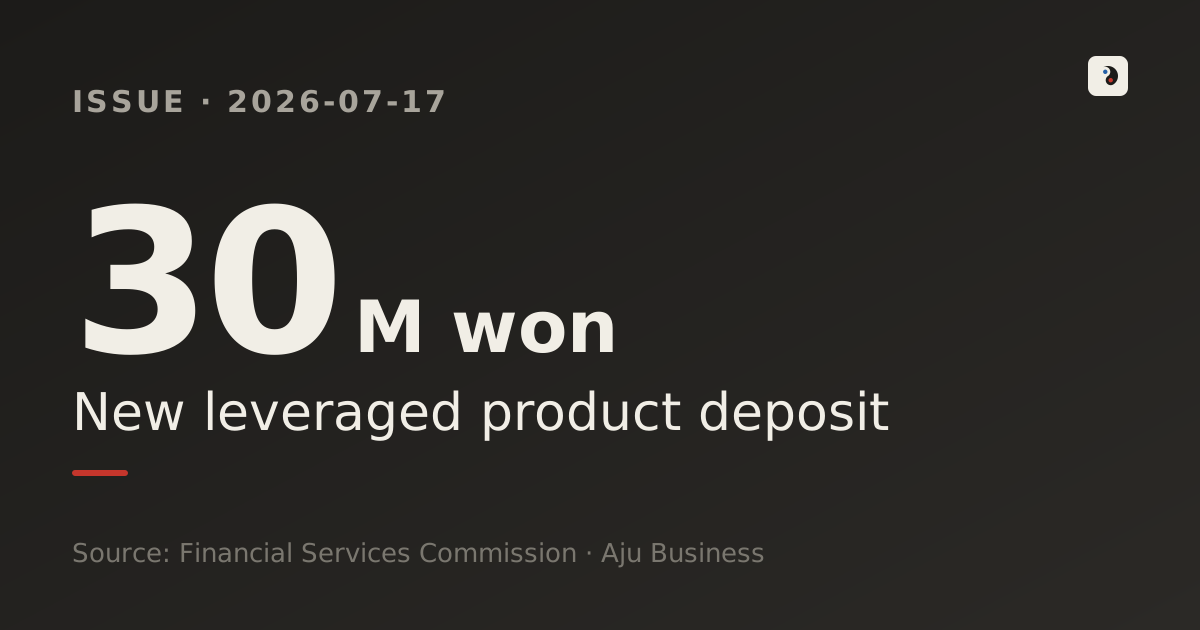
A tripled bar for leveraged bets, a social media age line at 14, a K-pop export record — today's three stories, annotated with Australia's experiment, the design behind the rules and market data the originals left out.
No 30 Million Won in Cash, No Leveraged Bet — Korea's 3 New Rules for Single-Stock Products
Korea's financial regulator halted new listings of single-stock leveraged products and tripled the deposit bar. Here is exactly what investors need to check before the August rollout.
From August, you will not be able to open a new position in a 2x Samsung Electronics product without 30 million won in cash.
On July 16, the Financial Services Commission announced corrective measures for single-stock leveraged products tracking Samsung Electronics and SK hynix: new listings are suspended for now, and the base deposit rises from 10 million to 30 million won. Advertising and promotional events by brokerages and asset managers are banned, and the minimum trading unit grows from 1 to 20 units. According to Aju Business Daily, the 16 products already listed keep trading, but no additional listings will be allowed until the market stabilizes.
Here is what to take care of before the August rollout — and what the design of this regulation is telling us.
What changes when — two dates to circle
Start with the calendar. The deposit increase to 30 million won takes effect around August 5; the switch to cash-only deposits — stocks and bonds will no longer count — follows around August 19. Today you can pledge part of your stock and ETF holdings as deposit; afterward, only cash qualifies. Nominally the bar triples, but stacked with the cash-only rule, the felt threshold rises even more.
Reading the design — a threshold instead of a ban
What stands out is that the products were not abolished. Rather than banning sales, the plan raises the entry cost (a cash deposit) and the minimum trade size (20 units) to filter out small impulsive bets. A structure where a few tens of thousands of won bought exposure to twice the underlying stock's volatility was flagged as the overheating channel — and bundling in an advertising ban suggests the regulator's target is less the product than the way it was being sold.
Three things to check now
First, if you plan new or additional purchases, whether you will have the 30-million-won cash deposit ready from around August 5. Second, that 20-unit trading sharply raises the minimum order size. Third, existing holdings face no delisting or forced liquidation — but with new launches frozen, your menu of alternatives will not grow for a while either.
A rule that keeps leverage but prices up the doorway — check your deposit before August 5.
Korea Moves to Bar Under-14s From Social Media — Why the World Is Taking Kids' Feeds Away
The government is pushing a law to block social media sign-ups for children under 14. Following Australia's world-first under-16 ban, we look at why country after country is reaching the same conclusion.
To the question "how old should you be for social media," governments have started answering with a number.
At a presidential briefing on July 16, the Korea Communications and Media Commission announced a plan to block social media sign-ups for children under 14 in principle, with exceptions only when parents consent. For ages 14 to 19, features engineered for overuse — infinite scroll, personalized recommendation algorithms — would be restricted in stages. The mechanism is an amendment to the Information and Communications Network Act that puts an age-verification duty on platforms.
By the end of this piece you will see which global wave this rides on, and why the real target is not age but design.
Australia fired first — a 105.3-billion-won experiment
The benchmark is Australia, which on December 10 last year became the first country to ban social media accounts for under-16s. Ten platforms including Facebook, Instagram, YouTube and TikTok are covered, and platforms lax on age checks faced fines of up to 49.5 million Australian dollars — a cap recently doubled, to roughly 105.3 billion won (News1). The core design choice: punish the platform, not the child. Korea's plan follows the same structure.
Why we react this way — the memory of the shutdown law
This is not Korea's first legal intervention in teenagers' digital habits. The 2011 "shutdown law," which forcibly cut off late-night gaming, was abolished in 2021 after a decade of doubts about its effectiveness. What differs now is the target. Where the shutdown law policed hours of use, this plan aims at the features that engineer addiction — infinite scroll, recommendation algorithms. The philosophy of regulation has shifted from blaming a child's willpower to questioning the platform's profit structure.
The open question — the age-verification dilemma
As Kyunghyang Shinmun noted, the common diagnosis behind these hard-line moves is deteriorating teen mental health. But a paradox remains: verifying every user's age ultimately means collecting more identity data from everyone. Australia, already in enforcement, will effectively run the experiment whose data Korea's National Assembly debate will use.
The regulatory question is shifting from "why can't kids resist" to "are platforms even letting them."
K-pop Album Exports Hit a Record $257M — Lessons From a Reversal Two Years in the Making
First-half K-pop album exports hit an all-time high of $257.48 million, 2.25 times last year's figure. Here is what the industry should learn from a rebound that upended the "decline" narrative.
A market written off as a "burst bubble" for two straight years just set an all-time record in six months.
According to Korea Customs Service trade statistics, K-pop album exports reached $257.48 million in the first half of this year, up 125% from the same period last year ($114.43 million) and an all-time high (Digital Daily). The spark came in March, when BTS released "Arirang," their first full album in three years and nine months, which topped the Billboard 200 for three straight weeks — a K-pop first. The United States became the top buyer at $74.12 million.
We pulled three lessons the industry can take from this reversal.
The reversal in the numbers — the 'decline' was a gap, not a structure
K-pop album exports fell in 2024 for the first time in nine years (Hankook Ilbo), feeding a "bubble" narrative. Then one mega-IP returned and the market grew 2.25-fold. The numbers proved the slump was not a structural problem like fandom attrition but a supply gap — the military-service hiatus of the industry's biggest act.
The reversal on the map — the center of gravity moves west
The other headline in this data is the ranking. The US ($74.12M) overtook China ($61.18M) and Japan ($45.61M) for first place, and five European countries — Germany, the Netherlands, Britain, France and Poland — made the top 10. An industry that worried about depending on neighboring markets found its growth engine across the Atlantic.
The homework — a record resting on one team
Still, that much of this record is one team's comeback effect is both lesson and warning. To stay steady through the next hiatus, developing new IP and diversifying markets is homework to be done precisely in this boom.
The returning team set the record — keeping it is the job of an industry preparing the next one.
Each issue is nuloq's own analysis, drawing on the original reporting and public data (official statistics and institutional sources), written with the help of AI. See each card's link and in-text citations for sources.
Related posts
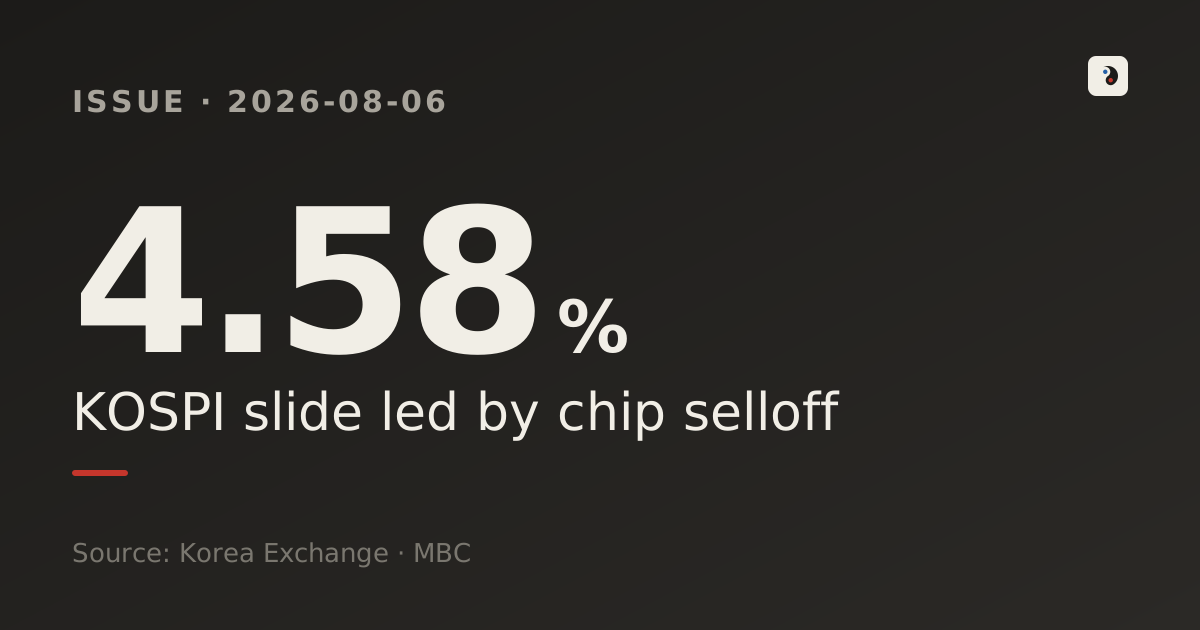
KOSPI Falls 4.58%, Heat Halts Korean Baseball, Kakao Hits Record Profit: What the Numbers Mean
KOSPI fell 4.58% on a chip selloff, yet the structure differs sharply from the 8.77% crash of 2024. Plus Korea’s first-ever two-day baseball heat shutdown, and why Kakao’s record +36% profit still leaves the AI question open.
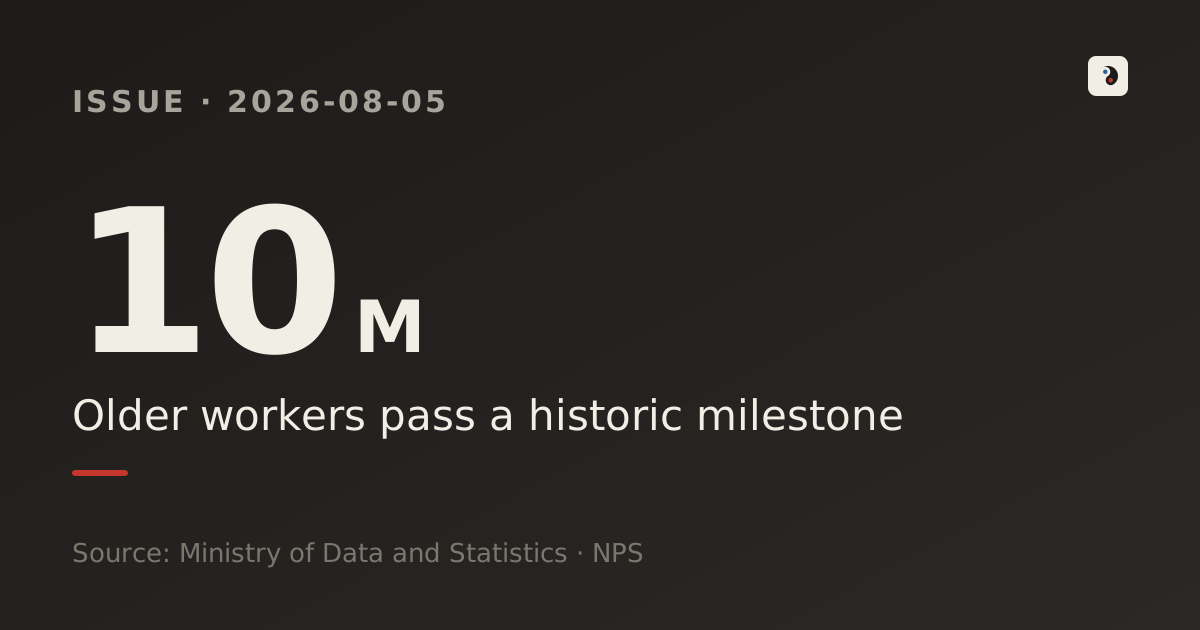
Korea Elderly Workers Top 10 Million, KOSPI Jumps 3.76%, Galaxy Z8 Hits 1.44M Presales — Why 3 Records Fell in One Day
Koreans aged 55-79 in work topped 10 million for the first time. Why they leave jobs at 53 yet hope to work until 73.6, what 29 sidecar halts in six months say about the KOSPI's 3.76% surge, and the price math behind 1.44 million Galaxy Z8 presales — all in numbers.
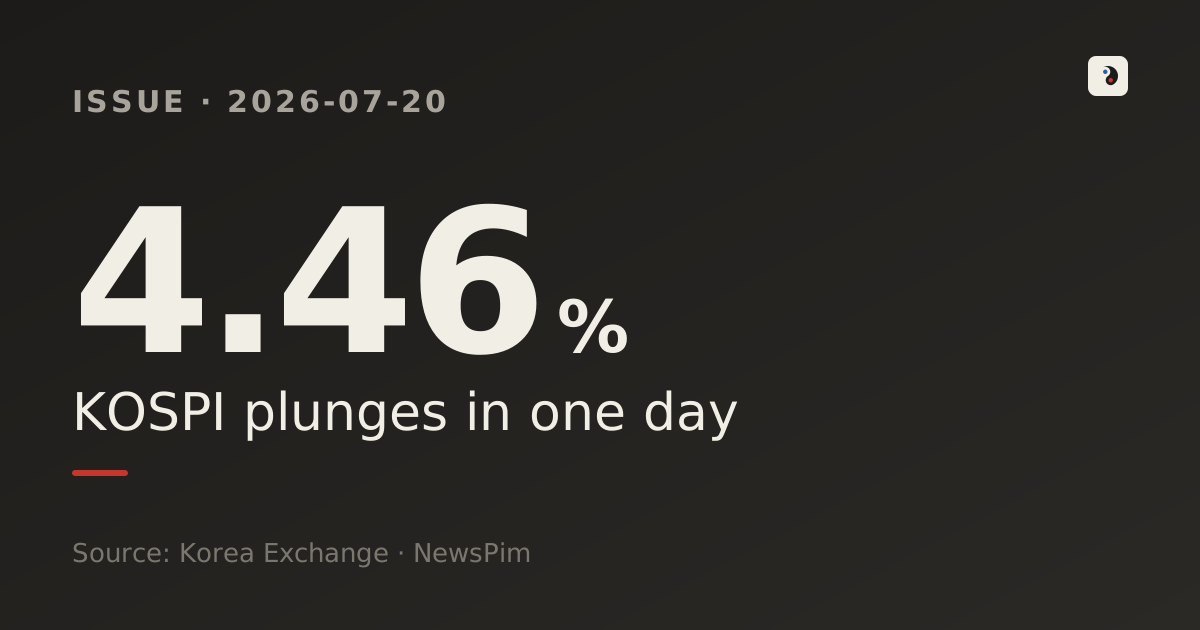
2026-07-20 KOSPI Drops 4.46%, 80mm/h Rain Alert, and BTS at the First World Cup Halftime Show
KOSPI fell 4.46% to 6,516 after China's Kimi K3 AI model rattled chip stocks. Here's the DeepSeek precedent, how to prepare for 80mm-per-hour rain on tomorrow's Seoul commute, and why BTS's first-ever World Cup halftime show matters.
2026-07-18 Choe Son-hui in Moscow, 61% Back Prosecutors, Galaxy Unpacked — Today's 3 Issues in Numbers
North Korea's foreign minister made her first official visit to Russia in 9 months, and a Gallup Korea poll found 61% want prosecutors to keep supplementary investigation powers. Plus Samsung's first AI glasses due July 22 — three issues unpacked with data the original reports left out.