2026-07-18 Choe Son-hui in Moscow, 61% Back Prosecutors, Galaxy Unpacked — Today's 3 Issues in Numbers
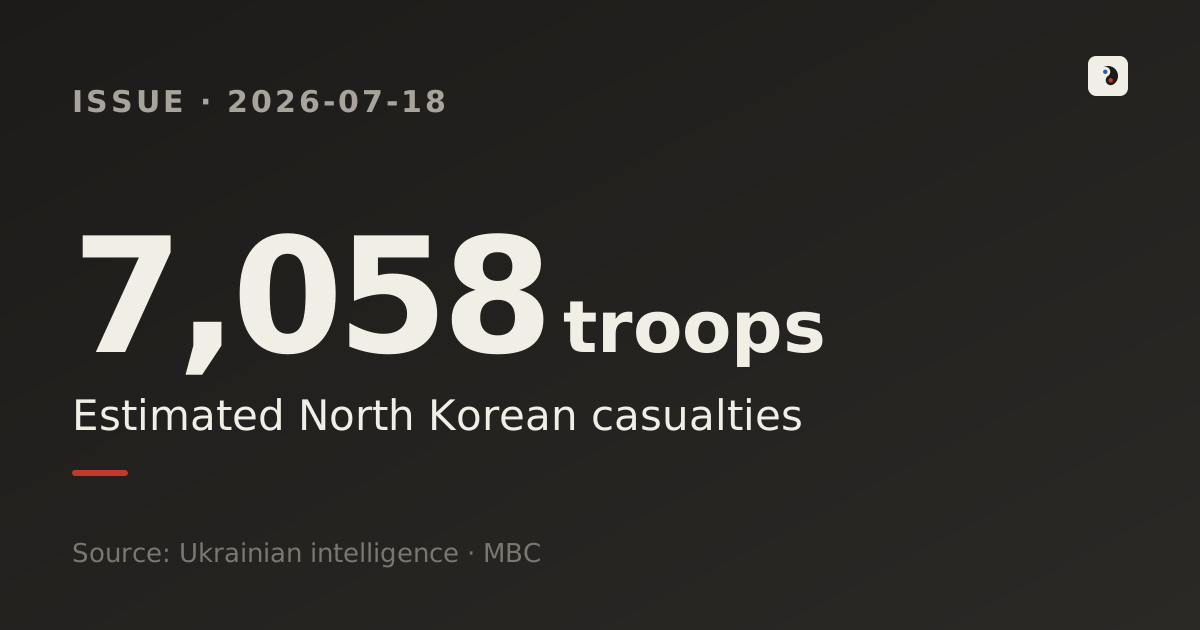
Choe Son-hui's Moscow trip after 9 months, the 61% verdict on prosecutorial powers, and Samsung's first AI glasses — today we add troop-casualty data, crosstab poll numbers and smart-glasses market figures the original articles didn't give you.
Choe Son-hui's Russia Visit After 9 Months — The Bill Behind 7,000 Casualties
North Korea's foreign minister arrived in Moscow on an upgraded 'official' visit, not a working one. We break down the cost ledger of two years of troop deployment and why a Kim-Putin summit this year is now on the table.
It is her first Moscow trip in nine months — and this time it is an 'official' visit, not a working one.
According to Russia's foreign ministry, North Korean Foreign Minister Choe Son-hui arrived in Moscow on July 18 at the invitation of Foreign Minister Sergei Lavrov. It is her first trip to Russia since a working visit last October, and diplomats read it as groundwork for a visit to Russia by leader Kim Jong-un (Herald Business).
By the end of this piece, you will see — in numbers — the size of the invoice this visit carries.
Why now — the treaty's second-year bill
The comprehensive strategic partnership treaty Pyongyang and Moscow signed in June 2024 (with its mutual military assistance clause) led to North Korean troop deployments that October. With the war grinding on, Pyongyang has reached the point where it must settle what it has paid and lock in the returns — military technology transfers, energy and food aid, and a summit stage. Upgrading from working-level contact to an official foreign-minister visit is itself a signal that the settlement phase has begun.
The cost of deployment, in numbers
By Ukrainian intelligence estimates (reported by MBC), North Korea has sent about 14,000 troops, of whom some 9,500 saw combat, with cumulative casualties of 7,058 (2,251 killed, 4,807 wounded). That is half of everyone sent. Losses on that scale raise the price Pyongyang can demand — and the negotiating table for that price may well be a Kim-Putin summit within the year.
An official visit carrying an invoice for half its soldiers — the next step is a summit table.
61% Say Keep Prosecutors' Powers — Why Even 46% of the Ruling Party's Base Balked
Six in ten Koreans want prosecutors to keep their supplementary investigation powers. Even the reform-friendly ruling-party base split 46 to 39 — we dig into the psychology behind the crosstabs.
On the fine print of prosecution reform, the ruling party's own base has split.
Gallup Korea asked 1,003 adults nationwide on July 14-16: 61% said prosecutors' supplementary investigation powers should be kept, 23% said they should be fully abolished, and 16% withheld judgment. In the same survey, President Lee Jae-myung's approval fell to 52%, down for a second straight week (Newspim).
Read to the end and you will see why even reform supporters hesitate at this particular institution.
46 to 39 inside the base
The interesting number is not the headline figure but the crosstabs. Among Democratic Party supporters, 'keep' led 46% to 39%; among progressives it was a statistical tie at 46 to 42. Moderates backed 'keep' at 64% and conservatives at 77% (Gallup Korea · Segye Ilbo). It is a rare scene: the party's signal and its supporters' case-by-case judgment pointing in different directions.
When anxiety beats principle
People who nod at the principle of separating investigation from indictment change their answer when asked, 'If police work is sloppy, who catches it?' The lower the trust in institutions, the more people choose to keep at least one check in place — and the 64% 'keep' among moderates is the index of exactly that instinct. Layer this onto an approval rating sliding to 52%, and the political cost of legislating against the grain of opinion on the fine print grows accordingly.
What the public is questioning is not the direction of reform, but its speed and its safety nets.
Galaxy Unpacked July 22 — 4 Things to Watch for the First AI Glasses
Samsung is bringing its first glasses-type device, the Galaxy AI Glass, to Unpacked. Here is your pre-livestream checklist — plus the state of a market where Meta has already sold 2 million pairs.
For the first time since phones and watches, Samsung is betting on an entirely new device category.
Samsung holds 'Galaxy Unpacked 2026' in London on July 22 at 10 p.m. Korea time. Expected on stage: the Z Fold8 with a 4:3 'passport-shaped' unfolded screen (about 201g, the lightest Fold ever), the Flip8, the Watch9 — and the company's first glasses-type device, the Galaxy AI Glass (inews24).
Run through the checklist below before the livestream and you will know exactly what to look for.
Why glasses, why now — a market opened by 2 million pairs
Meta's Ray-Ban AI glasses have already sold more than 2 million pairs cumulatively, and reports say Meta plans to sell 3 million more by the end of 2026 and expand annual production capacity to 10 million (Newsspace). With phone replacement cycles stretching, the race to claim the 'next form factor' has begun in earnest. Samsung's glasses are reported to be display-free — camera, microphone and speaker — powered by Android XR and Gemini for real-time translation and navigation.
How to judge a first-generation device
With a first-generation form factor, judge the ecosystem, not the feature list: the range of Korean-language voice support, how deeply it ties into Galaxy phones, and whether a next-generation roadmap is announced. Use the four checkpoints below.
On the night of the 22nd, watch the glasses before the fold — the next decade's form factor is at stake.
Each issue is nuloq's own analysis, drawing on the original reporting and public data (official statistics and institutional sources), written with the help of AI. See each card's link and in-text citations for sources.
Related posts
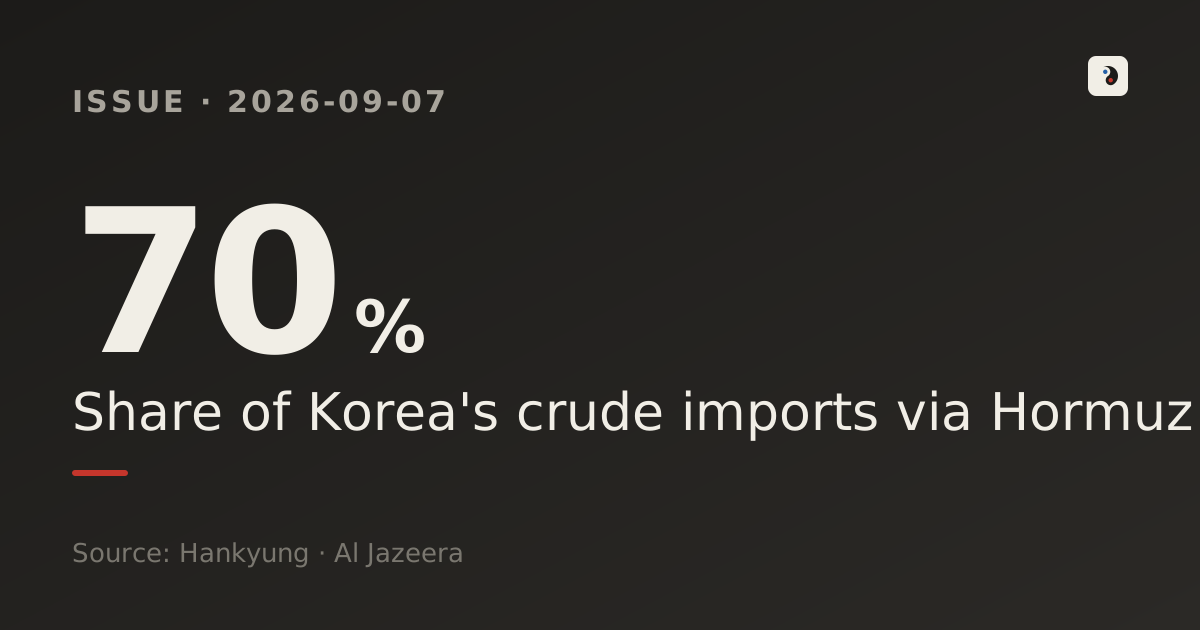
150 Troops, 70% of Oil: South Korea's Hormuz Dilemma by the Numbers
Squeezed between US pressure and Iran's war warning, South Korea is weighing sending 150 troops to the Strait of Hormuz — the route for 70% of its oil imports. Here's the dilemma in numbers.
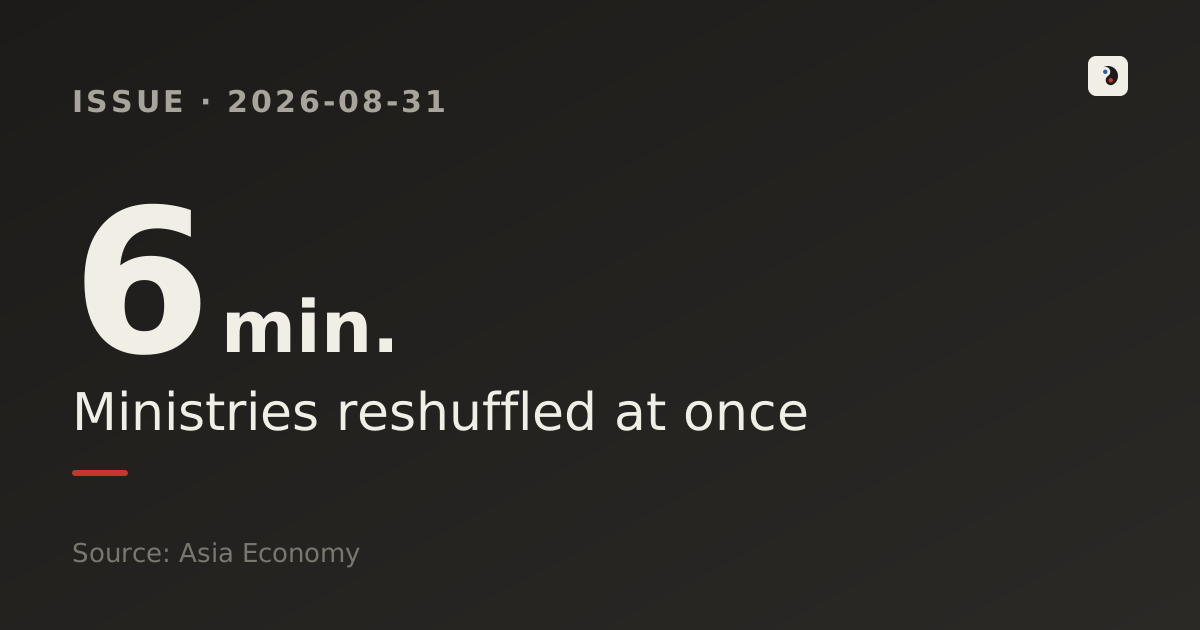
Approval at 45%, Housing Anger at 28%: What South Korea's Cabinet Reshuffle Really Signals
President Lee Jae-myung replaced six ministers as his approval rating sank to 45%. The data and disputes behind South Korea's biggest reshuffle yet.
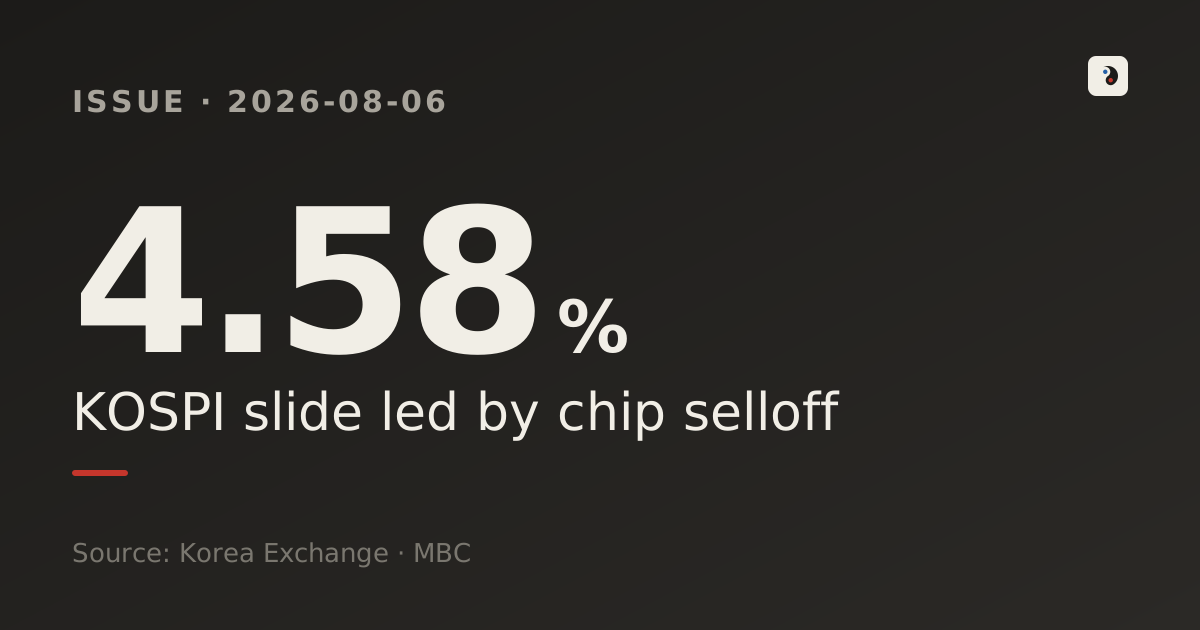
KOSPI Falls 4.58%, Heat Halts Korean Baseball, Kakao Hits Record Profit: What the Numbers Mean
KOSPI fell 4.58% on a chip selloff, yet the structure differs sharply from the 8.77% crash of 2024. Plus Korea’s first-ever two-day baseball heat shutdown, and why Kakao’s record +36% profit still leaves the AI question open.
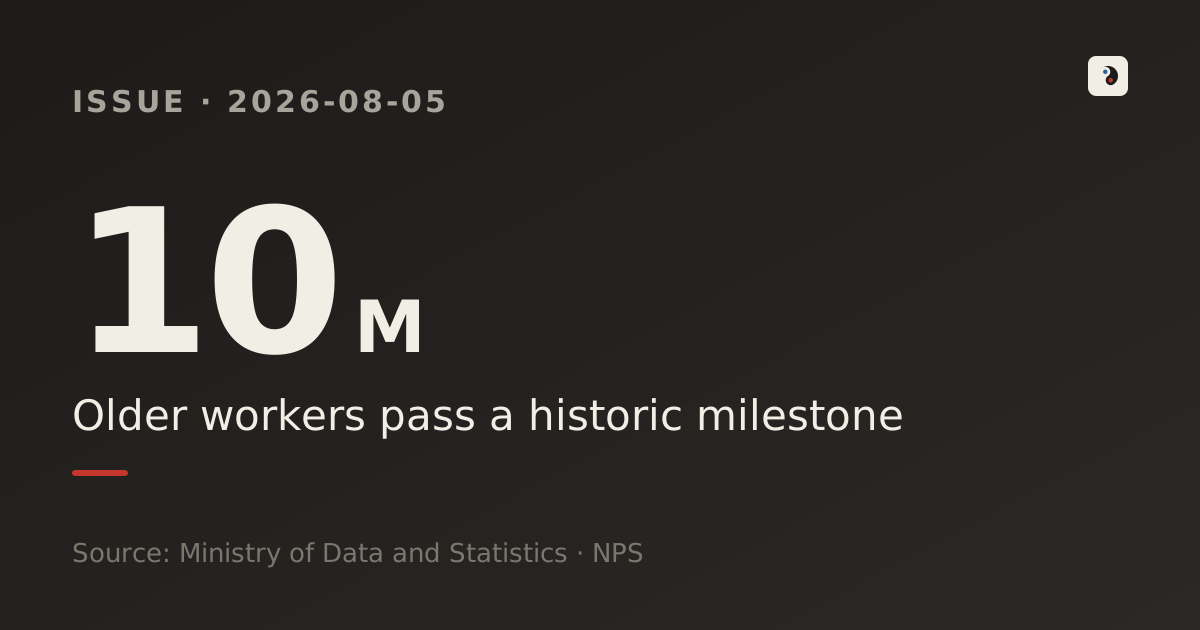
Korea Elderly Workers Top 10 Million, KOSPI Jumps 3.76%, Galaxy Z8 Hits 1.44M Presales — Why 3 Records Fell in One Day
Koreans aged 55-79 in work topped 10 million for the first time. Why they leave jobs at 53 yet hope to work until 73.6, what 29 sidecar halts in six months say about the KOSPI's 3.76% surge, and the price math behind 1.44 million Galaxy Z8 presales — all in numbers.