KOSPI Falls 4.58%, Heat Halts Korean Baseball, Kakao Hits Record Profit: What the Numbers Mean
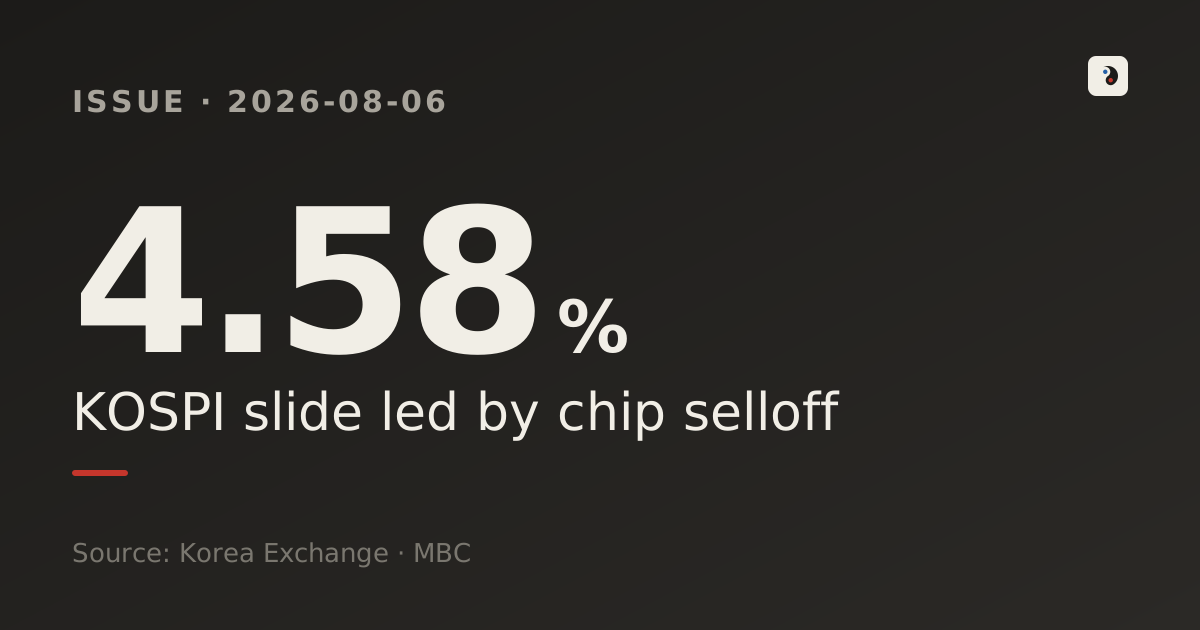
A 4.58% KOSPI slide driven by just two chip giants, a heat wave that stopped Korean baseball for the first time in its history, and Kakao being grilled about AI despite record earnings — we unpack today’s three issues with comparisons, context and outlooks you won’t find in the original reports.
KOSPI’s 301-Point Drop: 3 Ways It Differs From the 8.77% Crash
The KOSPI closed 4.58% lower at 6,296.38, one of this year’s steepest falls. Yet the index level, the two stocks behind the drop and the KOSDAQ’s opposite move tell a very different story from 2024.
On the 6th, the KOSPI shed 301.88 points in a single day — down 4.58% to close at 6,296.38.
Overnight, AI-related names like AMD and SanDisk issued guidance that fell short of expectations, triggering a tech selloff in New York that slammed Samsung Electronics (-6.3%, 230,500 won) and SK Hynix (-10.37%, 1,495,000 won). According to Kukmin Ilbo, retail investors bought about 3.3 trillion won of stock, but foreigners and institutions sold more than 3.4 trillion won, dragging the index down.
By the end of this piece you’ll see how this drop differs from past crashes — and why the stocks matter more than the index.
Putting the drop on the map: about half of the 8.77% crash
The KOSPI’s biggest closing-day loss was -8.77% (to 2,441.55) on August 5, 2024, and this March brought another slide of around 7% on Middle East shocks (Seoul Shinmun). Today’s 4.58% is roughly half that. More important is where the index sits: 6,296 is about 2.6 times the 2024 crash close — a correction landing on top of a two-year semiconductor rally.
It was two stocks, not the whole market
The same day, the KOSDAQ actually rose 0.26% to 801.67 (Newspim). That is evidence the decline was concentrated in two semiconductor megacaps, not market-wide panic. Because Samsung Electronics and SK Hynix carry such heavy weight in the KOSPI, a single piece of US AI-sector news can shake the entire index — and this day laid that concentration bare.
Outlook: earnings season keeps volatility alive
Since the trigger was US AI earnings guidance, similar swings can repeat as the rest of the reporting season unfolds. On the other hand, no indicator yet shows the semiconductor cycle itself breaking — so for investors who understand the concentration, this is a moment for review, not fear.
The essence of this drop is not its size but what fell — reading the concentration behind the index is what makes volatility bearable.
Heat Stopped Baseball: How 4 Cancelled Games Became 30 in 2 Years
Korea’s pro league cancelled every game two days running for the first time ever, then cleared 15 more weekend games. From 4 heat cancellations in 2024 to 30 this season — the number shows how fast climate is rewriting daily life.
In 44 years of Korean pro baseball (KBO), it had never happened — extreme heat shut down every game at all five stadiums, two days in a row.
After scrapping 10 games on the 5th and 6th, the KBO cancelled all 15 weekend games through the 9th and will resume the league on the 11th (Hankyung). Until September 6, every game will start at 7 p.m. Behind the decision was a spectator collapsing in the stands and receiving CPR (Financial News).
Read on to see why baseball only stopped now — and what this change means far beyond the ballpark.
From 4 games to 30 in two years
The first-ever KBO heat cancellation came just two years ago, in Ulsan in August 2024. That season saw 4 such cancellations; this season, including the weekend wipeout, the count reaches 30 — 7.5 times more in two years. The speed at which climate risk turned from exception into constant is stamped right onto the league schedule.
How the rulebook chases reality
Only on August 4 did the KBO publish detailed criteria — cancel by 1 p.m. on game day when highs reach 39°C or the heat index hits 38°C (Money Today). One day later it had to go beyond its own rule with a full league shutdown, and calls to rewrite the rule from scratch followed (Sports Kyunghyang). Bodies felt the danger faster than documents could be written.
Outlook: the schedule itself is now in question
The debate has moved past when to cancel: a midsummer break that pauses the league entirely, or a spring-and-autumn season format, are now openly discussed (OhmyStar). The familiar scene of summer-evening baseball has itself become a candidate for redesign.
When the climate shifts, bodies signal before rulebooks do — the ballpark was simply the first stage where that signal showed.
Kakao’s Record Quarter, +36% Profit — So Why Is the Market Asking About AI?
Kakao posted all-time quarterly highs: revenue of 2.0985 trillion won and operating profit of 277 billion won. But break down where the growth came from, and you see why investors’ eyes are on AI, not the numbers.
Here is a company that announced its best quarter ever — and the first question it got was: so, what about AI?
On the 6th, Kakao reported Q2 revenue of 2.0985 trillion won (+9%) and operating profit of 277 billion won (+36%), both all-time quarterly records (Newsway). The platform division led the way with 1.2303 trillion won, up 17%, while Talk Biz added a solid 643.2 billion won (+12%) (ET News).
Pull apart the structure of these earnings and you’ll understand why the market’s gaze is fixed on AI rather than today’s numbers.
Where the growth came from: the core business, all of it
This record quarter was built by the existing platform businesses — advertising, commerce, mobility. The content division, by contrast, grew just 1% to 868.2 billion won, essentially flat. In short: the core is solid, the next growth engine is not yet here — that is the inner structure behind the flashy +36%.
AI, the next test
Kakao says it will roll out agentic AI that completes orders, reservations and payments inside KakaoTalk, building it into a new revenue axis. That the market asks about the AI roadmap even on record results (Newsway) means investors want proof of the next growth story, not today’s profit. The AI race with Naver, which reports earnings on the 7th, is the comparison to watch.
Delivering an AI answer within the time its core business has bought — that is the real homework this record quarter left Kakao.
The three issues here are nuloq’s own analysis, layering public data such as exchange statistics and KBO announcements on top of the original reporting, written with the help of AI tools. Every figure’s source is noted in each card’s link, body citations and infographic captions.
Related posts
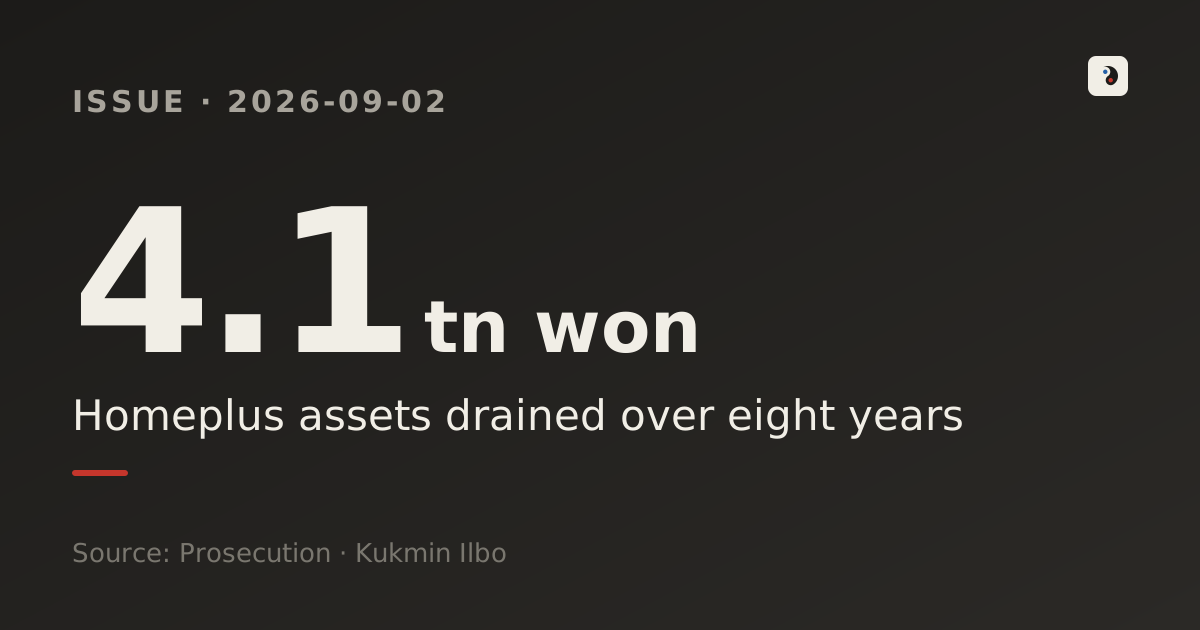
Homeplus Creditor Vote: MBK's ₩4.1 Trillion Exit, ₩1.9 Trillion Accounting Mystery
Creditors voted Sept. 2 on Homeplus's fate. Here's how MBK drained ₩4.1 trillion from the retailer over eight years, then turned ₩1.9 trillion of debt into equity six days before its rehabilitation filing.
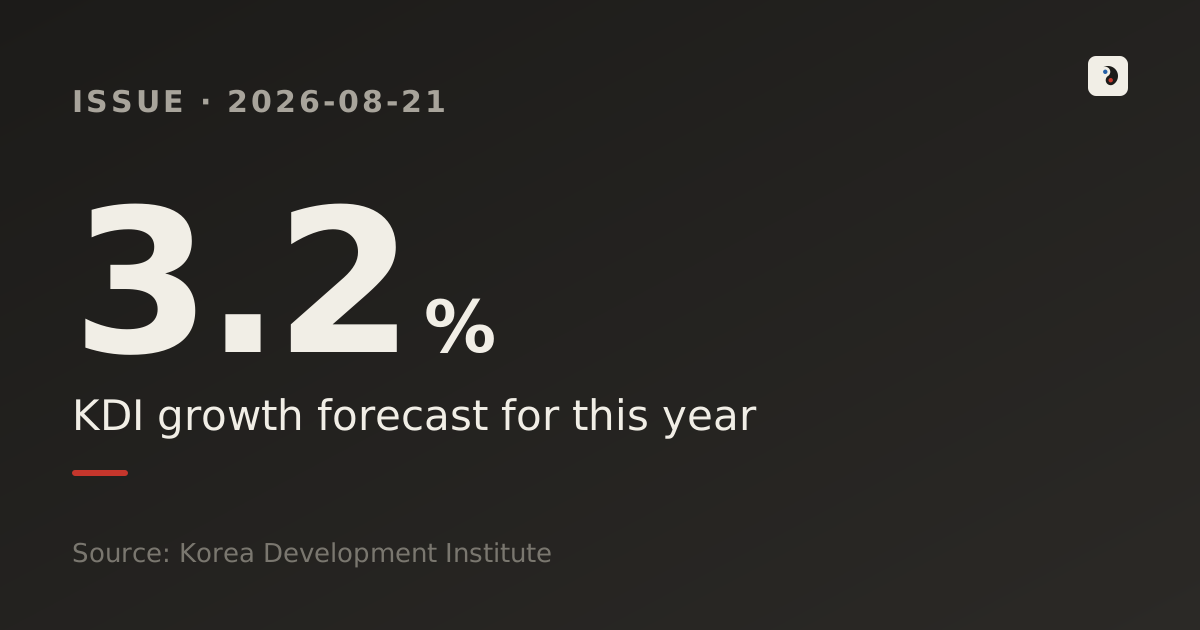
Korea's Growth Forecast Hits 3.2% — So Why Are New Jobs Falling?
KDI raised South Korea's 2026 growth forecast to 3.2% in 3 months on a chip boom — but new-jobs forecast fell from 170,000 to 110,000. The numbers, explained.
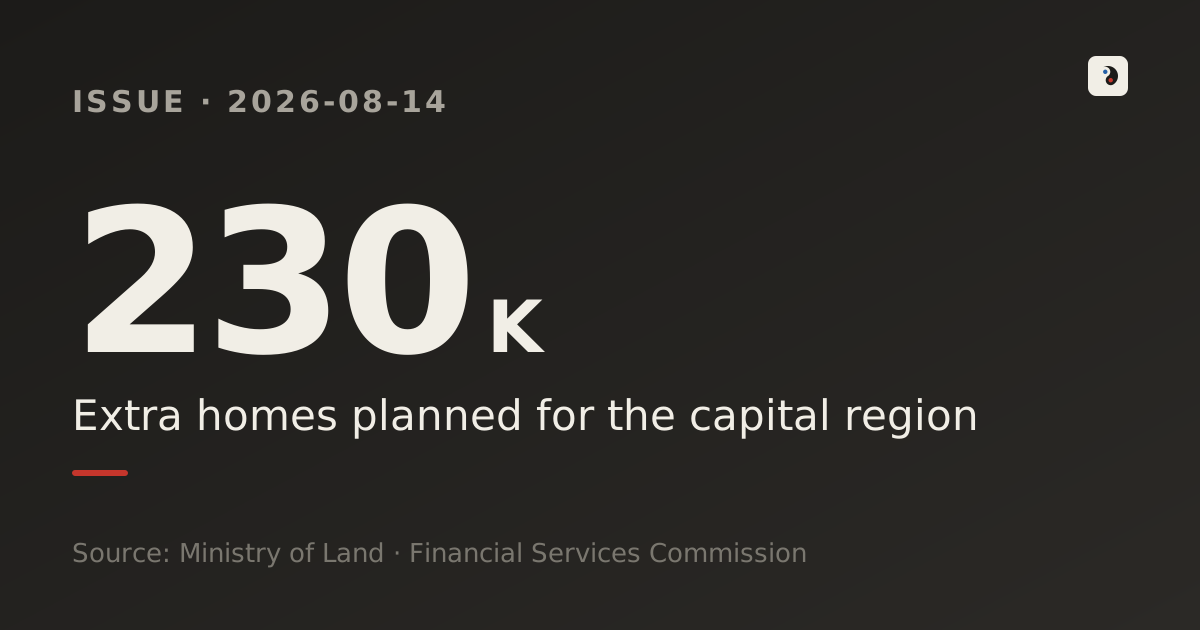
Korea Doubles Housing Loans, Adds 230,000 Homes — Will It Work?
Korea unveiled a housing plan on Aug. 13 adding 230,000+ homes and doubling household loan quotas, as Seoul's jeonse prices rose six times faster than a year ago. Here's whether it can actually cool the market.
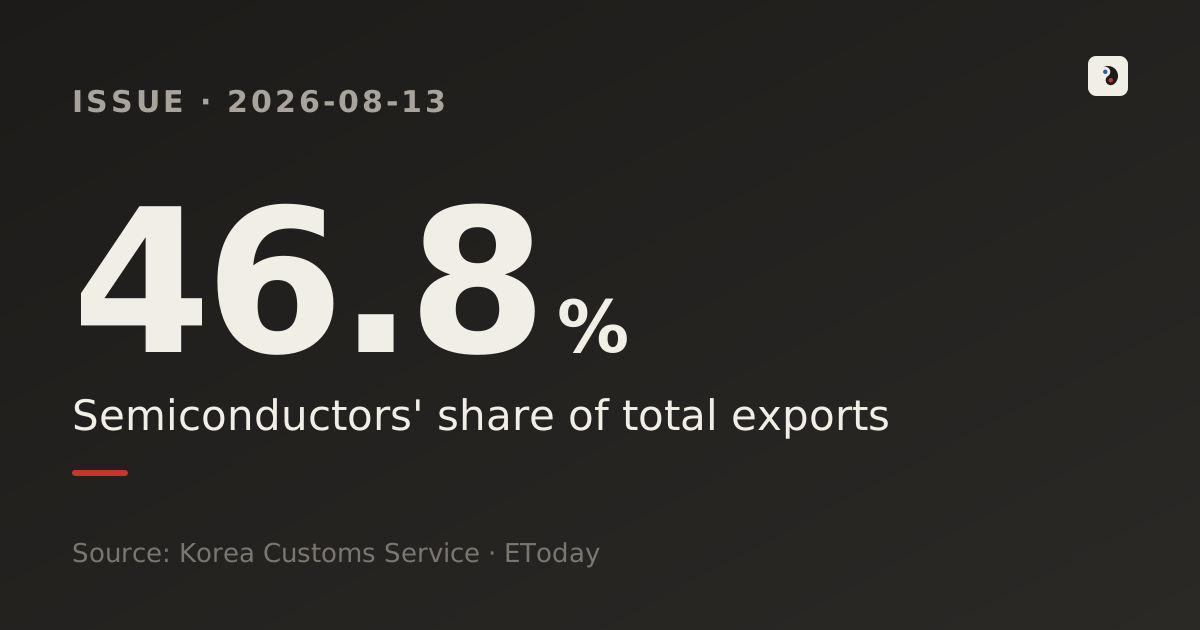
Chips Hit 46.8% of Korea's Exports — Inside a Record-High Warning Sign
Korea's exports hit a record $21.3B in early August, and 46.8% of it was chips alone. Here's the data behind how a share once in the low 20s doubled in two years — and why the boom itself is a red flag.