2026-07-21 KOSPI Rebounds 3.56% to 6,748 — Special Counsel Extended 30 Days, 200mm of Rain: Korea's Day in Numbers
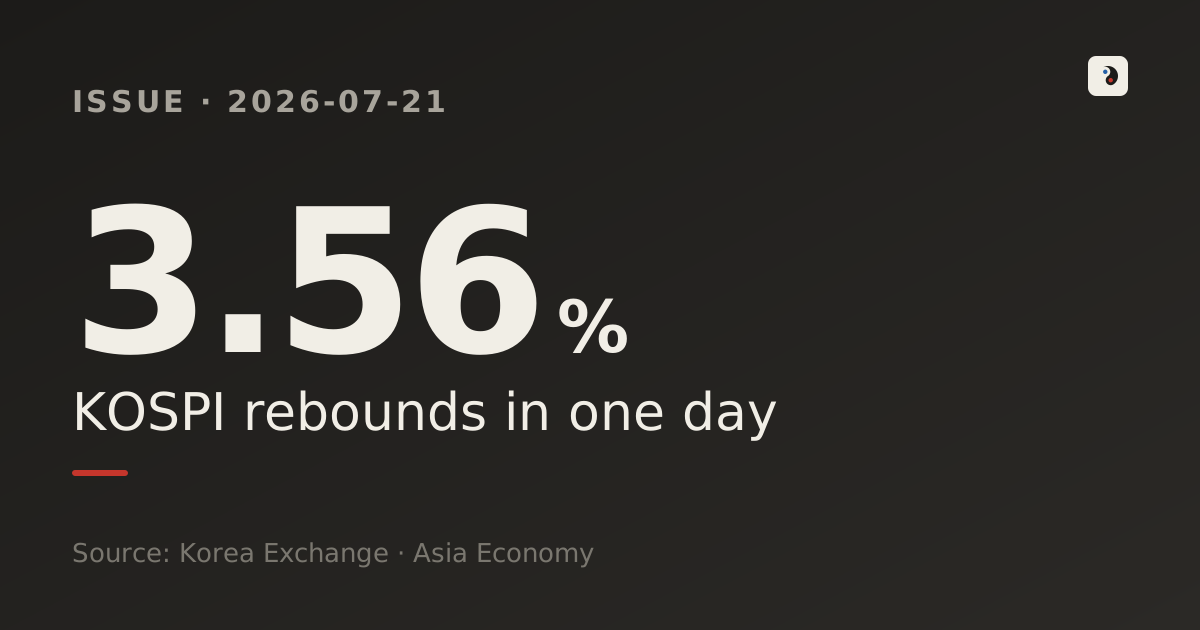
A 3.56% KOSPI rebound one day after the crash, a 30-day special counsel extension that reopened parliament after 50-plus days, and 120mm more rain after a 200mm soaking — we add the DeepSeek-recovery precedent and climate baselines the original articles leave out.
A 3.56% Rebound in One Day — 3 Signals That Say Whether 6,747 Is the Bottom
After Monday's 4.46% crash, Korea's KOSPI rebounded 3.56% to close at 6,747.95 on July 21. Here are the three forces behind the bounce — and what the DeepSeek shock precedent says about recovery.
The day after the crash, the market sprinted in exactly the opposite direction.
On July 21, the KOSPI closed at 6,747.95, up 231.68 points (3.56%) from the previous session. According to Asia Business Daily (Asiae), the index opened 0.58% higher at 6,553.88, reached 6,677.10 (+2.47%) by 10:13 a.m., and extended gains in the afternoon — clawing back most of Monday's 4.46% plunge to 6,516.27 in a single day.
By the end of this article you'll be able to separate the three forces supporting this rebound from the one variable still unresolved.
The three forces behind the bounce
First, bargain hunting driven by a sense that the sell-off had gone too far. Second, according to Financial News, foreign investors — who had been dumping shares for days — turned net buyers. Third, the semiconductor duo snapped back: Samsung Electronics jumped 6.15% to reclaim the 250,000-won level and SK hynix rose 4.08% back above 1.8 million won, pulling the index up with them.
Reading the 'Kimi shock' through the DeepSeek precedent
The trigger for the crash was 'Kimi K3', unveiled on July 16 by China's Moonshot AI — a 2.8-trillion-parameter model that climbed to third place on global benchmarks (ZDNet Korea), stoking fears of a 'second DeepSeek shock'. But recall January 2025: the DeepSeek shock wiped roughly $600 billion off Nvidia's market value in a day (Blockmedia), yet the counter-argument that better efficiency actually increases AI demand gained ground, and chip stocks recouped their losses over the following months. The precedent's data point: cheap AI did not mean the end of chip demand.
The one variable left
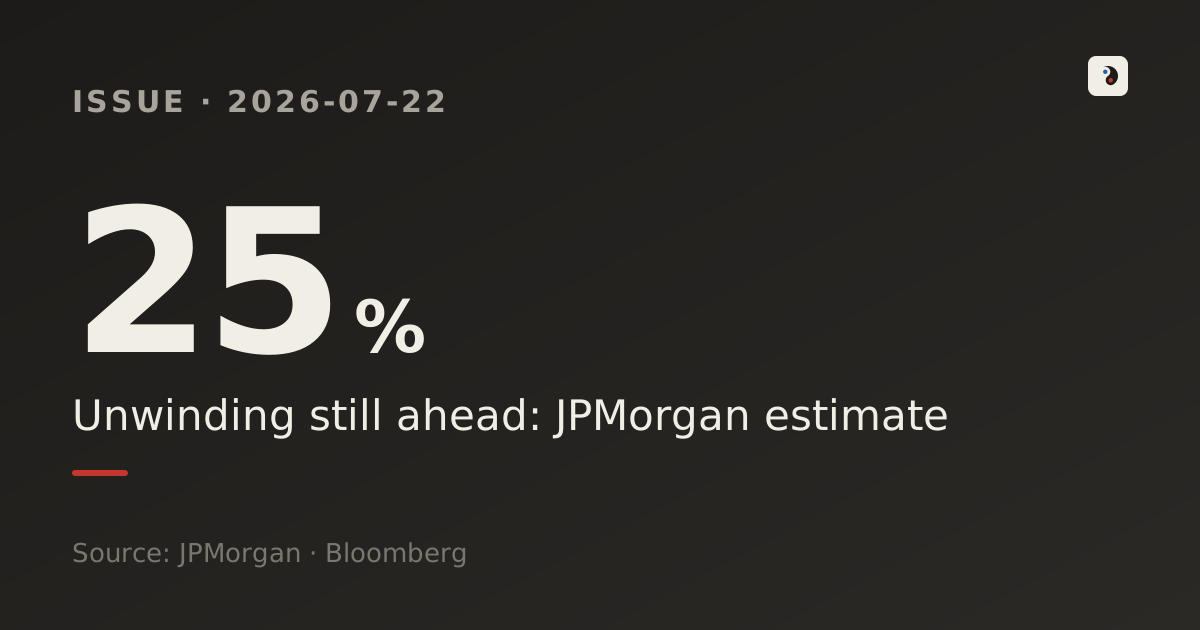
Even after the rebound, the KOSPI still sits about 25% below its June 18 peak of 9,000. Financial News also called volatility 'still elevated', framing this as an ongoing bottoming process. The next thing to check: whether today's foreign net buying was a one-day event or the start of a trend.
A 3.56% one-day rebound is the unwinding of panic, not yet the confirmation of a trend — whether foreign buying continues is the real bottom signal.
Special Counsel Extended 30 Days — Why a Parliament Frozen for 50 Days Moved Today
Korea's National Assembly voted on July 21 to extend three special counsel probes by 30 days, to August 23. We read the three numbers inside the bill — and how a 50-day political deadlock actually broke.
A clock that had stopped started ticking again.
In a plenary session on July 21, the National Assembly passed an amendment extending the three combined special counsel investigations (insurrection, Kim Keon-hee, and the fallen marine) from July 24 to August 23 — a 30-day extension (Financial News). The amendment also adds officials' 'audit obstruction' to the investigation scope and expands seconded personnel from 130 to 150. A day earlier, the Seoul Central District Court issued an arrest warrant for Board of Audit member Yu Byung-ho, citing the risk of evidence destruction (Newspim).
Read to the end and you'll see why this extension passed now — and under what conditions deadlocked politics gets unstuck.
Three numbers inside the bill
+30 days, +20 staff, +1 investigation target. The extension came just three days before the probes were due to end on July 24, and with 'audit obstruction' added and Yu Byung-ho arrested, analysts see the blade pointing toward the top of the Board of Audit (Newspim). A 15% staffing increase reads less like a wind-down and more like an expansion phase for the final month.
Deadlock breaks through exchange, not principle
This plenary also marked the Assembly's return to normal operation after more than 50 days of paralysis. According to The Korea Times (US edition), the breakthrough was an agreement to launch a special counsel on the election commission — once each side held a card it wanted, negotiations over committee assignments accelerated. In a system where the legal deadline for organizing parliament carries no enforcement power, what ends a standoff is the moment one side offers something the other can accept.
What makes this different from past special counsels
The 2016–17 Choi Soon-sil special counsel ended after its initial 70 days when the acting president refused an extension. This time the clock was extended not by an approver's signature but by legislation — meaning a special counsel's lifespan now depends on parliamentary seats, not executive discretion.
Bigger than the extra month is what the day proved: the exit from deadlock is never total victory — it is exchange.
200mm in Four Days, 120mm More Coming — Half of Korea in Rain, Half in Tropical Nights
With 1,044 rain-damage reports filed, the Seoul area faces up to 120mm more rain on July 21 — while the south endures tropical nights. Why the peninsula split in two, and why wet ground makes the next rain more dangerous.
Korea's summer is drawing two different seasons on a single map.
According to Kyunghyang Shinmun, rain-damage reports — flooded homes and roads, landslides and falling rocks — reached 1,044 as of 4 p.m. on July 20, with 92 people from six provinces and cities including Daegu, Sejong and Gyeonggi staying in temporary shelters. Four-day cumulative rainfall since July 17 hit 209.9mm in Yeongju, 205.5mm in Paju, 204.0mm in Dongducheon and 186.0mm in Seoul's Gangseo district. And on July 21, another 30–80mm is forecast for the capital region and the West Sea islands — up to 120mm-plus in some areas.
By the end of this piece you'll know how these numbers compare with climate normals, and why rain and heat are arriving at the same time.
Half a month's rain in four days
Gangseo's 186.0mm equals about 45% of Seoul's July climate-normal rainfall of 414.4mm (Korea Meteorological Administration, 1991–2020). Nearly half of what should fall over a month arrived in four days — it's the speed, more than the total, that is driving the damage.
South of the rain, tropical nights
This rain isn't falling evenly: it is concentrated on central Korea, where a stationary front sits. While a narrow rainband along the edge of the North Pacific High sweeps up and down the center, the south and Jeju — inside the high — endured tropical nights again on July 21 (KMA). One country, one half flooding, the other half sleepless: repeated strikes on whichever region the front straddles are the signature of today's monsoon.
Rain on wet ground is more dangerous
With evacuations already under way over retaining-wall and landslide risks, today's forecast 120mm is more dangerous than the first rain. Once the ground is saturated, the same rainfall produces different outcomes. Not dismissing the next disaster alert as 'another one' — that is this week's survival sense for central Korea.
Read it not as 'the storm has passed' but as 'we are between storms' — that is the one sentence central Korea needs today.
Each issue is nuloq's own analysis, drawing on the original reporting and public data (official statistics and institutional sources), written with the help of AI. See each card's link and in-text citations for sources.
Related posts
2026-07-22 KOSPI 7,166 Spike Fades, 10m Won Fine for Seoul Mayor and 10,000-Record Diplomat Data Breach
KOSPI spiked 5% to 7,166 intraday but closed at 6,797.70, up just 0.74% — JPMorgan puts the margin unwind at 75% done. Plus why a 10m won fine could unseat Seoul's mayor, and why a 10-month diplomat data breach was disclosed 5 months late.
Approval at 45%, Housing Anger at 28%: What South Korea's Cabinet Reshuffle Really Signals
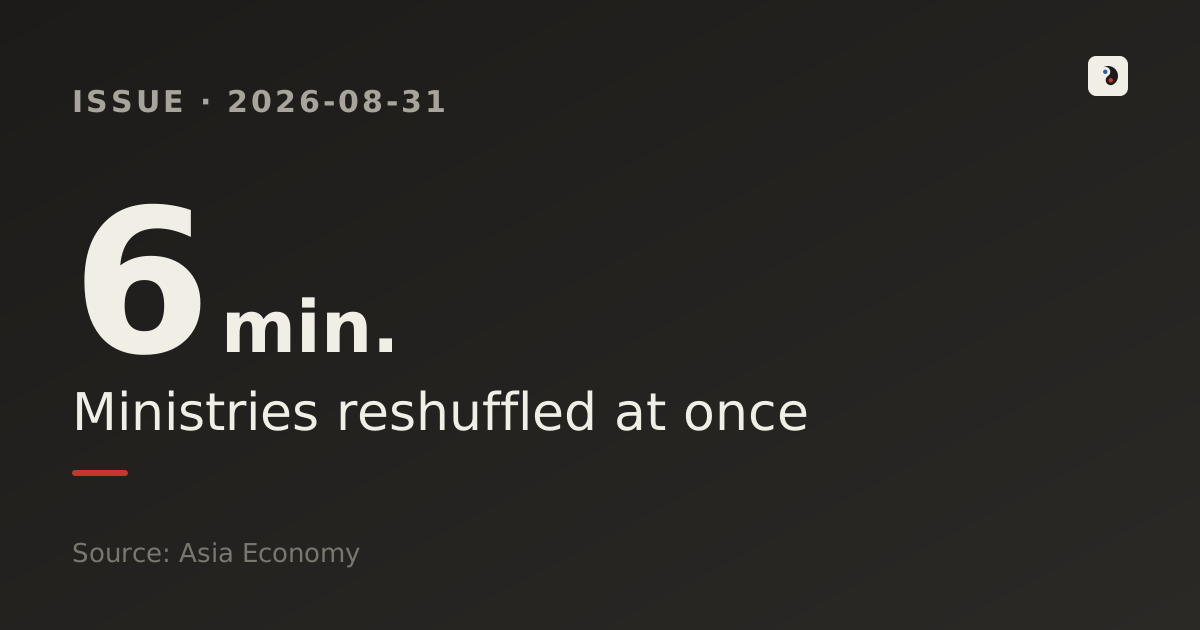
President Lee Jae-myung replaced six ministers as his approval rating sank to 45%. The data and disputes behind South Korea's biggest reshuffle yet.
Korea Elderly Workers Top 10 Million, KOSPI Jumps 3.76%, Galaxy Z8 Hits 1.44M Presales — Why 3 Records Fell in One Day
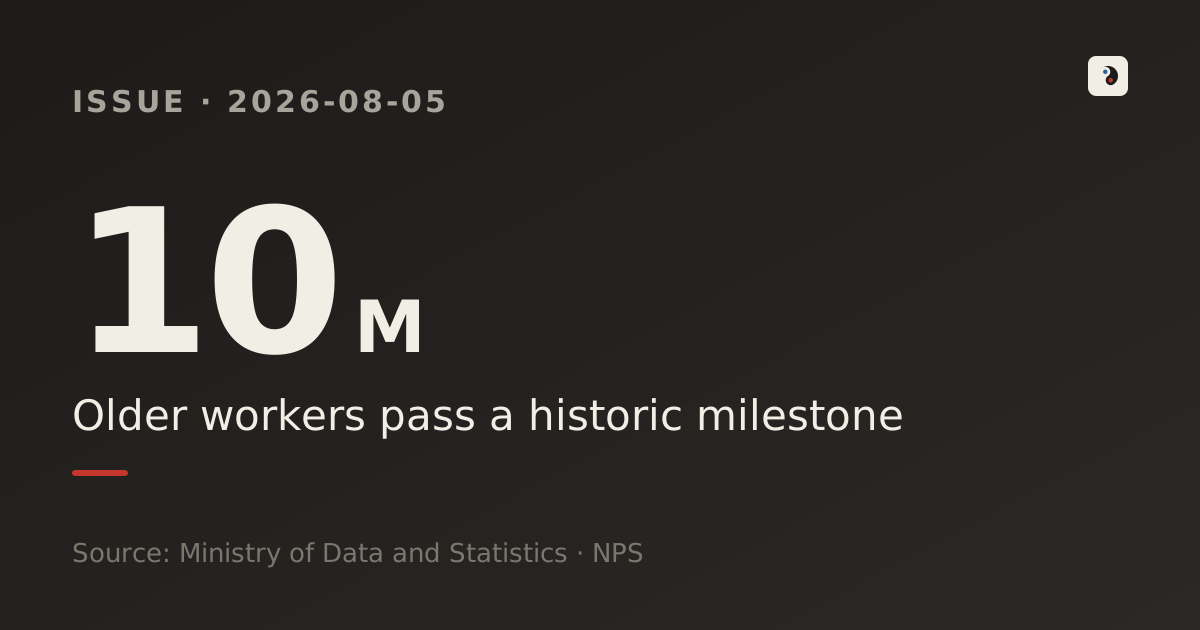
Koreans aged 55-79 in work topped 10 million for the first time. Why they leave jobs at 53 yet hope to work until 73.6, what 29 sidecar halts in six months say about the KOSPI's 3.76% surge, and the price math behind 1.44 million Galaxy Z8 presales — all in numbers.
Korea Doubles Top Property Tax, KOSPI Sinks 5.12%, K-Beauty Grows 10x in Brazil
Korea's 2026 tax reform doubles the top property tax - and 64% of its 3.4tn won revenue gain comes from that single levy. Plus the structure behind the KOSPI's 5.12% plunge and K-beauty's 10x surge in Brazil.