Korea Doubles Top Property Tax, KOSPI Sinks 5.12%, K-Beauty Grows 10x in Brazil
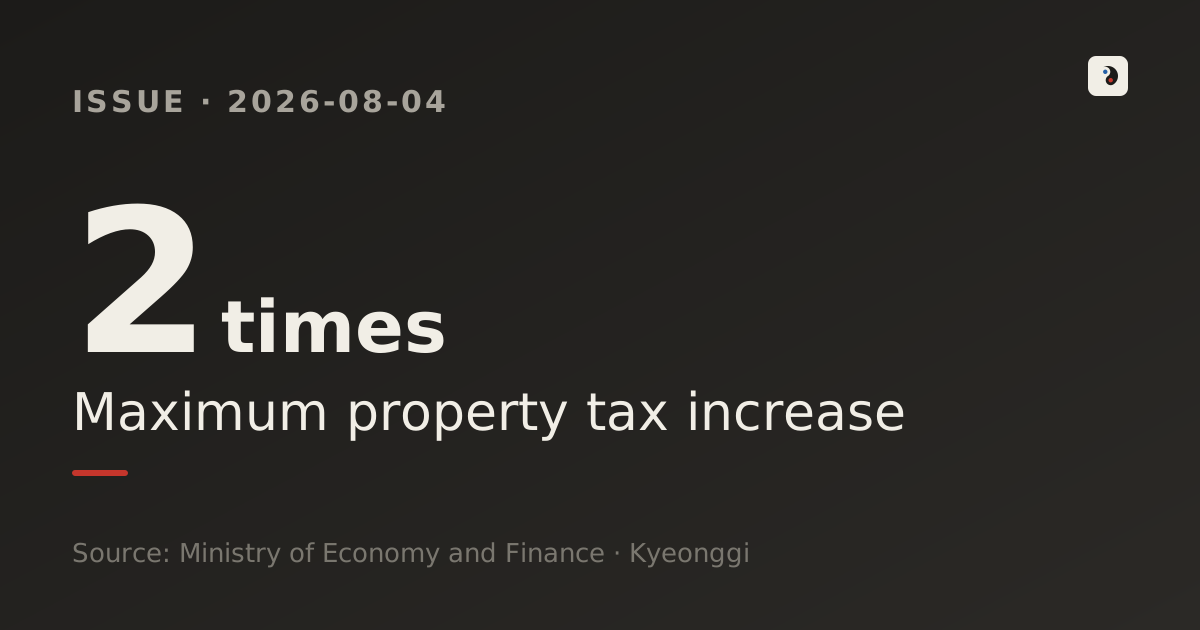
A tax plan that doubles the top property levy, a KOSPI that shed over 5% in a day, and Korean beauty exports growing tenfold in Brazil - today's three issues, read with background figures and outlooks you won't find in the original reports.
Property Tax Up to 2x, Deduction Capped at 1bn Won - Where the 3.4tn Reform Aims
Korea's priciest homes face up to double the comprehensive real estate tax, and the single-home capital gains deduction gets its first-ever cap. We trace where 64% of the 3.4-trillion-won revenue effect actually comes from.
The 2026 tax reform Korea's government finalized on August 3 takes unmistakable aim at one target: real estate.
The package amends 11 tax laws at once, cutting taxes for growth and household support while raising them on expensive homes. Single homes worth over 2 billion won at market price (1.4 billion won assessed) - roughly the top 2% - will owe the comprehensive real estate tax, and homes above 4 billion won face rates up to nearly double. The government expects the overhaul to add 3.4 trillion won in revenue over five years.
By the end of this piece, you will know what the 13 trillion and the 64% hiding behind that 3.4 trillion figure mean.
3.4 trillion and 13.3 trillion: two faces of one reform
The five-year net revenue effect is +3.4 trillion won, but by the cumulative method, Financial Today reports, the 2027-2031 total reaches 13.3 trillion won. The 3.4 trillion is what remains after tax cuts offset tax hikes - and a single item, the property tax, contributes 2.1815 trillion won over five years, about 64% of the net increase (Kyeonggi Shinmun). In effect, the reform's funding leans almost entirely on owners of high-priced homes.
Why the 1-billion-won deduction cap arrives in steps
The long-term holding deduction, which shaved up to 80% off a single homeowner's capital gains, gets its first ceiling: unlimited through 2027, 2 billion won in 2028, then 1 billion won from 2029. The staircase gives the market time to adjust while dulling the appeal of parking wealth in one expensive home. Kyunghyang Shinmun notes, though, that many popular districts such as Mapo, Yongsan and Seongdong fall under the 2-billion-won threshold - calling it half a reform.
Now it goes to parliament
The bill enters public notice August 4-20, passes the cabinet meeting on September 1, and reaches the National Assembly before September 3 - where the property tax and the deduction cap, both contentious, could still change.
One thing to remember: this reform's money comes not from everyone, but from the top 2% of homes worth over 2 billion won.
-5.12% the Day After a Record Rally - the Structure Behind the Panic
The KOSPI fell 5.12% and SK Hynix 8.8% - but the real culprit was the market's structure, not the news. The quiet 2.3-trillion-won chip deal signed the same week completes the picture.
Before the euphoria of a record rally could fade, the market flipped to fear in a single day.
On August 3 the KOSPI dropped 338.00 points (-5.12%) to 6,257.45. Samsung Electronics closed 8.76% lower at 239,500 won and SK Hynix fell 8.80% to 1,567,000 won, with Money Today's market wrap quoting retail investors crying out for a rescue team. The plunge came right after both stocks logged their best one-day gains on Friday, July 31 (CNBC), which made the drop feel even steeper.
Read to the end and you will be able to tell what actually broke - and what did not.
The panic was built by structure, not news
Break the session down and the semiconductor sector's average fall (-7.99%) runs far deeper than the KOSPI's (-5.12%) (Joongang Economy News). In a market whose two largest stocks are both chipmakers, when the sector coughs the whole index catches a cold. Timing mattered too: money that piled in on leverage during a short surge jumps out first on the pullback, making the day after a record rally psychologically the most fragile day of all.
Meanwhile, 2.3 trillion won moved quietly
Three days before the panic, on July 31, Doosan agreed to buy SK's 70.61% stake in wafer maker SK Siltron for 2.3 trillion won (Asiae). Siltron, Korea's only semiconductor wafer maker, posted about 2 trillion won in revenue and over 400 billion won in operating profit last year. Doosan, which entered chip testing with Doosan Tesna in 2022, now adds front-end materials and targets 3 trillion won in chip revenue by 2031, while SK uses the proceeds to shore up its finances. Even as prices swung 5% in a day, the industry's long game kept moving.
Today's contrast to keep: prices can swing -8.8% in a day, but the industry's realignment - from wafers to testing - moves in years.
10x in Five Years - the New K-Beauty Playbook Written in Brazil
Korean cosmetics exports to Brazil jumped from $5.18M to $54.3M in five years. Yet Korea still holds just 0.16% of the world's No. 3 market - which is where the real story begins.
It took exactly five years for Korean cosmetics to earn a place on Brazilian vanity tables.
Korea's cosmetics exports to Brazil surged more than tenfold, from $5.18 million in 2020 to $54.3 million in 2025 (News1). Brazil is the world's third-largest cosmetics market after the US and China, worth about $34 billion a year (roughly 49.86 trillion won). Last week's presidential visit to Brazil, joined by a delegation of K-beauty CEOs, underlined how much weight the market now carries.
By the end, you will see where the growth headroom bigger than 10x actually lies.
Tenfold - and still just 0.16%
Ten times in five years works out to roughly 60% average annual growth. Yet set that $54.3 million against Brazil's total market of about $34 billion and it amounts to just 0.16%. That contrast is the aspirational core: explosive growth, and still only the entrance. A growth curve proven in North America and Southeast Asia has completed just its first lap in South America - which is exactly why companies are racing to build beachheads now.
From viral buzz to trench warfare
Early K-beauty grew on social-media buzz; the Brazil push is heavier. Amorepacific is widening local distribution, APR is placing Medicube into drugstores, and Goodai Global put Beauty of Joseon into Sephora, the key channel (E-Today). In Newspim interviews, local experts named the key to success not flashy marketing but regulatory predictability - the ability to clear health-authority approvals reliably. The rules of the game have shifted from selling a trend to planting a system.
Today's lesson: the real opportunity is not the number that grew 10x - it is the 99.84% of the market still left.
All three pieces today are nuloq's own analysis, layering public data - ministry releases, exchange closing prices, export statistics - over the original reporting, written with the help of AI tools; the sources behind every figure are noted in each card's link, text and infographic.
Related posts
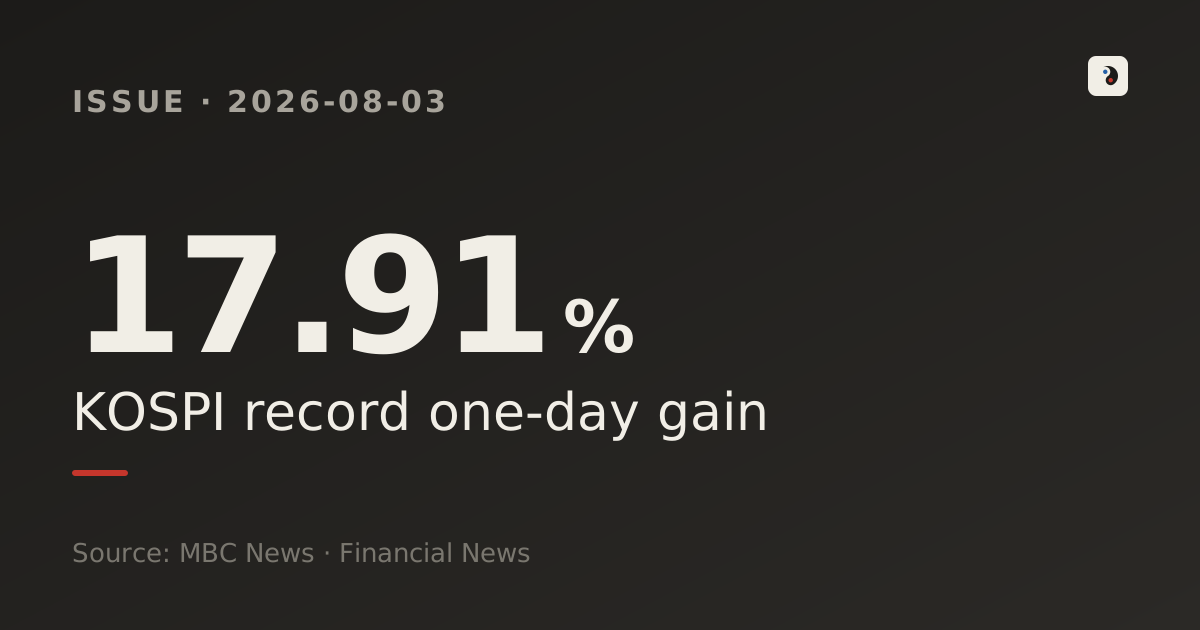
KOSPI Surged a Record 17.91% in One Day — What SK Hynix's Limit-Up Really Means
KOSPI jumped a record 17.91% in one day and SK Hynix hit its price limit for the first time in 17 years. Here's the data behind Korea's wild semiconductor rally.
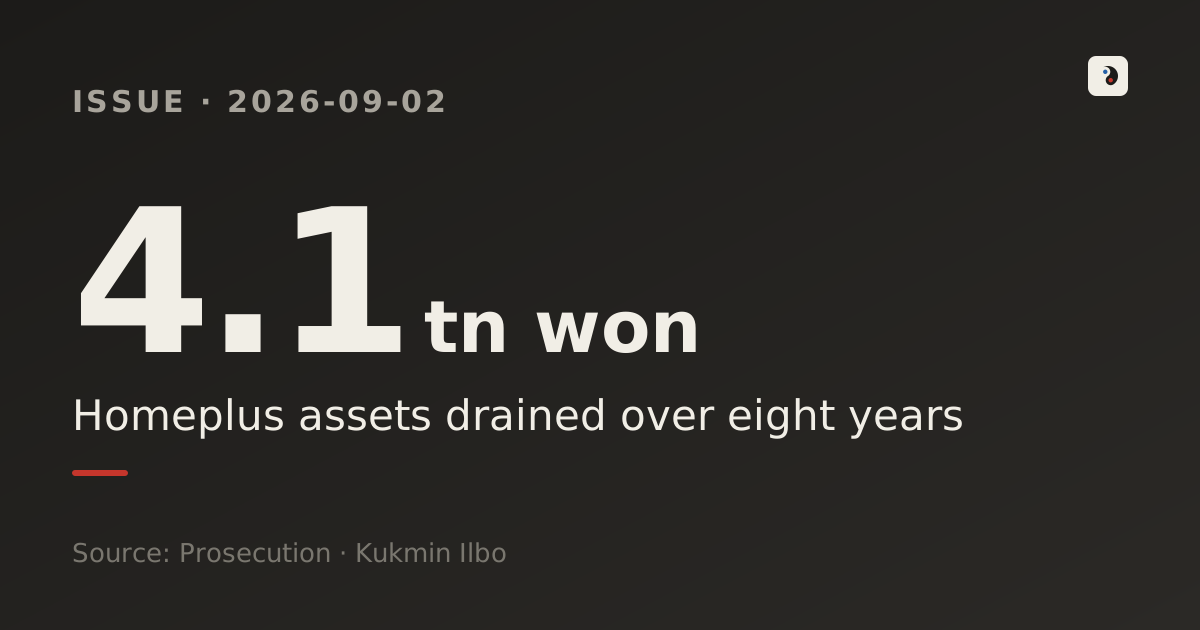
Homeplus Creditor Vote: MBK's ₩4.1 Trillion Exit, ₩1.9 Trillion Accounting Mystery
Creditors voted Sept. 2 on Homeplus's fate. Here's how MBK drained ₩4.1 trillion from the retailer over eight years, then turned ₩1.9 trillion of debt into equity six days before its rehabilitation filing.
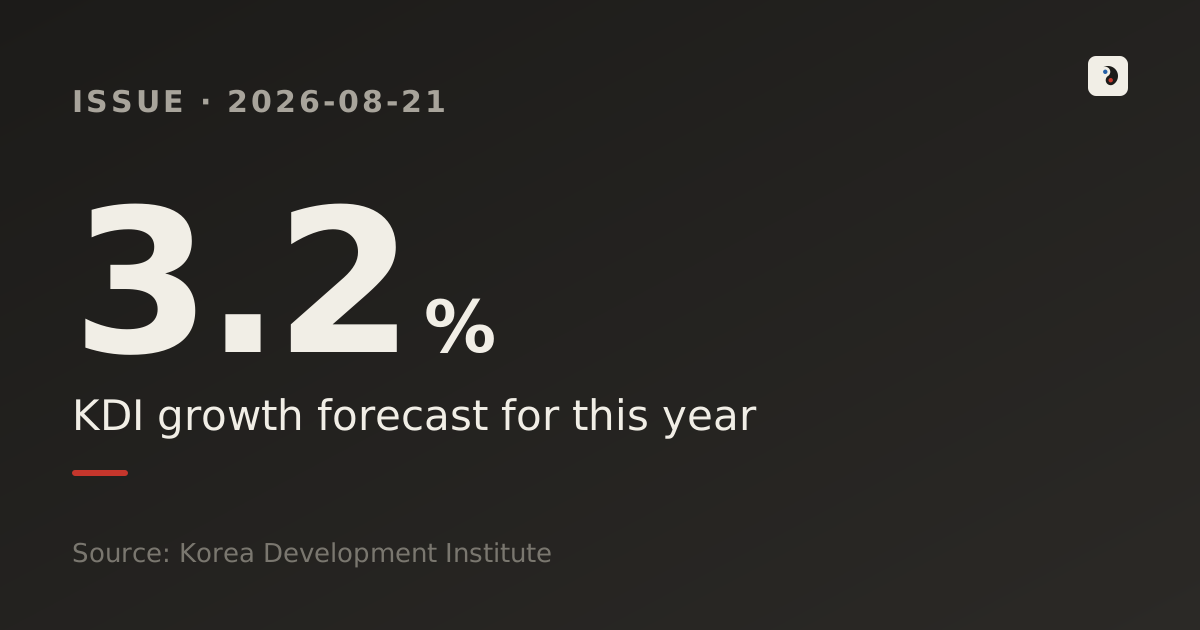
Korea's Growth Forecast Hits 3.2% — So Why Are New Jobs Falling?
KDI raised South Korea's 2026 growth forecast to 3.2% in 3 months on a chip boom — but new-jobs forecast fell from 170,000 to 110,000. The numbers, explained.
Korea Doubles Housing Loans, Adds 230,000 Homes — Will It Work?
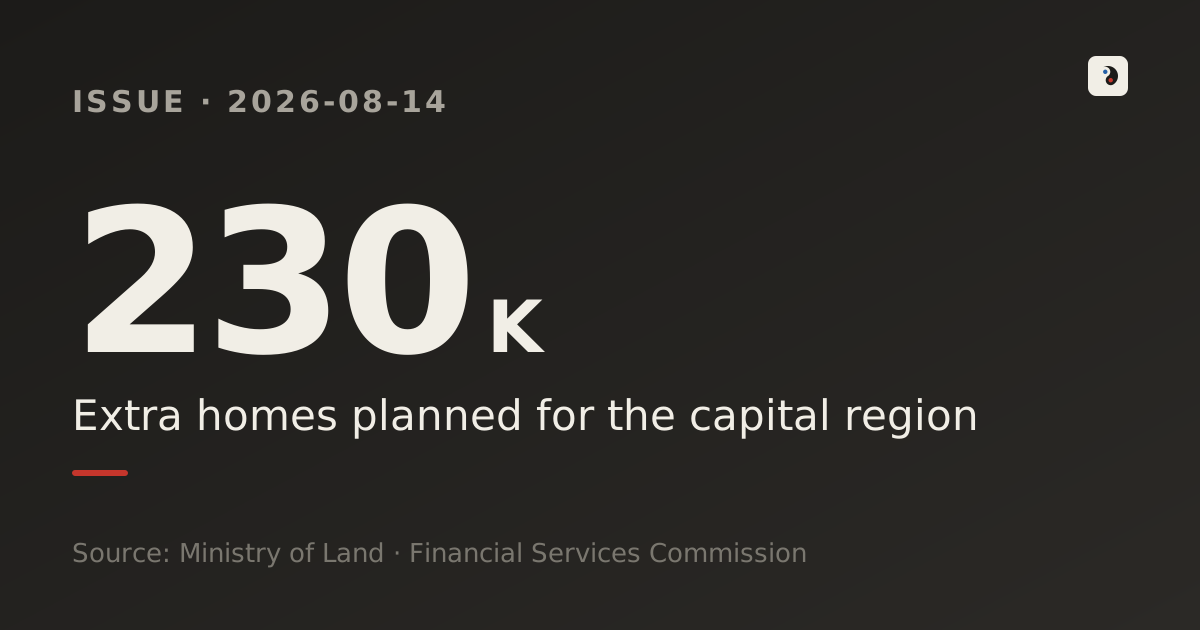
Korea unveiled a housing plan on Aug. 13 adding 230,000+ homes and doubling household loan quotas, as Seoul's jeonse prices rose six times faster than a year ago. Here's whether it can actually cool the market.