2026-07-24 KOSPI Crashes 5.72%, US Locks In 12.5% Korea Tariff, and a 3-Million-Album Rookie
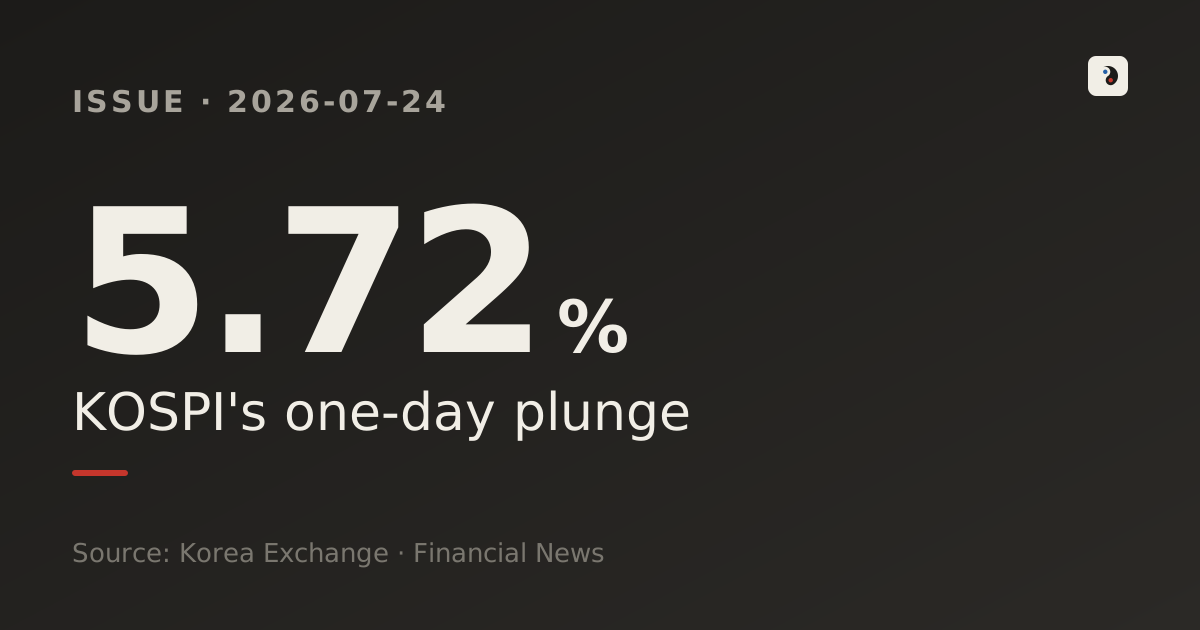
A 406-point KOSPI wipeout, a 12.5% US tariff kicking in at 1:01 p.m., and a rookie group passing 3.09 million albums in one day — we read all three through crash history, tariff-cap math and sales curves the original reports don't give you.
KOSPI Falls 5.72% — How It Compares to the 8.39% COVID Crash
The KOSPI shed 406 points to the 6,690 level and sell-side sidecars halted program trading in both markets. Here are the three stacked triggers, and where today truly ranks among Korea's historic crashes.
Today's KOSPI chart looked less like a graph than a cliff.
The index closed July 24 at 6,690.62, down 406.27 points (5.72%), while the KOSDAQ fell 5.32% to 748.22. As losses deepened, sidecar halts on program selling were triggered in both markets; foreign investors dumped roughly 3.3 trillion won and institutions 1.95 trillion won, against 5.18 trillion won of net buying by retail investors (Fnnews, Asia Economy Daily).
By the end of this card you'll know the three stacked triggers — and where today actually sits in Korea's crash history.
Three layers of bad news
The trigger was the Middle East: President Trump signaled he is weighing a large-scale strike on Iran, pushing Brent crude above $100 a barrel and WTI past $90 (Hankook Ilbo), while oil-driven inflation fears drove the 10-year US Treasury yield above 4.7%. Stack on the US forced-labor tariffs on 60 countries taking effect the same day and mounting worries over AI capital spending (Fnnews), and rate-sensitive chip giants Samsung Electronics (-7.59%, 249,500 won) and SK Hynix (-8.34%, 1,759,000 won) dragged the index down.
Against history's worst days
By Korea Exchange records, the KOSPI's worst single-day falls were -12.02% on September 12, 2001 (right after 9/11), -10.57% on October 24, 2008 (global financial crisis) and -8.39% on March 19, 2020 (COVID panic). Today's -5.72% is roughly half those — but unlike them, it came without a systemic financial crisis, driven purely by macro variables: oil, rates and tariffs. Retail investors absorbing over 5 trillion won of selling also sets this day apart from past panics.
Until oil and rates turn, it is safer to treat today's crash as a live variable, not a storm that has passed.
The 12.5% Tariff Effective at 1:01 p.m. — 3 Things to Check
The US finalized forced-labor tariffs of 10-12.5% on 60 countries, with Korea in the top 12.5% bracket from July 24. Here is how the cap structure differs from the old 10% tariff, and what exporters should verify now.
As a 150-day tariff expired, a heavier one arrived in its place.
After the US Supreme Court ruled reciprocal tariffs unlawful in February, a temporary 10% global tariff under Section 122 of the Trade Act ran for 150 days and expired on July 24. Washington filled the gap with Section 301 'forced-labor' tariffs, finalizing 10-12.5% on 60 countries; Korea, like Japan and Switzerland, sits in the top 12.5% bracket, effective 12:01 a.m. US Eastern time — 1:01 p.m. in Korea (Hankook Ilbo, Kyunghyang Shinmun).
Read on to see how the rate is actually calculated, and what the next risk is.
From 10% to 12.5% — a capped structure
This tariff works as a total-burden cap, not a flat surcharge: items currently below 12.5% rise only up to 12.5%, and items already above it face no extra duty (Kyunghyang Shinmun). On average that makes it up to 2.5 percentage points heavier than the expired 10% global tariff. Industry Minister Kim Jung-kwan met US Commerce Secretary Lutnick (July 22-23) and trade chief Yeo Han-koo met USTR Representative Greer (July 21) to push for 10%, but the 12.5% rate was confirmed unchanged (Fnnews).
The next variable: 'overproduction' tariffs
Separately from forced labor, the USTR has been investigating tariffs premised on 'overproduction'. Seoul's worry is that combined duties could breach the 15% cap set in the Korea-US trade agreement; the US reaffirmed the same day that it will honor the 15% cap (Fnnews). Whether that cap actually holds is the key thing to watch from here.
Tariffs are now a constant — knowing the cap structure, not just the headline rate, is what limits the damage.
3.09M Albums in 11 Months — Why Do Fandoms Still Buy CDs?
CORTIS's second EP topped 3.09 million copies in 11 weeks, becoming 2026's second triple-million seller. We break down the structure that sells physical albums in the streaming era.
In an age when music lives on streaming, a group eleven months into its debut sold 3.09 million CDs.
CORTIS's second mini album 'GREENGREEN' passed 3.09 million cumulative copies (Circle Chart tally) eleven weeks after release, becoming a triple-million seller (News1). About 1.2 million copies sold on release day alone (Herald Muse), and it is only the second album released in Korea this year to clear 3 million, after BTS's 'ARIRANG' (Herald Business).
This card shows, in numbers, what structure — rather than what music — produces sales like this.
From 2.15M to 3.09M — a steepening fandom curve
CORTIS's debut mini album sold 2.15 million copies. The second EP's 3.09 million is 44% more, lifting cumulative sales to 5.25 million within eleven months of debut (News1). Step-change growth with every release signals that the fandom's size and buying intensity are growing each cycle — more than the music alone improving.
Why fandoms buy the physical object
The 1.2 million first-day copies are the clue. A physical album is less a playback medium than merchandise carrying member photocards, a raffle ticket for fan-signing events, and above all a vote recorded on the fandom's scoreboard of first-week sales and chart ranks. That concentrates buying on release day and normalizes multiple copies per fan. Three million copies measures less a revival of recorded music than the scale of an organized fandom economy.
Album sales are no longer music's report card — they are the scoreboard of how organized a fandom economy has become.
Each issue is nuloq's own analysis, drawing on the original reporting and public data (official statistics and institutional sources), written with the help of AI. See each card's link and in-text citations for sources.
Related posts
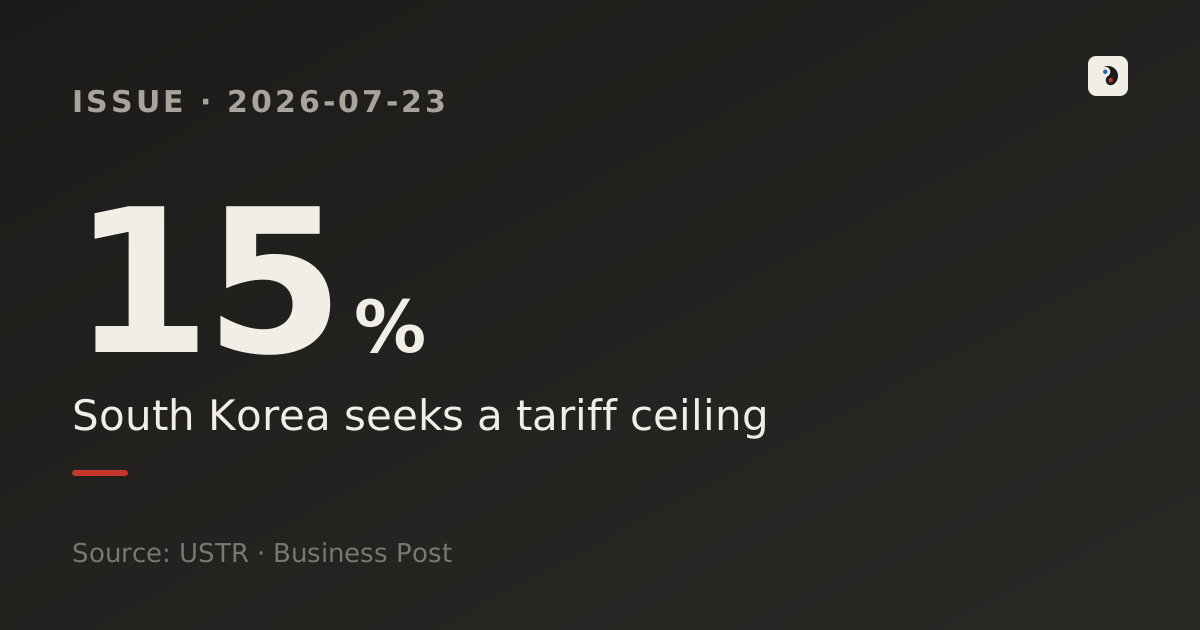
2026-07-23 US Tariff Deadline, Korea's 15% Cap, a 37°C Heatwave and China's 15-Trillion-Won DRAM IPO
A briefing on tariffs, 37°C heat and a Chinese chip IPO. Heat-illness figures cover the 12 days from July 20 to 31, 2025.
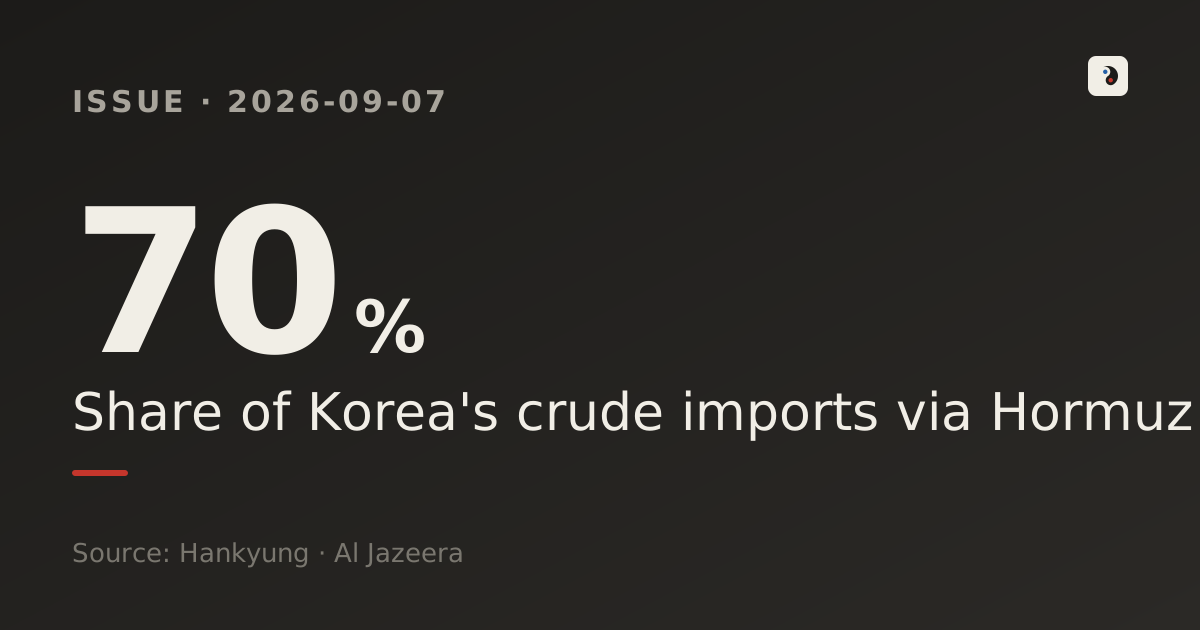
150 Troops, 70% of Oil: South Korea's Hormuz Dilemma by the Numbers
Squeezed between US pressure and Iran's war warning, South Korea is weighing sending 150 troops to the Strait of Hormuz — the route for 70% of its oil imports. Here's the dilemma in numbers.
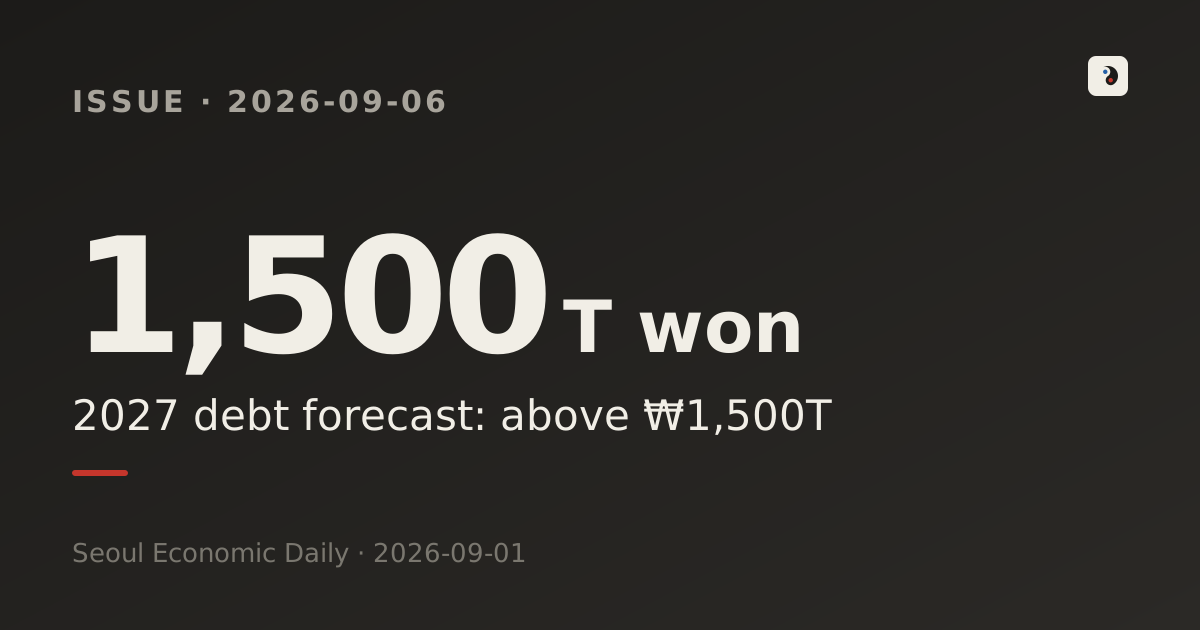
Welfare ₩148.8tn, National Debt ₩1,519.8tn — What Is the 48.3% Ratio Divided By?
We separate the two ways of counting the welfare ministry's budget, and correct the denominator of the national debt ratio to nominal GDP. We hold back judgment on why the ratio falls until the official GDP assumption can be checked, and we found no confirmed evidence that the future response fund caused the ₩106 trillion rise in debt.
A 5-Year-Old Text Threatens Korea's Justice Minister Pick
Justice minister nominee Kim Seung-won sent a text in 2021 asking regulators to speed up a drug trial approval. Five years on, that message is the flashpoint of his September 15 confirmation hearing.