KOSPI Crashes 10.84%, Worst Day Since 9/11 — Plus Korea's Record 6.7% Welfare Hike
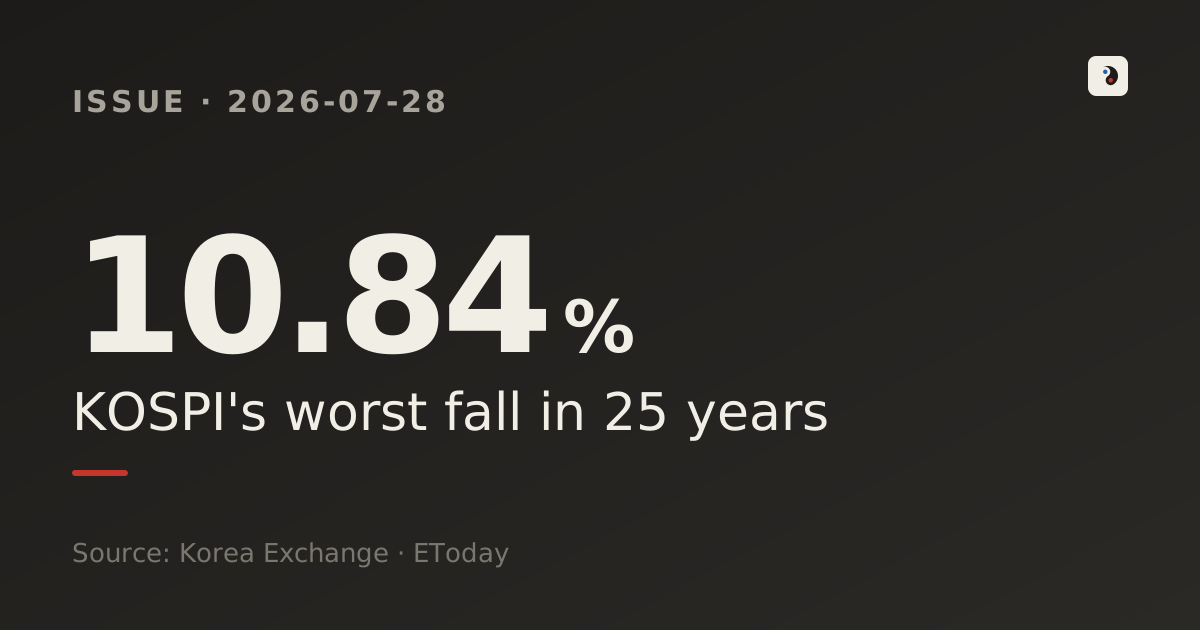
A 10.84% KOSPI crash, a record 6.7% welfare benchmark hike, and a heat-illness curve bending sharply upward after the monsoon — we read today's three numbers against historical records, policy mechanics and age data that the original reports leave out.
KOSPI −10.84%: The Biggest One-Day Fall Since 9/11, Explained
Samsung fell 13.39% and SK Hynix 14.65% on a day that triggered a full circuit breaker. We rank this crash against 25 years of records and weigh what the 'China shock' really means for memory chips.
From 6,755 to 6,023 — the KOSPI erased 732 points in a single session.
On July 28 the index closed at 6,023.66, down 10.84%, after a sell-side 'sidecar' halt at 9:06 a.m. and a 20-minute circuit breaker at 10:13 a.m. (Financial News). Samsung Electronics ended 13.39% lower at 220,000 won and SK Hynix lost 14.65% to 1.55 million won (Etoday). The trigger: a soaring Shanghai debut by China's memory maker CXMT and reports that China has begun localizing DUV lithography equipment (Money Today).
Read on to see where this fall ranks in market history — and how much weight 'made in China' actually carries here.
The biggest drop in 25 years
Against Korea Exchange daily records, −10.84% is the sharpest one-day fall since September 12, 2001 (−12.02%), right after the 9/11 attacks — deeper than the COVID crash of March 19, 2020 (−8.39%) and the August 2024 'Black Monday' (−8.77%). But those were demand shocks that markets recovered from within months; this one begins to price in a change to the supply structure of the memory industry itself.
Two Chinese headlines landed at once
CXMT reportedly surged 465% on its Shanghai debut (Money Today) — a signal that Chinese capital is piling into domestic memory. The same day brought reports that China has started localizing DUV lithography, a market ASML has all but monopolized. DUV is a generation behind EUV, yet it decides cost competitiveness in mature-node and legacy memory production. SK Hynix now trades more than 48% below its June 25 record of 2,987,000 won (Etoday) — a measure of how much 'no Chinese competition' was priced into the AI memory supercycle. The won also slid back into the 1,470-per-dollar range (Businesskorea).
The record matters less than the reason: for the first time, the market has started pricing memory chips for a world where China has caught up.
Korea's Welfare Benchmark Up a Record 6.7% — 4 New Thresholds to Check
The standard median income — the line that decides welfare eligibility in Korea — rises 6.7% next year to 6,929,885 won for a family of four, the biggest hike on record. Here are the four new benefit thresholds in plain numbers.
The line that decides who qualifies for welfare in Korea just made its biggest move ever.
On July 28, the Ministry of Health and Welfare's Central Livelihood Security Committee set the 2027 standard median income at 6,929,885 won a month for a four-person household — up 6.70% from 6,494,738 won, the largest increase since the system began in 2015 (Herald Business). For single households it rises from 2,564,238 to 2,736,042 won, a gain of 171,804 won a month. The selection ratios stay unchanged: livelihood benefit at 32% of the benchmark, medical at 40%, housing at 48%, education at 50% (Korea Policy Briefing).
By the end of this card you'll be able to place your own household against the new lines in about three minutes.
Why 6.7%? The formula itself changed
Behind the record number is the first overhaul of the calculation method in six years: instead of relying only on a three-year average of survey-based median income growth, the formula now also reflects consumer prices and real GDP growth (Korea Policy Briefing). The government framed it as a response to 'K-shaped' polarization — a higher line pulls more borderline households into eligibility at the same income. For a single household, +171,804 won a month compounds to roughly 2.06 million won a year.
How to check your own threshold
The ratios are unchanged, so multiply the new benchmark: for a four-person household, livelihood benefit applies below roughly 2.22 million won (32%), medical below about 2.77 million (40%), housing below about 3.33 million (48%), and education below about 3.46 million (50%). Actual eligibility uses 'recognized income', which also converts assets — so confirm through the Bokjiro portal (bokjiro.go.kr) or your local community service center.
The line moved up while the ratios stood still — if your household just missed the cut last year, next year deserves a recalculation.
1,399 Heat-Illness Cases 'Look Mild' — Why Korea's Real Risk Starts Now
Korea's heat-illness count is only 60% of last year's — yet daily cases quadrupled from 19 to 80 within five days of the monsoon ending. Here's why the reassuring average hides a rising curve.
On paper, this summer looked gentler than the last one — until last weekend.
The Korea Disease Control and Prevention Agency's ER surveillance counted 1,399 heat-illness patients and 8 deaths from May 15 to July 26 — about 60% of the 2,367 cases in the same period last year (Financial News). But once the monsoon ended, daily cases jumped from 19 on July 20 to 80 on July 25 — more than fourfold in five days. The weather agency forecasts full-scale heat nationwide from July 28, with tropical nights above 25°C and morning feels-like temperatures near 30°C in Seoul (YTN).
By the end you'll see who is at risk, and when — more clearly than any season average shows.
The illusion of 'milder than last year'
This year's low cumulative count isn't proof of a mild summer; the monsoon lingered into late July and simply delayed exposure. Judging risk by the running total dulls alertness at exactly the moment the curve turns — 302 cases were reported in just the last five days (Kyunghyang Shinmun). The dangerous number isn't the sum; it's the slope.
Risk is not distributed equally — 30% are 65 or older
People aged 65 and over account for 30.2% of patients, and of the 8 deaths, all but one person in their 50s were 65 or older (Financial News). Aging bodies sense thirst and regulate temperature less reliably, so 'I can bear it' fails as a warning signal. Livestock deaths — 302,454 animals so far — point the same way: heat stress is systemic, not anecdotal.
Trust the slope, not the average — Korea's real heat clock started ticking the week the monsoon ended.
The three pieces on this page are nuloq's own interpretation, layering public data — Korea Exchange records, the welfare committee's decision, KDCA surveillance figures — on top of the original reporting, written with the help of AI tools. Sources are noted in each card's link and in the text and charts.
Related posts
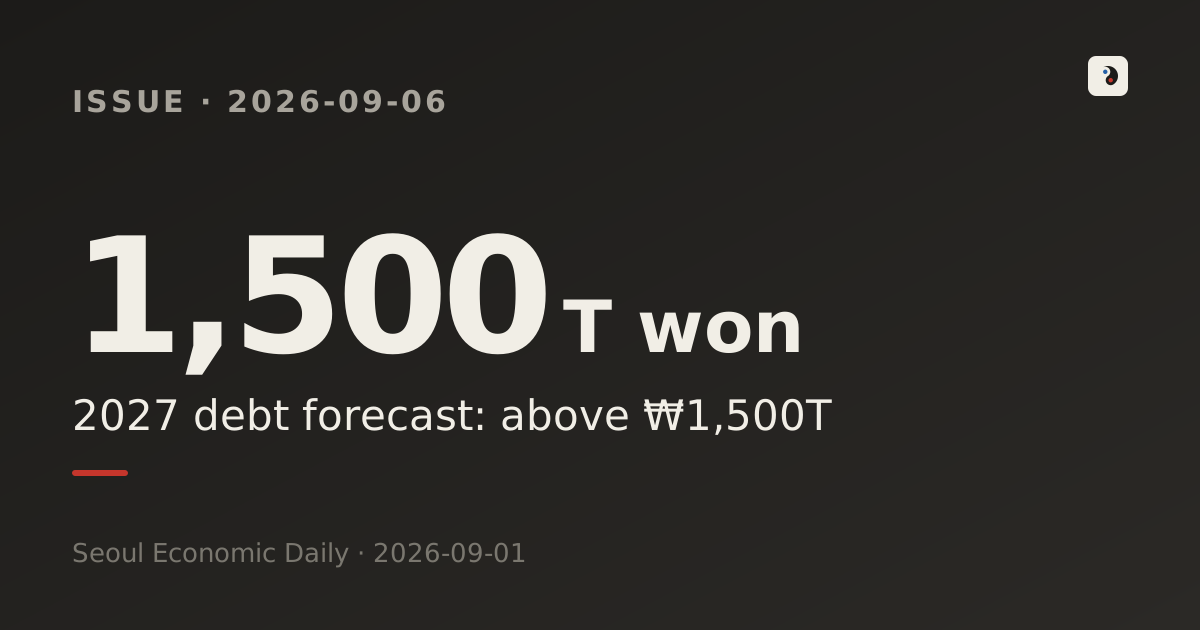
Welfare ₩148.8tn, National Debt ₩1,519.8tn — What Is the 48.3% Ratio Divided By?
We separate the two ways of counting the welfare ministry's budget, and correct the denominator of the national debt ratio to nominal GDP. We hold back judgment on why the ratio falls until the official GDP assumption can be checked, and we found no confirmed evidence that the future response fund caused the ₩106 trillion rise in debt.
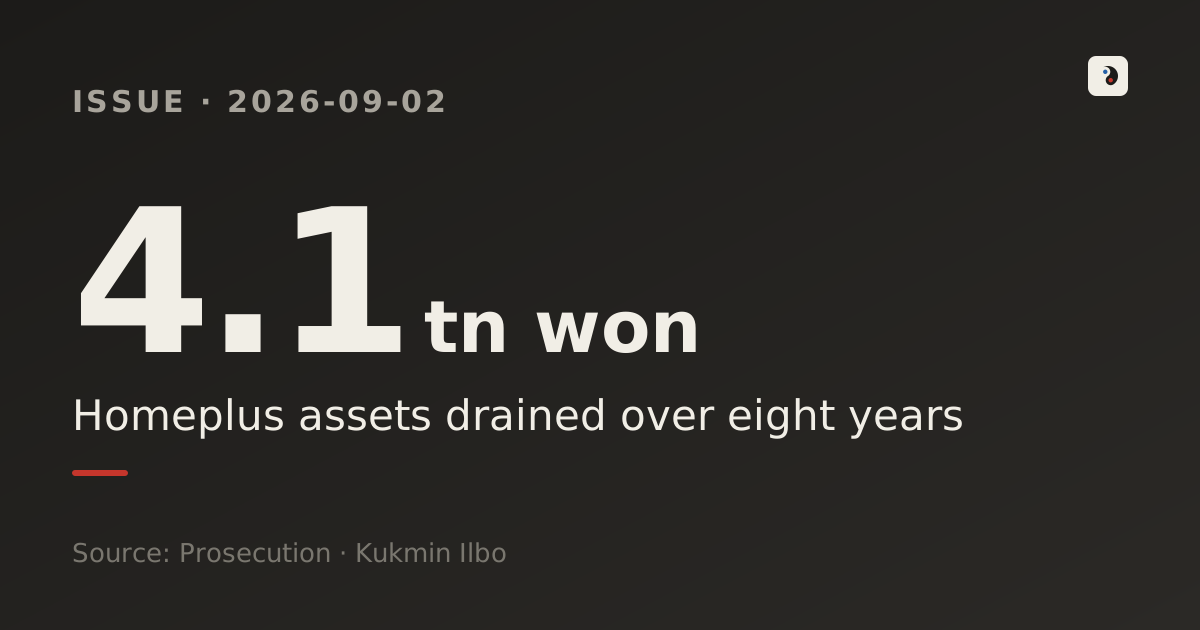
Homeplus Creditor Vote: MBK's ₩4.1 Trillion Exit, ₩1.9 Trillion Accounting Mystery
Creditors voted Sept. 2 on Homeplus's fate. Here's how MBK drained ₩4.1 trillion from the retailer over eight years, then turned ₩1.9 trillion of debt into equity six days before its rehabilitation filing.
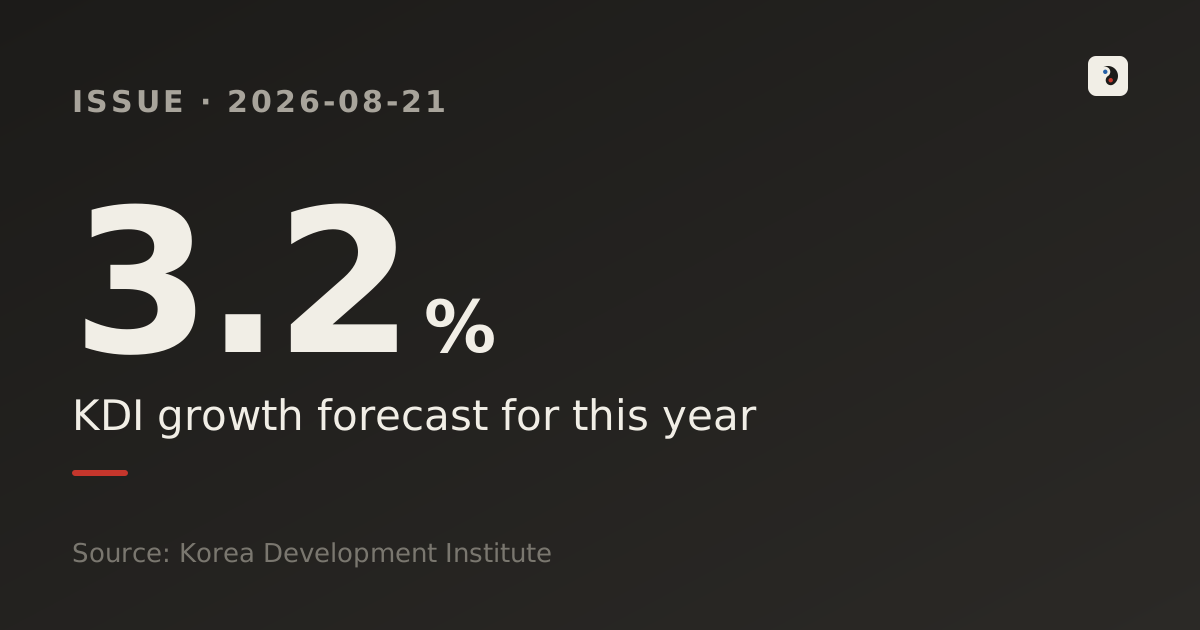
Korea's Growth Forecast Hits 3.2% — So Why Are New Jobs Falling?
KDI raised South Korea's 2026 growth forecast to 3.2% in 3 months on a chip boom — but new-jobs forecast fell from 170,000 to 110,000. The numbers, explained.
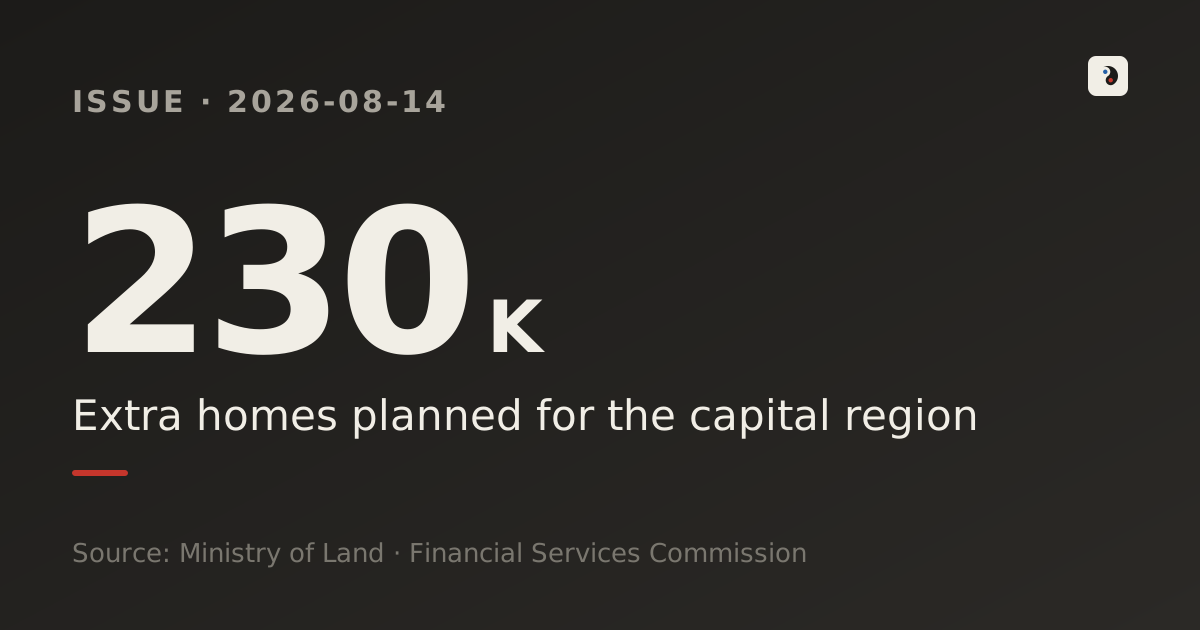
Korea Doubles Housing Loans, Adds 230,000 Homes — Will It Work?
Korea unveiled a housing plan on Aug. 13 adding 230,000+ homes and doubling household loan quotas, as Seoul's jeonse prices rose six times faster than a year ago. Here's whether it can actually cool the market.