Korea Doubles Housing Loans, Adds 230,000 Homes — Will It Work?
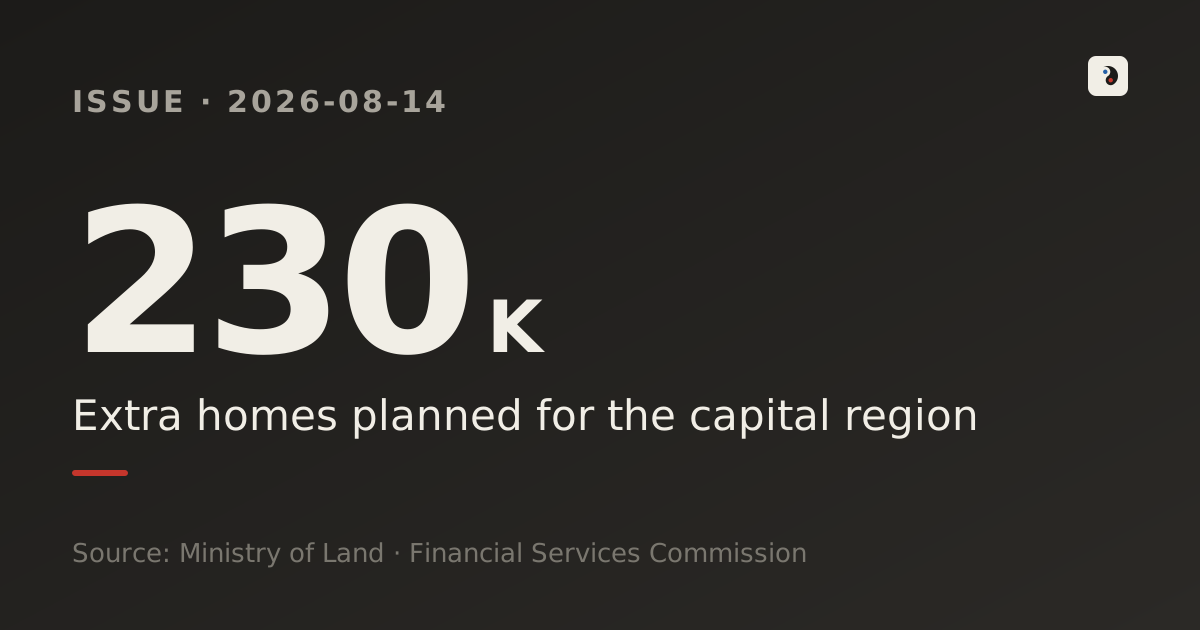
The government pledged 230,000 more homes for the Seoul metro area and doubled its household-loan ceiling — a high-stakes bet as Seoul's jeonse prices rise six times faster than a year ago.
- On August 13, the government unveiled its "8.13 housing measures," built around supplying 230,000+ homes in the Seoul metro area and expanding household loan capacity by roughly 28 trillion won.
- The plan opens up part of Seoul's greenbelt for housing sites and aims to cut the time from site announcement to groundbreaking from 68 months to 37 — but the 3rd New Towns project, which once promised a 30-month cut, ended up running up to 19 months late instead.
- The household loan growth target was doubled from 1.5% to 3.0%, yet critics warn ordinary buyers may not feel the difference soon, and the supply signal itself could stoke short-term price gains.
What happened
On August 13, Korea's Ministry of Land, Infrastructure and Transport (MOLIT) and the Financial Services Commission (FSC) held a joint briefing at the Government Complex Seoul to announce the "Rapid Housing Supply Plan for Stabilizing the Rental and Sales Markets" and a companion "Comprehensive Financial Plan for Real Estate Market Stability." Land Minister Kim Yun-deok and FSC Chairman Lee Euk-won presented together. Three numbers anchor the plan.
- 230,000+ additional homes for the Seoul metro area between 2026 and 2030
- The time from site announcement to groundbreaking cut from 68 months to 37 months
- This year's household loan growth target doubled, from 1.5% to 3.0%, freeing up roughly 28 trillion won in extra lending capacity
Three new public housing district candidates — Yeomchang-dong in Seoul's Gangseo district, Wabu-eup in Namyangju, and Jangji-dong in Gwangju, Gyeonggi Province — were named immediately, accounting for 27,200 homes. Sites for the remaining 73,000+ homes will be disclosed later this year.
Why now — the pressure of a rental squeeze
The plan responds to sale and rental prices that officials say have reached a breaking point in Seoul. As of May 2026, Seoul apartment jeonse prices — jeonse being Korea's lump-sum lease deposit system used instead of monthly rent — rose 0.28% for the month, more than double the national average of 0.11%. Over the past year, cumulative jeonse price growth hit 2.89%, roughly six times faster than the same period a year earlier. Seoul's jeonse listings have fallen more than 27% this year, as more tenants renew in place and fewer new units reach the market.
The roots trace back to a supply contraction that has continued since 2022. Expanded land-transaction permit zones and stricter owner-occupancy requirements slowed redevelopment and reconstruction projects, leaving new apartment supply unable to keep pace with demand. It's also worth noting that 8.13 is the current administration's third housing supply package, following measures on September 7 and January 29 — meaning the first two rounds failed to tame the market.
By the numbers
Financing also scaled up. Financial support for accelerating housing supply rose from 26.3 trillion won to 47.8 trillion won-plus. Public project-financing (PF) guarantees will expand over three years — 23 trillion won in 2026, 33 trillion won in 2027, and 30 trillion won in 2028.
Officials say the roughly 28-trillion-won loan expansion will go mainly toward easing funding strain for young and first-time buyers, plus relocation, interim, and balance loans tied to reconstruction and redevelopment projects.
The debate — cure or trigger?
Assessments are split. Supporters point to a real expansion in homeownership chances for young people and newlyweds. Skeptics raise two separate concerns.
First, doubling the loan growth target doesn't mean every bank lowers its lending bar uniformly — much of the added capacity is earmarked for supply-linked loans like relocation and interim payments, so ordinary mortgage borrowers may not feel relief right away. Second, the supply-expansion "signal" itself could stir buying sentiment and push prices up in the short term.
Ko Jun-seok, a professor at Yonsei University, said the plan "may bring a temporary psychological calm, but its actual price-stabilizing effect will likely be limited," adding that because new supply takes time to become move-in-ready homes, short-term measures to draw existing units onto the market are also needed. Political reaction is split too: the opposition attacked the plan as having "three things missing, starting with Seoul supply," while the ruling party pressed for faster legislation.
What's next — can the "37-month promise" hold?
If groundbreaking at the three named sites proceeds on schedule, a concrete "supply is coming" signal could take shape between 2026 and 2027 and help cool buying sentiment. If land-compensation disputes or greenbelt-release friction repeat instead, this plan risks joining the previous two as an announcement without a market effect. For actual buyers, the more telling signal may not be today's loan expansion but where the remaining 73,000-plus homes will be sited later this year, and whether groundbreaking at the three named sites actually happens on time.
- Housing rapid-supply plan and financial package [photo] — Etoday (이투데이) (2026.08.13)
- Seoul area to add ‘230,000+’ homes... loan quota doubled [Aug. 13 plan] — Financial News (파이낸셜뉴스) (2026.08.13)
- Public-site-to-groundbreaking time cut from 68 to 37 months [Aug. 13 plan] — Financial News (파이낸셜뉴스) (2026.08.13)
- Household loan ceiling doubled, +28 trillion won, focused on youth and real demand — Newspim (뉴스핌) (2026.08.13)
- Housing finance support expanded to 47.8 trillion won+, loan-quota rule eased from 1.5% to 3% — Getnews (게트뉴스) (2026.08.13)
- Government bets big on supply; experts say execution is what matters — Newstomato (뉴스토마토) (2026.08.13)
- Opposition blasts Aug. 13 plan as missing Seoul supply, among 'three gaps' — Iminju.net (민주신문) (2026.08.13)
- 3rd New Towns: government promised '-30 months', reality is 'up to +19 months' — Daum/News1 (다음) (2026.07.28)
This article is nuloq's own analysis, written with the help of AI tools, based on the MOLIT and FSC announcements and news coverage listed under Sources. It is for informational purposes only, not investment or legal advice, and reflects the situation as of August 14, 2026. We will update the text if figures or facts are corrected.
Related posts
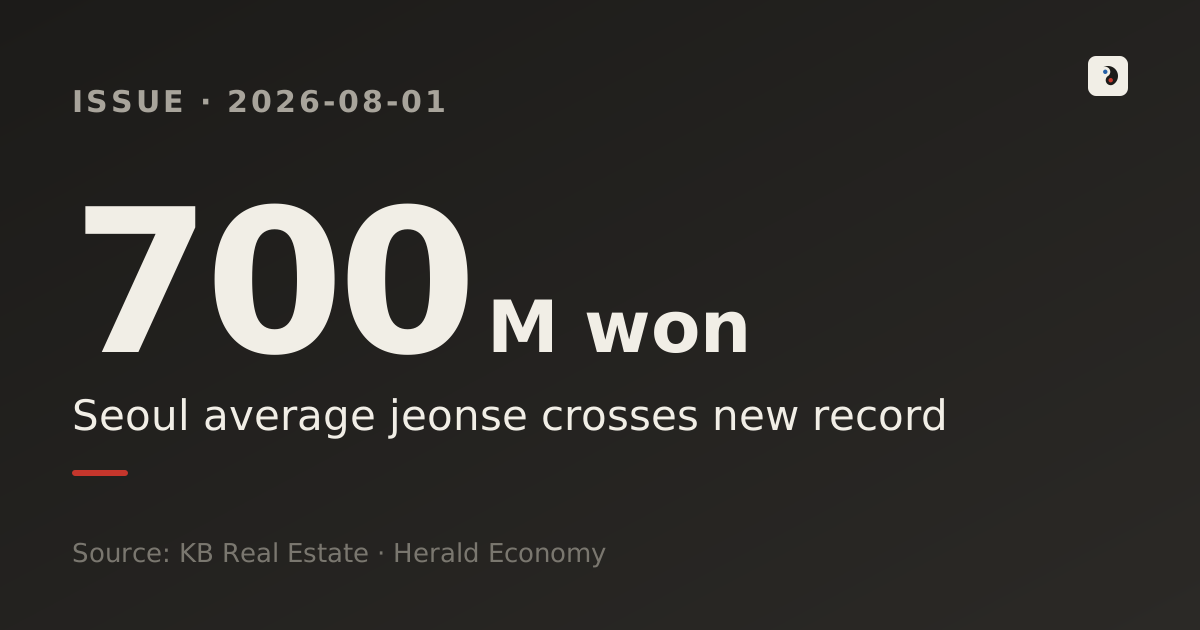
Seoul Jeonse Deposits Top ₩700 Million for the First Time as Supply Halves
Seoul's average apartment jeonse deposit hit ₩704.6 million in July, a record high. New housing supply just fell 48% — here's the data behind the crunch.
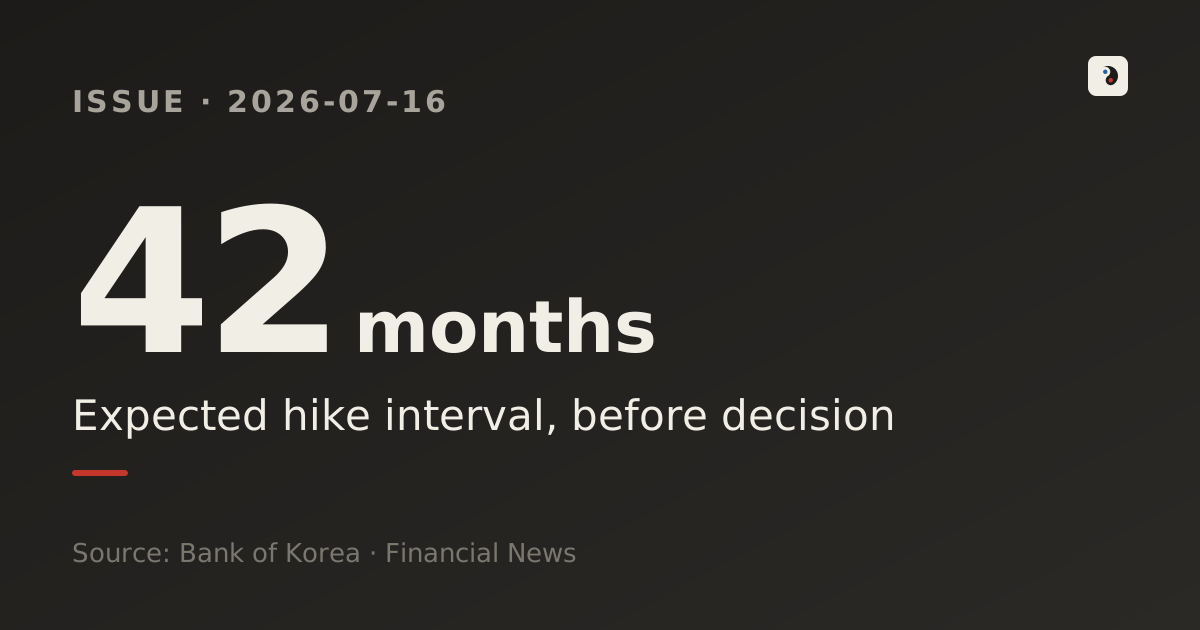
Analysis before the July 16 rate decision: the case for an expected hike
Analysis before the July 16 rate decision: the case for an expected hike
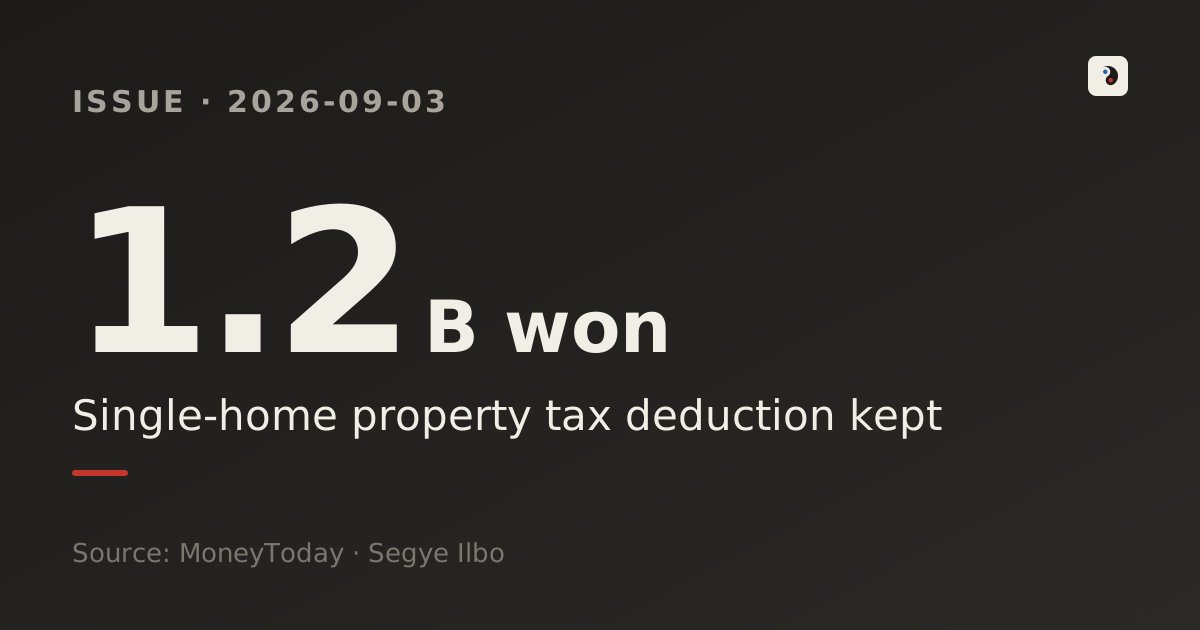
Korea's Property Tax U-Turn: Gangbuk Prices Jump, Not Gangnam
Seoul walked back a property-tax hike on non-resident owners — but Gangbuk apartments, not Gangnam's, are the ones rising. Here's why.
Homeplus Creditor Vote: MBK's ₩4.1 Trillion Exit, ₩1.9 Trillion Accounting Mystery
Creditors voted Sept. 2 on Homeplus's fate. Here's how MBK drained ₩4.1 trillion from the retailer over eight years, then turned ₩1.9 trillion of debt into equity six days before its rehabilitation filing.