Korea Raises Property Tax Exemption to ₩1.4 Billion, Multi-Home Owners Face 80% Rate
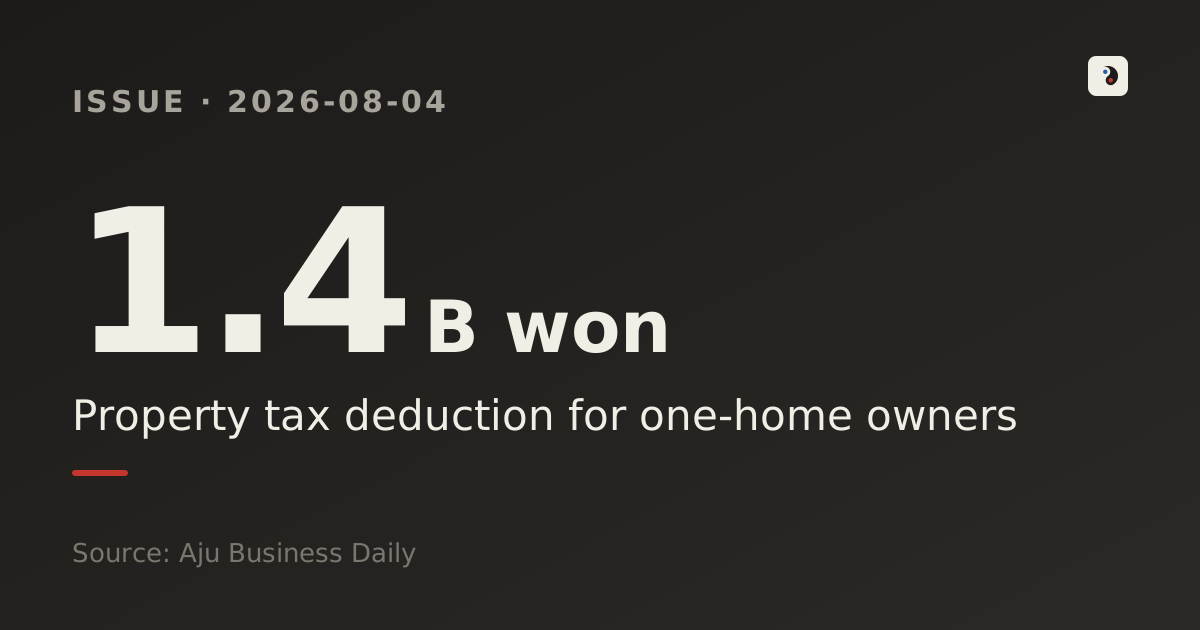
The day the government reviewed housing and stocks together, it unveiled its 2026 tax reform — here's the real math behind the numbers.
- On August 3, the government finalized its 2026 tax reform, raising the basic deduction for single-home owners' comprehensive property tax from 1.2 billion won to 1.4 billion won while pushing multi-home owners' fair-market-value ratio to as high as 80%, adding 3.4 trillion won in revenue.
- The move came the same day President Lee Jae-myung chaired a 7.5-hour meeting on real estate and the stock market right after returning from an overseas trip — part of a broader strategy to steer money out of housing and into equities.
- High-end single-home owners in Gangnam and the Han River belt face tax hikes of 40-70%, while owner-occupiers below roughly 2 billion won in market value are now exempt from the tax entirely.
What happened
President Lee Jae-myung returned to Seoul on August 3 after an 11-day trip to the United States and Latin America, and headed straight to the presidential office to chair a review meeting on real estate and the stock market. Starting at 3 p.m., the session ran for seven and a half hours — with Prime Minister Han Seong-sook, ministers from the land and finance ministries, and presidential aides in attendance — until it wrapped up at 10:30 p.m. That same day, the government's tax development deliberation committee finalized and announced the 2026 tax reform. Its centerpiece is a tighter comprehensive property tax (CPT) regime: the basic deduction for single-home, owner-occupying households rises from 1.2 billion won to 1.4 billion won, while taxes on multi-home owners and high-end properties climb sharply — a selective tax hike. The government expects the reform to add 3.4 trillion won in revenue.
Why now — treating real estate and stocks as one problem
There's a reason the two markets were reviewed together. Since taking office, the Lee administration has repeatedly urged citizens to put money into stocks instead of housing, hoping to relieve overheated pressure on Seoul home prices. In May, regulators allowed roughly a dozen 2x leveraged ETFs tracking Samsung Electronics and SK Hynix, and retail money poured in alongside an AI investment boom, driving KOSPI to a blistering rally at one point. But volatility has since spiked with a semiconductor sell-off, and late July even saw circuit-breaker-triggering crashes. Bloomberg described it as "the Lee Jae-myung brand that powered the KOSPI bull run now being tested by leverage ETFs."
The concern is that a shaky stock market could send money flowing back into real estate. Analysts have repeatedly warned that "cash left adrift by a market correction could migrate back into housing." Tightening property taxes at this particular moment reads as a preemptive move — closing off the channel through which stock-market volatility could reignite housing demand.
By the numbers
The reform's structural shift is simple to state: value now matters more than headcount. Instead of taxing based on how many homes someone owns, the system increasingly taxes based on the total value of what they own.
The burden on high-end single-home owners rises sharply. One estimate puts the CPT bill on a reference Gangnam apartment (Arifac, 84㎡) at 38.16 million won in 2026, climbing 61% to 61.42 million won in 2027. Another report says an Apgujeong Hyundai unit could see its holding tax rise by 50 million won a year once its assessed value reaches 7 billion won. Across Gangnam's three wealthiest districts and the Han River corridor, property tax increases on high-end homes generally cluster in the 40-70% range. Owner-occupiers below roughly 2 billion won in market value (1.4 billion won in assessed value), by contrast, are now exempt from the tax altogether.
Where views diverge
The opposition People Power Party has pushed back hard, arguing that "a government already collecting record surplus tax revenue from the semiconductor boom is now reaching for another 3.4 trillion won." Citing the higher fair-market-value ratio and a new cap on tax credits (which shrinks long-term-holding deductions), the party called it a "worst-ever reform that collects more, gives less, and dresses it up as relief." The ruling Democratic Party, for its part, has held off on an official response, striking a cautious tone.
Experts see it differently again. Many argue that tightening holding taxes alone won't normalize the housing market — that lowering transaction taxes first, to get more listings moving, would do more good. Notably, the government reinstated a heavier capital gains tax on multi-home sellers only to cut the rate again three months later, opening an "exit ramp." That sends mixed signals: squeeze owners who hold, but ease the path for those who sell — a contradiction now drawing its own criticism over policy consistency.
Zoom out, and this reform isn't a new direction so much as a familiar swing of the pendulum. The comprehensive property tax was first introduced in 2005 under President Roh Moo-hyun. The Moon Jae-in administration later tried to push assessed-value ratios toward 90%, triggering a tax backlash widely seen as one factor in its eventual loss of power. The Yoon Suk-yeol government then rolled assessed values back to 2021 levels, easing the burden. Lee's reform swings the pendulum toward tightening once again — but its shift to a value-based rather than headcount-based system marks a genuine design change from past overhauls.
What's next — the vote and the market's response
For the reform to take effect, it still needs to clear the National Assembly. If it passes, higher holding taxes on high-end single homes would first be felt in late 2027, while the broader restructuring of CPT rates and the tiered fair-market-value ratios would phase in starting 2028.
Two things are worth watching. One is whether tightening holding taxes without easing transaction taxes actually deepens the lock-in effect that keeps sellers off the market. The other is whether this move genuinely curbs the flow of money back into real estate as stock-market volatility continues. Having bundled housing and equities into one meeting and one tax reform, the Lee administration's experiment is now the one being tested.
- Lee Chairs 7+ Hour Meeting on Real Estate Right After Return: 'Supply Speed Is Crucial' — Herald Business (2026.08.03)
- President to Chair Real Estate, Stock Market Review Meeting Upon Return — Hankook Ilbo (2026.08.02)
- [2026 Tax Reform] Growth and Livelihood Tax Cuts, Stronger Real Estate Taxation — Revenue Up 3.4 Trillion Won — Ajunews (2026.08.03)
- [2026 Tax Reform] Comprehensive Property Tax Now Based on Total Home Value, Not Number of Homes — Ajunews (2026.08.03)
- High-End Single Homes Face Sharply Higher Property Tax Next Year: Arifac Case Study [2026 Tax Reform] — Financial News (2026.08.03)
- Targeting Gangnam Apartments: Apgujeong Hyundai Owners Could Pay 50 Million Won More a Year [2026 Tax Reform] — Seoul Economic Daily (2026.08.03)
- Opposition Calls It 'Worst Ever' Tax Reform, 'All Rhetoric, No Substance' [2026 Tax Code] — Herald Business (2026.08.03)
- Bloomberg: Lee Jae-myung's KOSPI Bull-Run Brand Tested by Leverage ETFs — Financial News (2026.07.20)
- Cash Adrift After Market Shock Eyes a Return to Real Estate — Newspim (2026.07.30)
This article is nuloq's own analysis of the reporting and government materials listed under Sources, written with the help of AI tools. It is for informational purposes only — not investment, legal, or medical advice — and reflects the situation as of writing (August 4, 2026). We correct the text if the facts change or errors are found.
Related posts
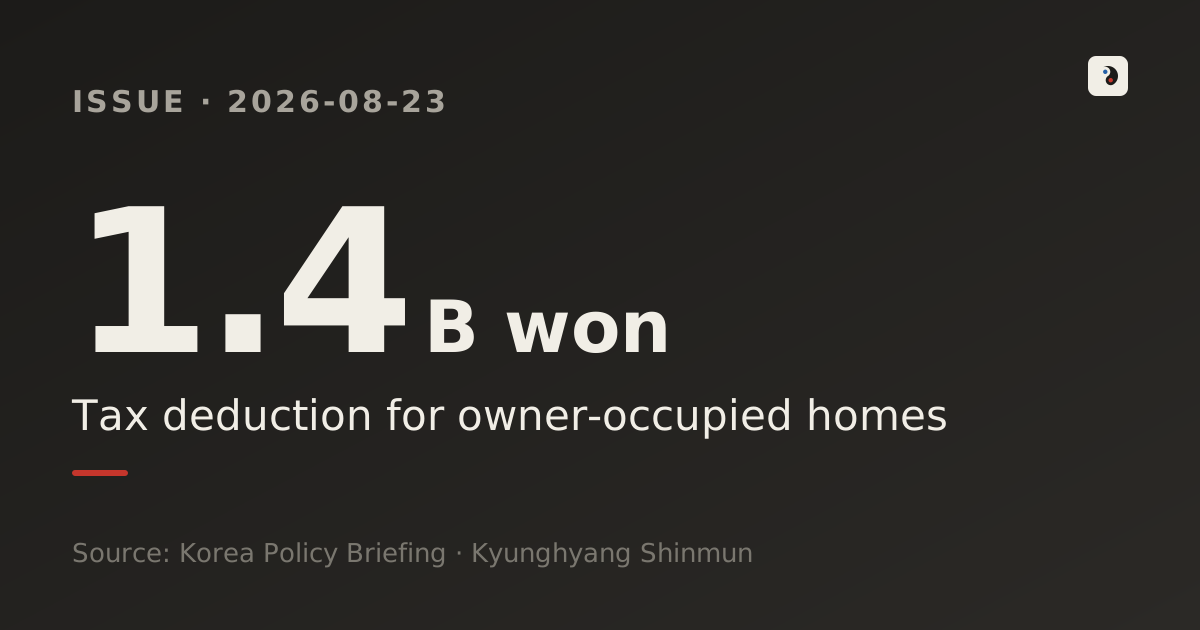
Korea's Property Tax Reform: 1.4bn Won Exemption for Residents, 900m for Absentees
Korea's 2026 tax reform raises the property-tax exemption to 1.4bn won for owner-occupiers, cuts it to 900m won for absentee owners. The data, history and fight behind the split.
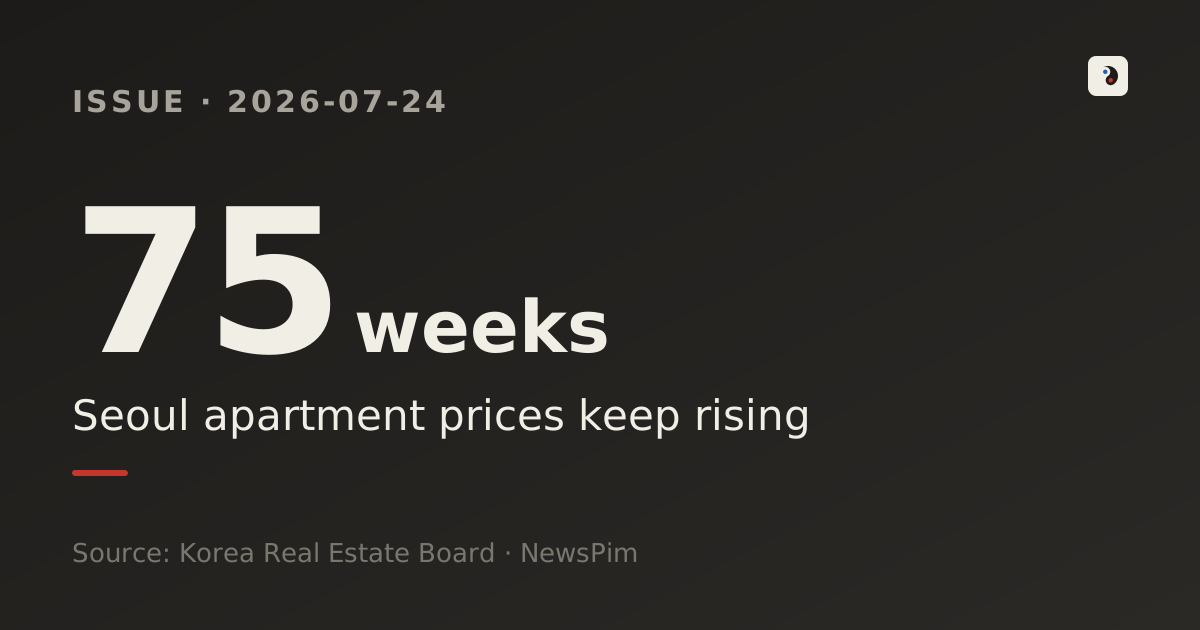
Seoul Home Prices Rise 75 Straight Weeks Despite Rate Hike — Korea's August Tax Overhaul
Seoul apartment prices have risen for 75 straight weeks, closing in on the 85-week record under the Moon administration — even after a rate hike. Here's why Korea's coming tax overhaul could be different, in numbers.
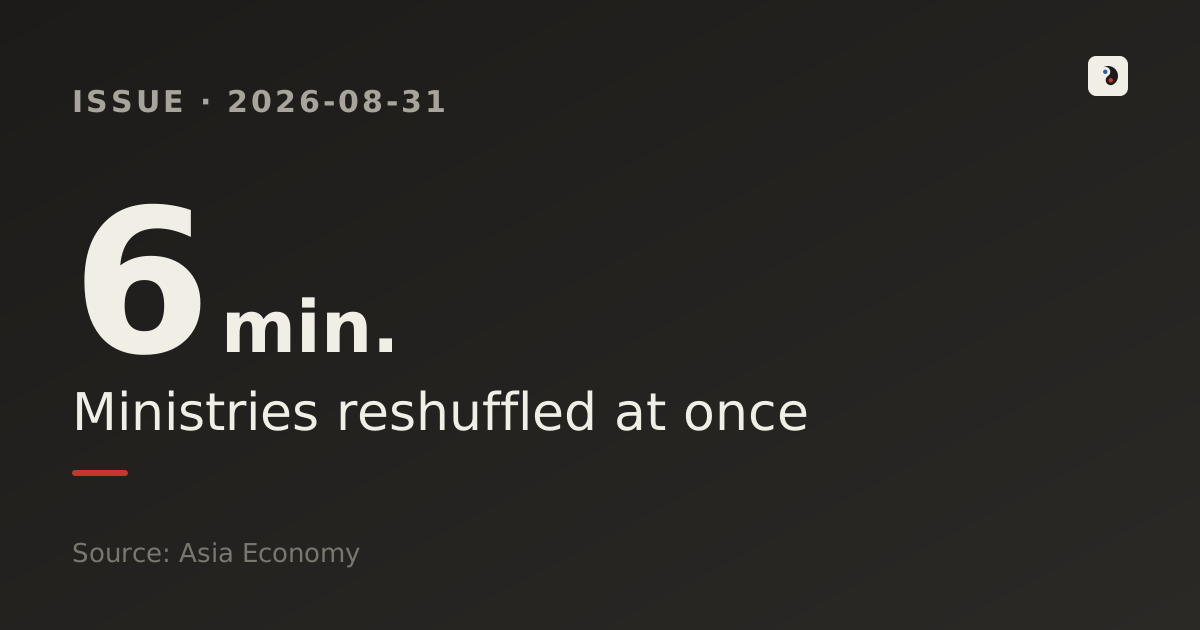
Approval at 45%, Housing Anger at 28%: What South Korea's Cabinet Reshuffle Really Signals
President Lee Jae-myung replaced six ministers as his approval rating sank to 45%. The data and disputes behind South Korea's biggest reshuffle yet.
Korea's Growth Forecast Hits 3.2% — So Why Are New Jobs Falling?
KDI raised South Korea's 2026 growth forecast to 3.2% in 3 months on a chip boom — but new-jobs forecast fell from 170,000 to 110,000. The numbers, explained.