Korea's Property Tax Reform: 1.4bn Won Exemption for Residents, 900m for Absentees
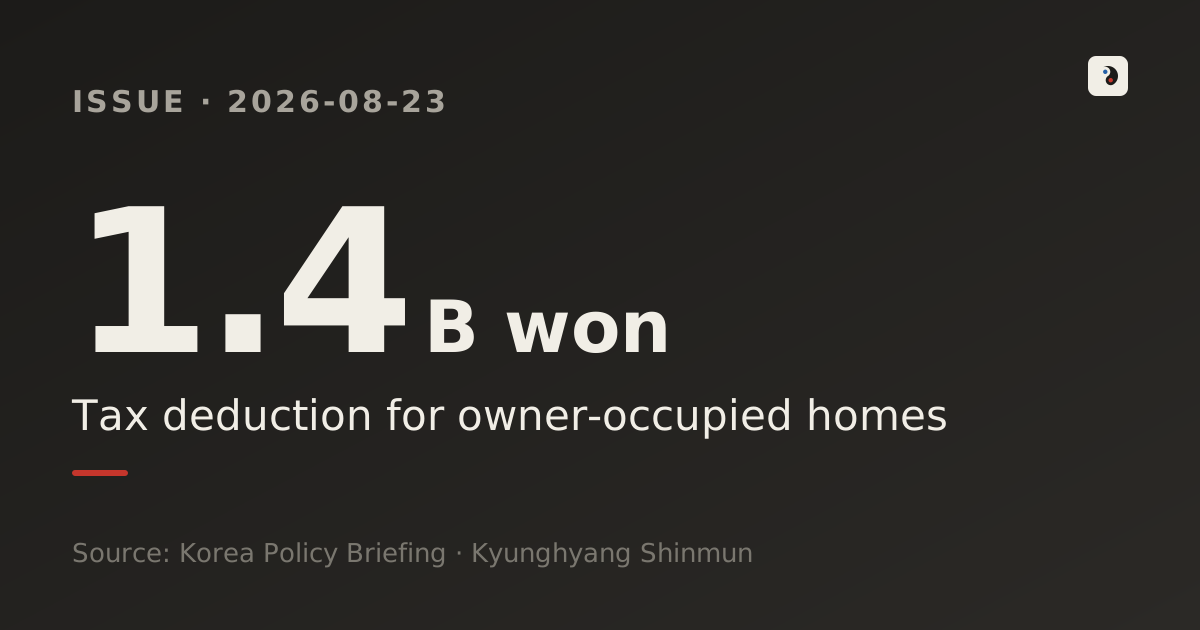
One number now decides how much tax your home owes — inside Korea's 2026 property tax overhaul.
- On August 3, Korea's Ministry of Economy and Finance proposed raising the comprehensive real estate tax exemption for owner-occupied single homes from 1.2bn to 1.4bn won, while cutting it from 1.2bn to 900m won for single-home owners who don't live in their property.
- After more than 10,000 public comments opposed the plan, the government and ruling party held their first high-level policy meeting under new party leader Kim Min-seok on August 23 to discuss revisions, including restoring the property-tax cap to 150%.
- Korea's effective property tax rate of 0.17% remains far below the US (1.54%), Japan (1.4%) and the UK (1.1%) — the real fight is less about how much to tax and more about who counts as a genuine resident.
What happened
At the center of Korea's 2026 tax reform, unveiled by the Ministry of Economy and Finance on August 3, is a new dividing line in the comprehensive real estate tax (jongbutse): whether the owner actually lives in the home. For single-home households who occupy their property, the basic exemption on the government-assessed value rises from 1.2 billion won to 1.4 billion won. For single-home owners who live elsewhere — "absentee" owners — the exemption falls from 1.2 billion won to 900 million won, putting them on the same footing as owners of multiple homes.
The plan also raises the fair market value ratio used to calculate the tax base from 60% to 70% (up to 80% for owners of three or more homes), and reworks the long-term holding deduction from a formula based on years owned plus years lived in (up to 80% combined) to one based mainly on residency (30% after ten years of actual occupancy). The changes would first apply to tax bills assessed from June 1, 2027, with some provisions — full unification of tax rates and the 80% fair-value ratio — delayed to 2028.
Why now — the backstory
The comprehensive real estate tax was introduced in 2005 under President Roh Moo-hyun to curb wealth inequality tied to housing. Its character has swung wildly with each administration since. Under President Moon Jae-in, the government sharply raised rates on multiple-home owners, up to 6.0% at the top. President Yoon Suk-yeol's government reversed course just as sharply — cutting the fair market value ratio from 95% to 60%, raising the basic exemption from 600 million to 900 million won, and moving to abolish the multiple-home surtax (1.2%–6.0%) altogether, effectively unwinding the tax to pre-Moon levels.
This reform is another turn on that same road, shifting the tax base from "how many homes do you own" to "do you actually live in this one." That shift is also tied to revenue needs: the government estimates the reform's overall tax-revenue effect at around 3.4 trillion won.
By the numbers
The impact of this reform is not symmetric. The exemption for owner-occupiers rises 16.7%, while the exemption for absentee single-home owners falls 25% — a 500-million-won gap in absolute terms. In other words, even within the same category of "single-home owner," the real weight of this reform lands almost entirely on those who don't live in their home.
So how heavy is Korea's property tax by international standards? Korea's effective property tax rate is 0.17% — a ninth of the US rate (1.54%), an eighth of Japan's (1.4%), and a sixth of the UK's (1.1%). As a share of GDP, property-tax revenue in Korea is just 0.6%, far below the UK (3.3%), the US (2.8%) and Japan (2.1%).
By that measure, calling this reform a "tax hike" undersells how low Korea's overall property-tax burden still is internationally. What's more telling is the structure: the US, UK and Japan use flat rather than progressive rates, and typically tax based on actual use — second homes, vacant units — rather than the sheer number of properties owned. Korea's shift from counting homes to checking residency is, in that sense, a step toward how those systems already work.
The fight — competing views
More than 10,000 comments opposing the plan were filed with the government's public legislation portal after the proposal was announced. The core objection is the rigidity of the "actual residence" test: single-home owners who can't live in their own property for reasons beyond their control — a work posting elsewhere, an overseas assignment, a child's school district, caring for aging parents — would be treated the same as owners of multiple homes. "Don't turn citizens who own just one home into a tax target" is the most common refrain among the comments.
The government's counterargument is different: owning a home you don't live in looks more like an investment than a place to live, so protecting genuine occupiers and normalizing the treatment of absentee ownership are two sides of the same principle. Even within the ruling party there's daylight on this — new party leader Kim Min-seok has publicly said the tougher treatment of absentee single-home owners "needs supplementing." Most expert commentary lands in a similar place: broad agreement with the direction, real unease about the details and their predictability.
What's next
The government and ruling party held their first high-level policy coordination meeting under Kim Min-seok's new leadership on August 23 to work through the plan, aiming to finish party-government coordination by the end of August. The most contested provisions are being revised one by one — the plan to raise the combined property-tax cap (comprehensive real estate tax plus local property tax) from 150% to 200% has reportedly been dropped in favor of keeping the current 150% cap.
- Whether new exceptions will be carved out for absentee single-home owners — a posting to another region, an overseas assignment, medical care for a parent — and how broadly they're defined. Broader exceptions would ease the backlash but blunt the "residency" standard itself.
- Whether provisions currently slated for 2028 — the 80% fair market value ratio, full rate unification — get revisited in this same round of talks.
- Because the changes would first apply to bills assessed as of June 1, 2027, absentee single-home owners have a window now to weigh whether they can meet the residency requirement before then.
- Property Tax Relief Demands Flood In: Will the 3.4tn-won Tax Revenue Impact Shrink? — Financial News (fnnews) (2026.08.12)
- [2026 Tax Reform] The Comprehensive Real Estate Tax That Spared 'Mapo-Yongsan-Seongdong': Half a Reform — The Kyunghyang Shinmun (2026.08.03)
- Owner-Occupied Single Home Worth Up to 2 Billion Won Exempted from Comprehensive Real Estate Tax — Korea.kr Policy Briefing (Ministry of Economy and Finance) (2026.08.14)
- ISA Rules Reversed, Property Tax Back on the Party-Government Table: Final Coordination on Tax Reform — Newsis (2026.08.19)
- Property Tax Cap Likely Restored to 150%: Core of Aug. 3 Real Estate Tax Plan Kept Intact — Edaily (2026.08.20)
- How Is Korea's Housing Holding Tax Different From Advanced Economies? ‘No Progressive Rates in the US, UK or Japan’ — Kookmin Ilbo (2026.07.27)
- Comprehensive Real Estate Tax Rolled Back to Pre-Moon Jae-in Levels: Multi-Home Surtax Abolished, Shift to Value-Based System — Munhwa Ilbo (2026.08.10)
- Comprehensive Real Estate Tax: Korea the Outlier Among 9 Countries Including the UK, US and Japan — Herald Business (2026.08.11)
This is nuloq's own analysis of the public reporting and official data listed above under Sources, produced with the help of AI tools. It's for information only, not investment or legal advice, and reflects the situation as of August 23, 2026; we correct the piece if facts change or errors are found.
Related posts
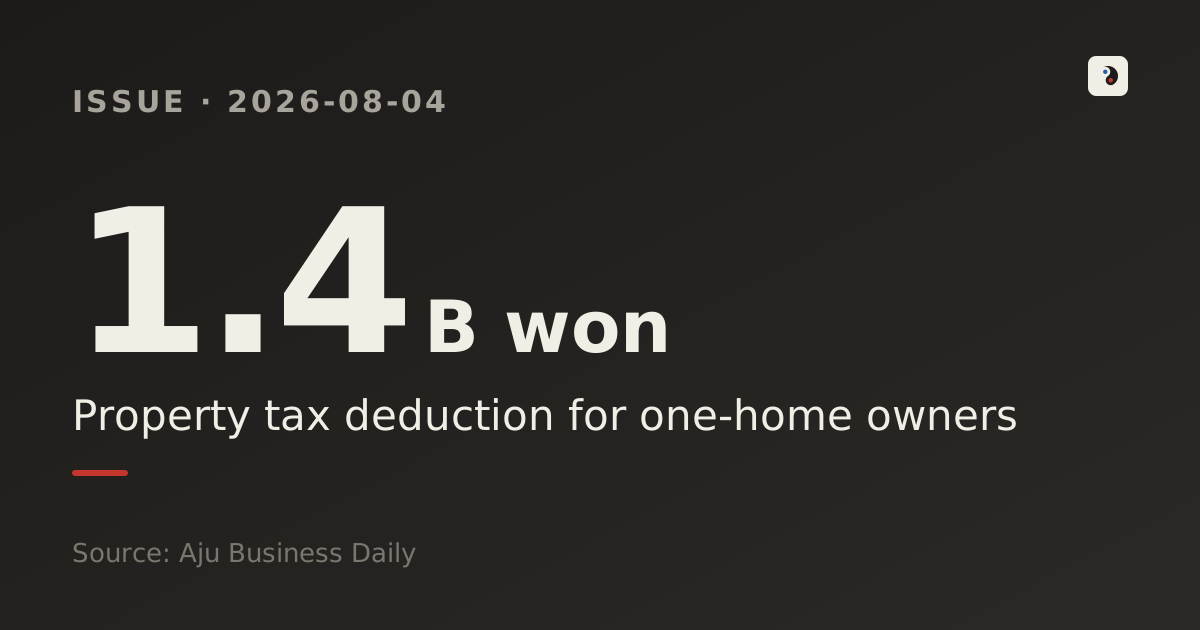
Korea Raises Property Tax Exemption to ₩1.4 Billion, Multi-Home Owners Face 80% Rate
South Korea raised its property tax exemption to 1.4 billion won and pushed multi-home owners' tax ratio to 80% — the 3.4 trillion won reform explained by the numbers.
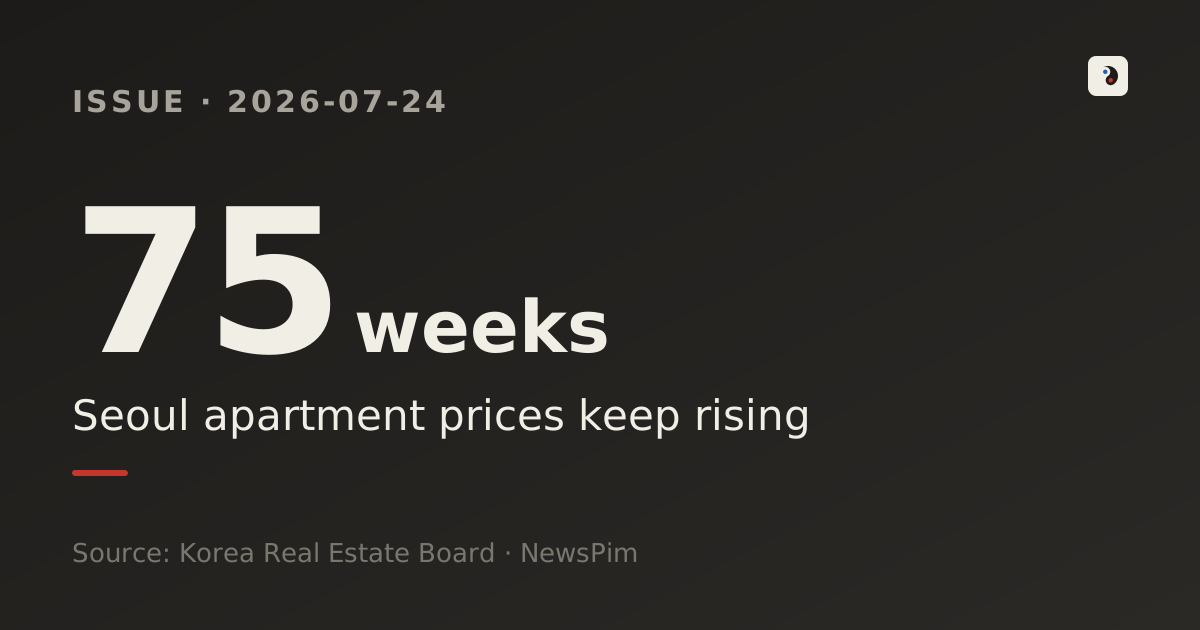
Seoul Home Prices Rise 75 Straight Weeks Despite Rate Hike — Korea's August Tax Overhaul
Seoul apartment prices have risen for 75 straight weeks, closing in on the 85-week record under the Moon administration — even after a rate hike. Here's why Korea's coming tax overhaul could be different, in numbers.
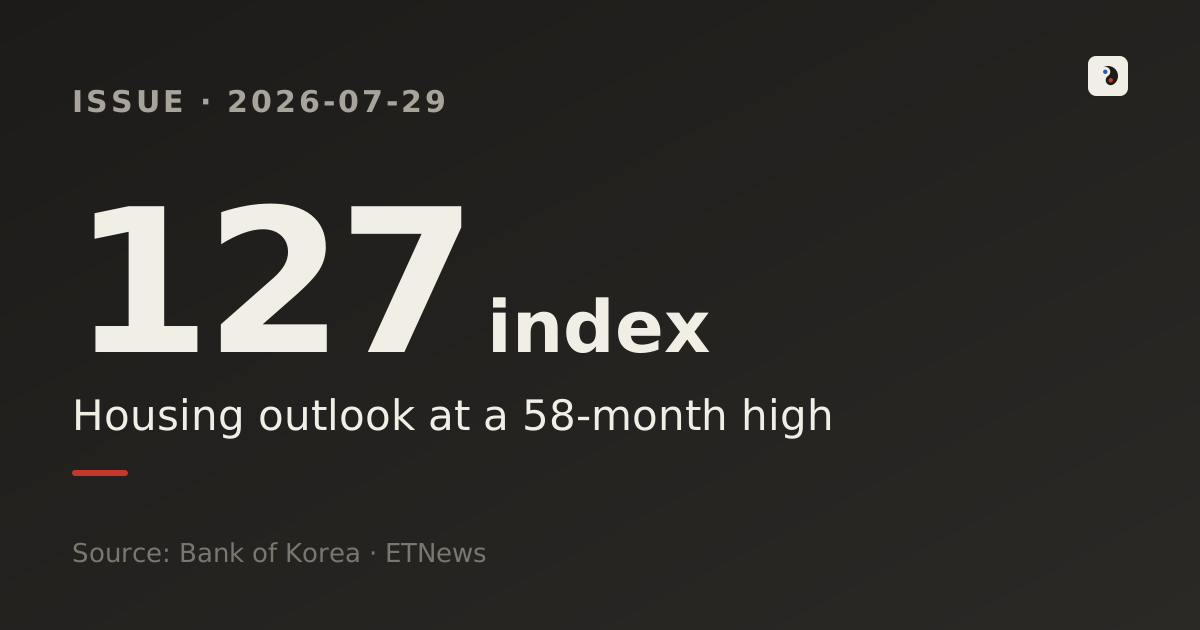
Korea Housing Price Outlook Hits 127, Highest Since the 2021 Boom
Bank of Korea data show the housing price outlook index jumped to 127, a 4-year-10-month high, even after a rate hike. Here's why supply, not cheap money, is driving the surge.
Approval at 45%, Housing Anger at 28%: What South Korea's Cabinet Reshuffle Really Signals
President Lee Jae-myung replaced six ministers as his approval rating sank to 45%. The data and disputes behind South Korea's biggest reshuffle yet.