· Updated 2026-09-10
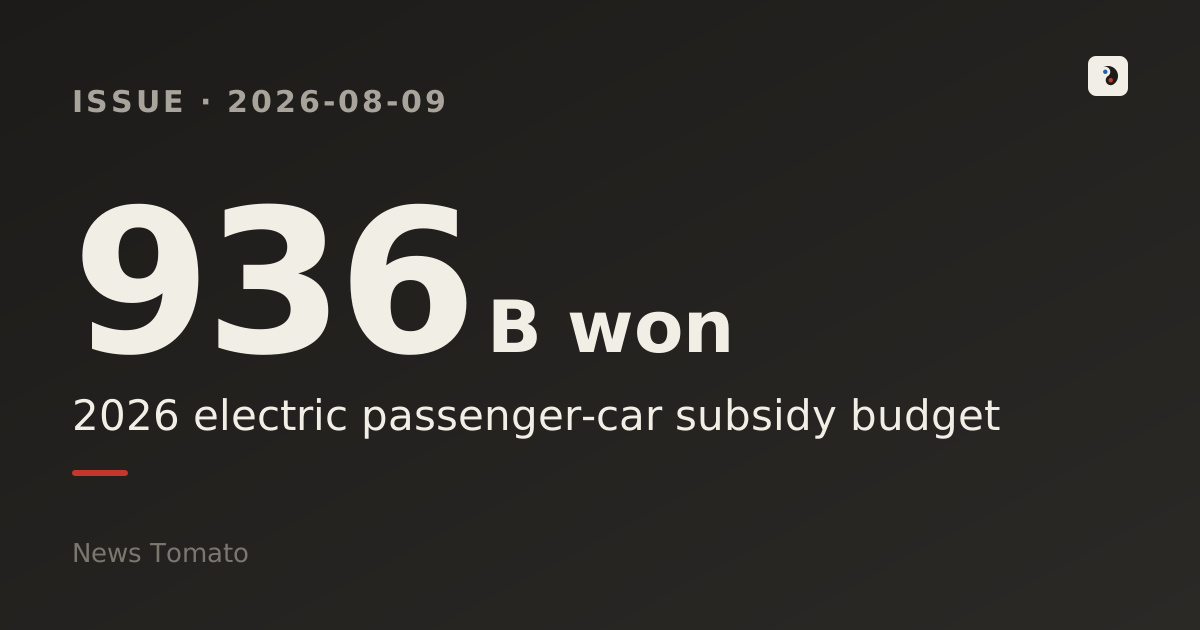
KRW 936 billion for electric-car purchase subsidies: how the production tax credit differs
Correction (2026-09-10): The scope, comparisons and interpretation of key figures have been reviewed and corrected below. The original publication date is retained.
Seoul is spending more to get people into EVs while quietly leaving EVs out of its new production tax credit. Here's what the numbers show.
- The electric passenger-car purchase-subsidy budget rose from KRW 715 billion in 2025 to KRW 936 billion in 2026: an increase of KRW 221 billion, or about 30.9%.
- The August 2026 tax proposal would reduce the EV consumption-tax exemption to KRW 2 million in 2027 and KRW 1 million in 2028, ending it in 2029. This article describes that proposal, distinct from enactment and implementation.
- MoneyToday, citing KAMA, reports 25,595 Chinese-made vehicles out of 70,078 newly registered electric passenger cars in Q1 2026 (36.5%). This is manufacturing origin, not Chinese brands’ share.
What happened
The finance ministry’s proposed domestic production credit is based on domestic production and sales of eligible strategic goods. It differs from the existing credit based on capital investment.
Finished EVs were excluded, while components such as secondary batteries were included. The government cited competitiveness through strategic components; industry called for finished vehicles to be covered too.
Why it matters — the backstory
As a presidential candidate, Lee Jae-myung pledged to include EVs in the domestic production tax credit. That the pledge didn't survive into the final bill is what turns this from routine tax news into something worth unpacking.
By the numbers
The electric passenger-car purchase-subsidy budget rose from KRW 715 billion in 2025 to KRW 936 billion in 2026: an increase of KRW 221 billion, or about 30.9%.
Government guidance allows up to KRW 5.8 million for a midsize electric passenger car plus up to KRW 1 million in conversion support in 2026, subject to conditions. This is separate from the KRW 3 million consumption-tax exemption.
MoneyToday, citing KAMA, reports 25,595 Chinese-made vehicles out of 70,078 newly registered electric passenger cars in Q1 2026 (36.5%). This is manufacturing origin, not Chinese brands’ share.
The debate — different views
Industry: "Support the whole value chain"
Automakers and battery makers see it differently. Without tax incentives for finished-vehicle production itself, the incentive to manufacture domestically weakens — and battery demand eventually suffers too. Battery-industry figures have argued that "even if batteries get the credit, battery demand falls if EV demand falls," making the case that the whole value chain, including finished vehicles, should qualify.
What's next — the stakes
Two conditional scenarios can be considered.
- If the purchase-subsidy budget keeps clearing the National Assembly and growing through the 2027-2029 phase-down of the consumption tax break, the net hit to consumers could stay limited. If the budget freezes or shrinks instead, higher real prices become likely.
- Whether betting on parts instead of finished vehicles was the right call will only become clear over the next few years, by watching whether domestic EV production and sales move in step with battery export performance.
- Tax pressure on "real residence"... EVs left out of the production credit [2026 Tax Reform] — Etoday (이투데이) (2026.08.03)
- EVs excluded from domestic production tax credit... 10-year tax support for chips, batteries — Money Today (머니투데이) (2026.08.03)
- K-battery gets the "Korean IRA" production credit... "EVs and the value chain should be included" — Seoul Economic Daily (서울경제) (2026.08.04)
- South Korea EV makers warn of double tax burden — UPI (2026.08.04)
- Hybrid consumption-tax break ends this year... EVs, hydrogen cars phased out by 2029 — Edaily (이데일리) (2026.08.03)
- EV's 3-million-won tax break set to end... will consumer costs rise? — Hankyung (한국경제) (2026.05.13)
- "Korea will be dominated within 3 years"... cheap Chinese EVs are flooding in — Money Today (머니투데이) (2026.05.03)
- Tesla, BYD, Zeekr's "three-way push"... Chinese EVs capture a third of Korea's market — G-Enews (글로벌이코노믹) (2026.05.02)
This is nuloq's own analysis based on the reporting and official figures listed under Sources, written with the help of AI tools. It is for information only — not purchase or investment advice — and reflects the situation as of writing (August 2026). We correct the text if errors are found.
Related posts
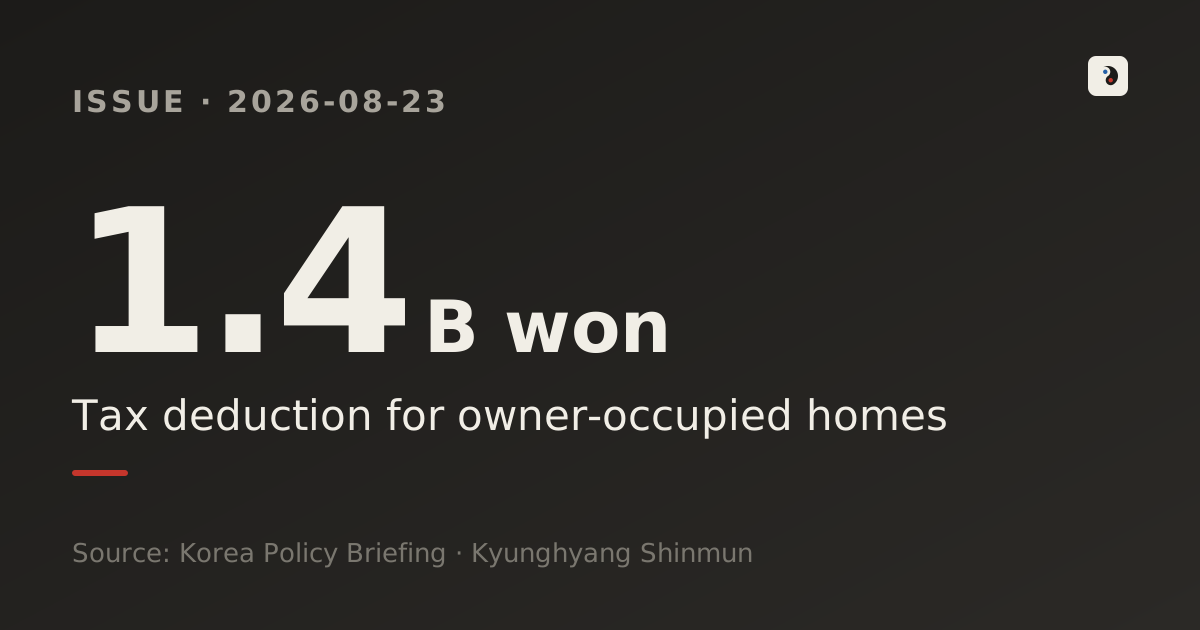
Korea's Property Tax Reform: 1.4bn Won Exemption for Residents, 900m for Absentees
Korea's 2026 tax reform raises the property-tax exemption to 1.4bn won for owner-occupiers, cuts it to 900m won for absentee owners. The data, history and fight behind the split.
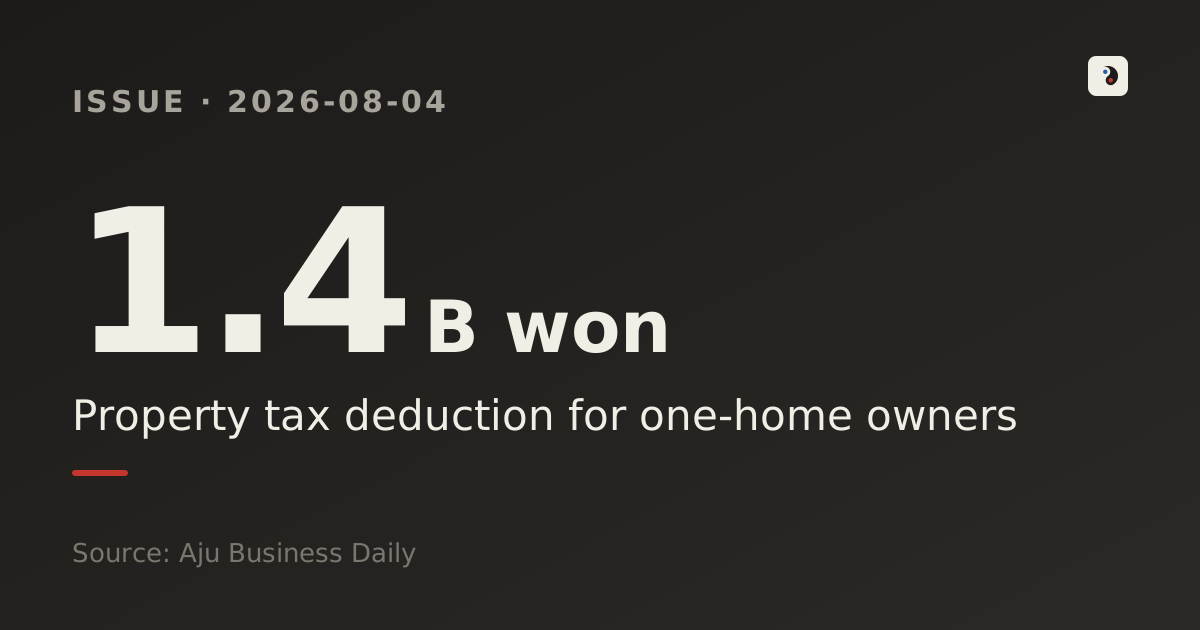
Korea Raises Property Tax Exemption to ₩1.4 Billion, Multi-Home Owners Face 80% Rate
South Korea raised its property tax exemption to 1.4 billion won and pushed multi-home owners' tax ratio to 80% — the 3.4 trillion won reform explained by the numbers.

Seoul Home Prices Rise 75 Straight Weeks Despite Rate Hike — Korea's August Tax Overhaul
Seoul apartment prices have risen for 75 straight weeks, closing in on the 85-week record under the Moon administration — even after a rate hike. Here's why Korea's coming tax overhaul could be different, in numbers.
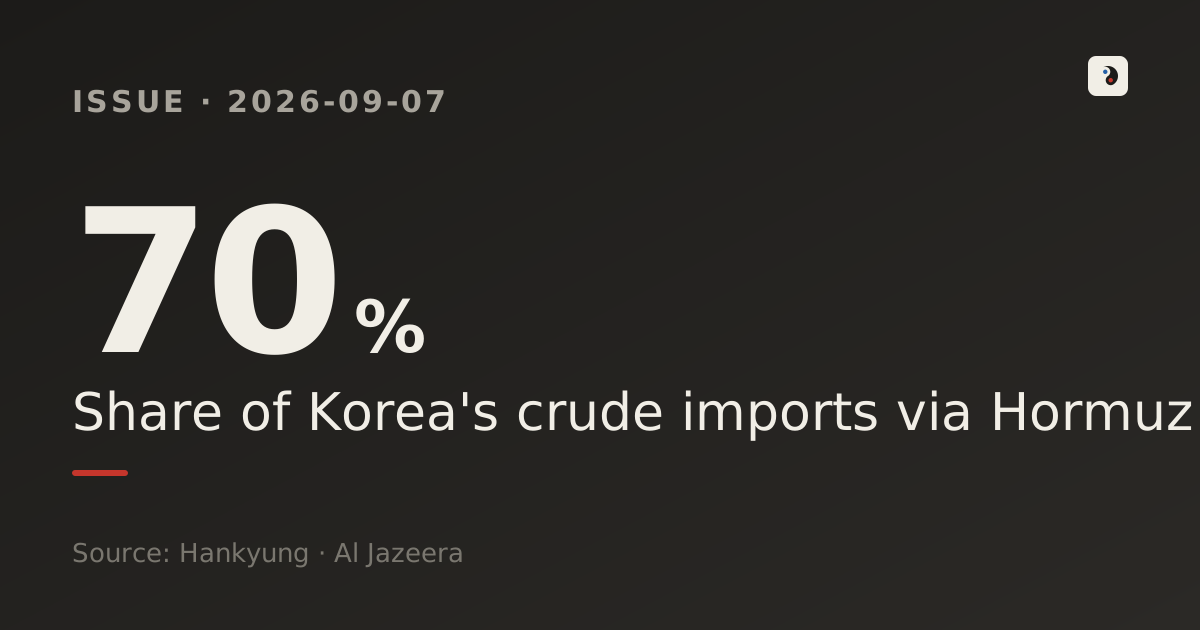
150 Troops, 70% of Oil: South Korea's Hormuz Dilemma by the Numbers
Squeezed between US pressure and Iran's war warning, South Korea is weighing sending 150 troops to the Strait of Hormuz — the route for 70% of its oil imports. Here's the dilemma in numbers.