Korea's Household Debt Passes ₩2,019.8 Trillion, Biggest Jump in 19 Quarters
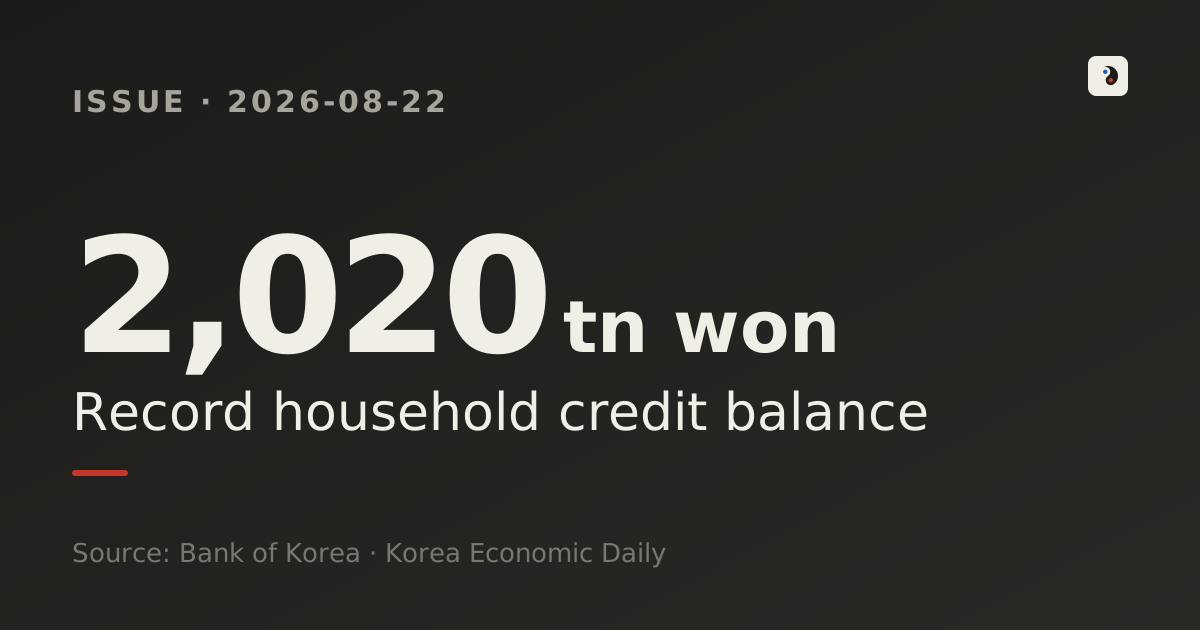
Now that household debt has broken ₩2,000 trillion for the first time, here's the real warning behind the numbers.
- South Korea's household credit balance hit ₩2,019.8 trillion in Q2 2026, its first time above ₩2,000 trillion, with the quarterly increase of ₩25.9 trillion the largest in 19 quarters.
- A rush of real estate deals ahead of an expiring tax exemption for multi-home owners collided with a stock-market boom fueled by credit-based investing, pushing non-mortgage loan growth past mortgage growth for the first time in five years.
- The Bank of Korea raised its policy rate to 2.75% last month and has signaled it may hike again — how it manages the interest burden on this pile of debt is the next thing to watch.
What happened
According to the Bank of Korea's preliminary Q2 household credit statistics released on August 19, household credit stood at ₩2,019.8 trillion at the end of June — the first time it has topped ₩2,000 trillion. That's up ₩25.9 trillion from the previous quarter, the largest quarterly increase since Q3 2021 (₩34.8 trillion) — the biggest jump in 19 quarters, or four years and nine months.
Household loans alone stood at ₩1,891.3 trillion, up ₩24.9 trillion from the prior quarter. Of that, mortgage loans rose ₩12.2 trillion while other loans — mainly credit loans — rose ₩12.8 trillion, meaning non-mortgage borrowing outgrew mortgage borrowing. That reversal hadn't happened in five years.
Why this is happening now
Two trends collided in the same quarter. First, home sales picked up as multi-home owners rushed to buy or sell ahead of the expiration of a temporary exemption from a heavier capital-gains tax, driving up demand for mortgage loans. Second, a stock market rally fueled a surge in so-called "leveraged investing" — borrowing via credit loans to buy stocks.
Money flows into real estate and equities usually arrive with a lag between them, so having both hit at once this quarter is statistically unusual. The result: the largest quarterly increase in 19 quarters, and the first time in five years that non-mortgage loans have outgrown mortgages.
The numbers
The scale shift feels different measured against four years ago. Household credit stood at ₩1,869 trillion in Q2 2022; four years later it has grown roughly 8% to around ₩2,020 trillion. Over the same period, the Bank of Korea has pivoted back toward raising rates to rein in the debt burden.
The picture looks starker in international comparison. Korea's household-debt-to-GDP ratio ranks second highest among 38 countries compared, behind only Canada — well above both the world average and the emerging-market average.
Not every indicator is flashing red, though. Korea's household-debt-to-disposable-income ratio, at 171%, is the seventh highest among OECD members, but that ratio has fallen for four straight years as income has grown faster than debt. In other words, the absolute size of debt is at a record, even as the burden relative to repayment capacity had been easing gradually. Whether this quarter's surge reverses that trend is the next thing to watch.
The debate — different views
- The worried camp: further rate hikes could squeeze consumer spending through higher interest payments and push weaker borrowers toward default. The Bank of Korea did raise its policy rate from 2.50% to 2.75% last month and has left the door open to more hikes.
- The more optimistic camp: stricter repayment-capacity screening under the third-stage stress DSR rules, in effect since July 2025, means loan quality has improved — and the debt-to-income ratio had been on an improving trend.
- The government's response: the Financial Services Commission's "2026 Household Debt Management Plan" moves to generally bar maturity extensions on mortgage loans for multi-home owners' apartments in the capital region and regulated areas, expand the scope of DSR rules, and steer variable-rate loans toward long-term fixed rates.
What to watch next
If the Bank of Korea does hike rates again, households with a larger share of variable-rate debt will feel the higher interest burden first. Tighter lending rules for multi-home owners could cool mortgage growth, but as long as the stock market stays strong, credit-fueled leveraged investing may not ease as easily.
For individuals who've borrowed to invest, it's worth stress-testing repayment capacity against a scenario of further rate hikes. On the policy side, aggregate lending caps and tighter repayment screening are likely to remain the main levers for now — and whether non-mortgage loan growth cools in next quarter's data will be the first signal of whether this surge was a one-off spike or a structural shift.
- Amid leveraged buying and stock bets, household debt tops ₩2,000 trillion for the first time — Hankyung (Korea Economic Daily) (2026.08.19)
- Household debt tops ₩2,000 trillion for first time, biggest increase in 19 quarters — Financial News (2026.08.19)
- Q2 household debt breaks record ₩2,000 trillion mark amid home and stock buying frenzy — Herald Business (2026.08.19)
- Trapped in ₩2,000 trillion household debt amid stock bets and leveraged buying, rate hikes stoke spending-cliff fears — Etoday (2026.08.20)
- Household debt-to-disposable-income ratio at 171%, 7th highest among OECD members — Daum News (2026.06.18)
- 2026 Household Debt Management Plan — Financial Services Commission (2026.04.01)
- Debt-fueled buying pushes household debt past ₩2,000 trillion for first time, rate hike "dilemma" — Newstomato (2026.08.19)
This is nuloq's own analysis based on the Bank of Korea and Financial Services Commission announcements and news reports listed under Sources, produced with the help of AI tools. It's for informational purposes only, not investment or legal advice, and reflects information available at the time of writing; we will correct any errors found.
Related posts
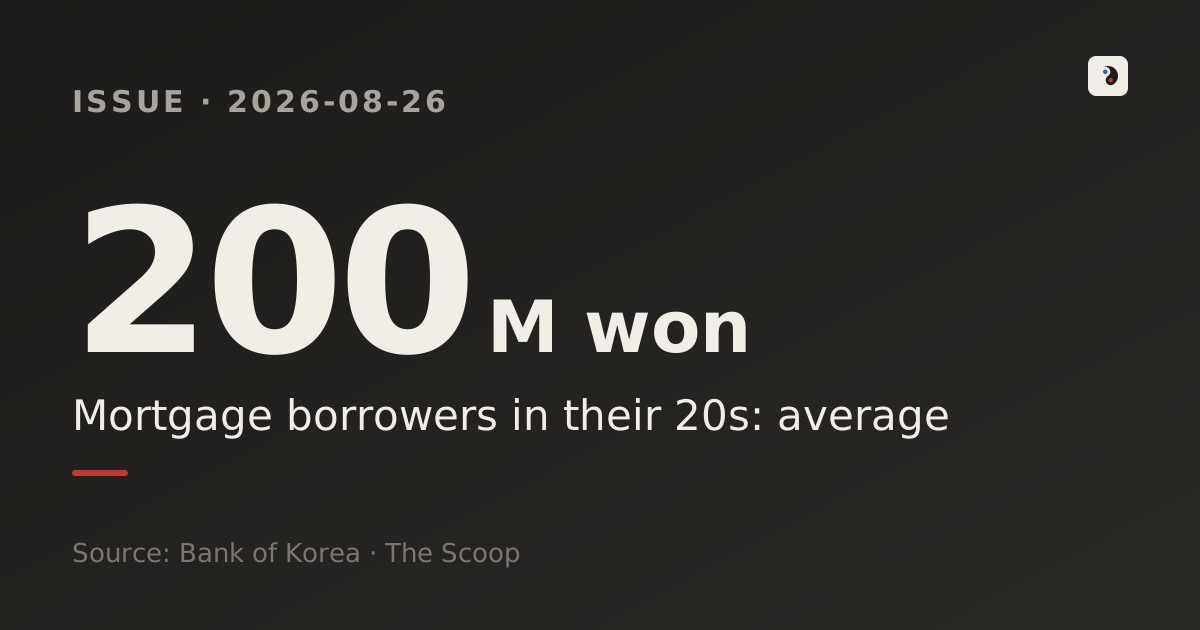
Loans Got Tighter, Yet Only 20-Somethings Borrowed More: Korea's ₩200M Mortgage Line
South Korean borrowers in their 20s now carry an average mortgage balance of ₩203.94 million, crossing ₩200 million for the first time even as lending tightened everywhere else. Here's what the Bank of Korea data reveals — and the statistical trap behind it.
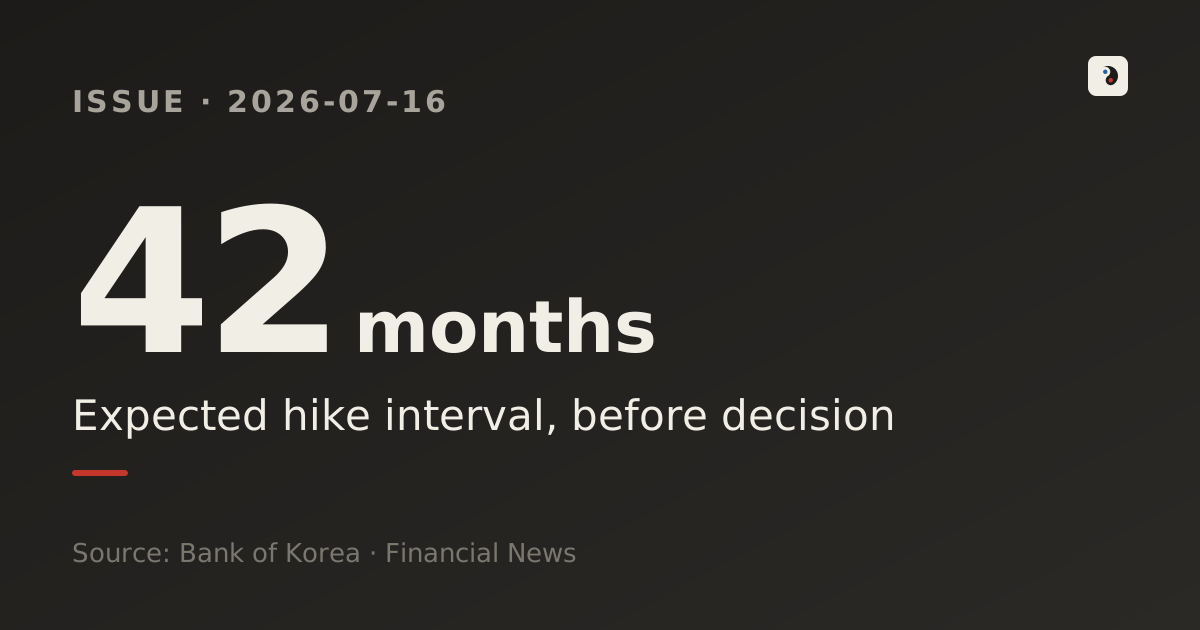
Analysis before the July 16 rate decision: the case for an expected hike
Analysis before the July 16 rate decision: the case for an expected hike
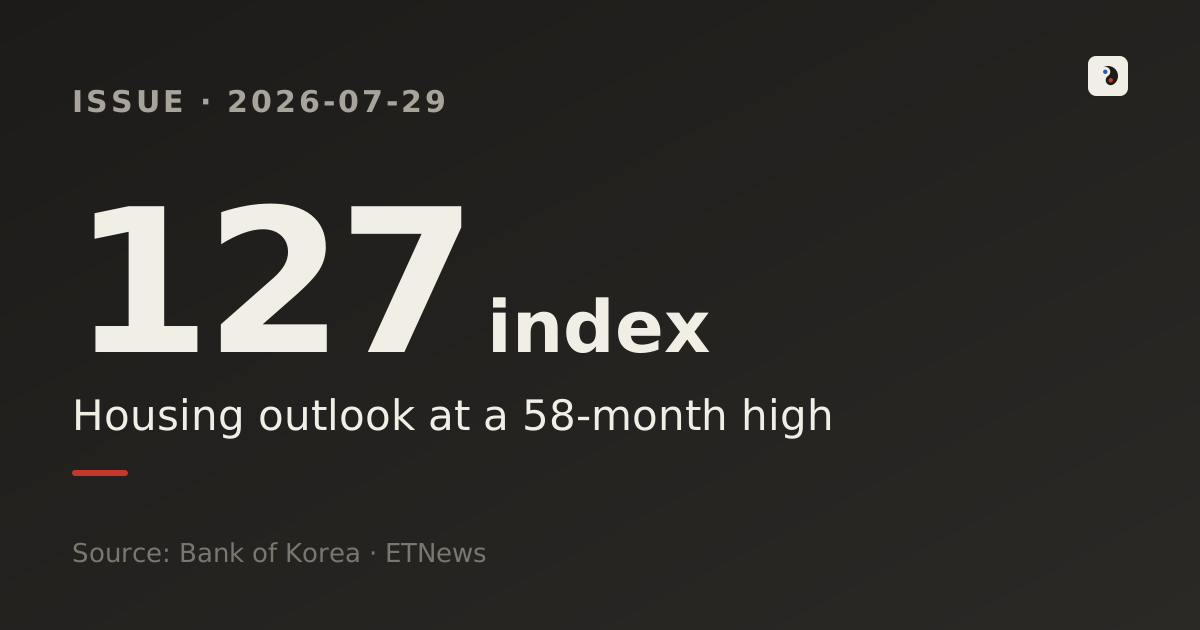
Korea Housing Price Outlook Hits 127, Highest Since the 2021 Boom
Bank of Korea data show the housing price outlook index jumped to 127, a 4-year-10-month high, even after a rate hike. Here's why supply, not cheap money, is driving the surge.
Seoul Home Prices Rise 75 Straight Weeks Despite Rate Hike — Korea's August Tax Overhaul
Seoul apartment prices have risen for 75 straight weeks, closing in on the 85-week record under the Moon administration — even after a rate hike. Here's why Korea's coming tax overhaul could be different, in numbers.