· Updated 2026-09-10
Analysis before the July 16 rate decision: the case for an expected hike
Correction (2026-09-10): The scope, comparisons and interpretation of key figures have been reviewed and corrected below. The original publication date is retained.
This article analyses the prospect of a hike using reporting published before the July 16, 2026 decision. Its title has been corrected to distinguish the contemporary forecast from a confirmed decision.
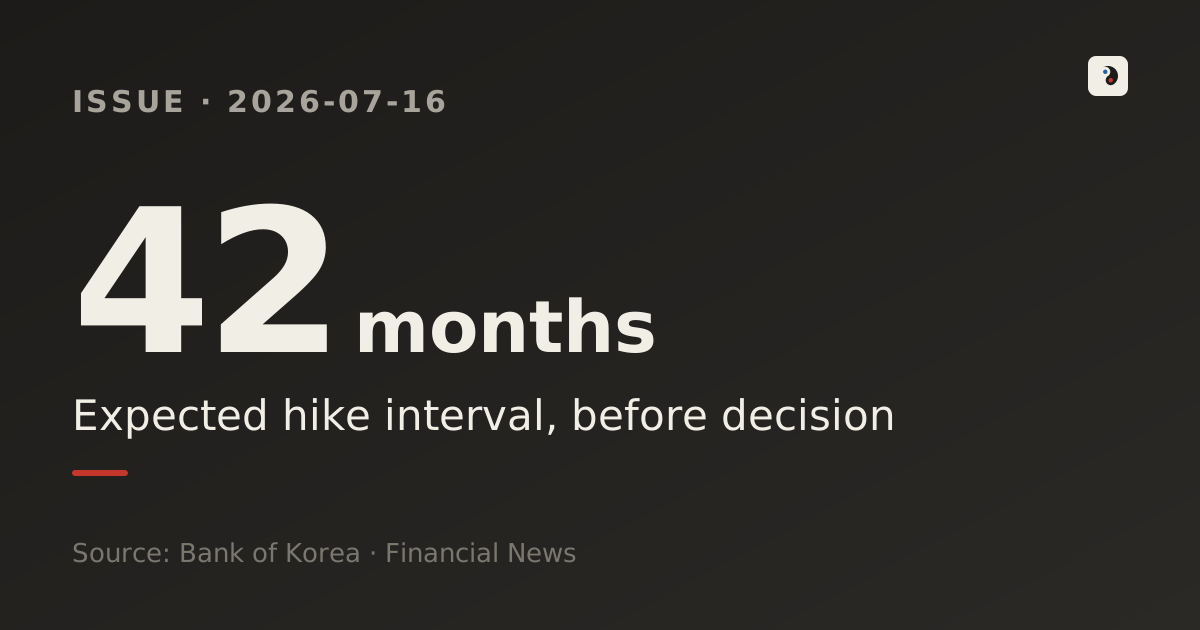
- The Bank of Korea is widely expected to raise its policy rate by 0.25 percentage points, from 2.50% to 2.75%, at its July 16 board meeting — the first hike since January 2023, 42 months ago.
- The case for tightening rests on three pillars: June inflation at 3.2% (above the 2% target), an upgraded 2026 growth forecast of 2.6% on a semiconductor boom, and household credit at 1,993 trillion won — just short of the 2,000 trillion won mark.
- With further hikes possible in August or October, borrowers with variable-rate mortgages and the Seoul-area housing market are set to feel the impact almost immediately.
What happened
The Bank of Korea's Monetary Policy Board meets on July 16 to set the policy rate. Markets and most analysts expect it to raise the current 2.50% rate by 0.25 percentage points to 2.75%. If that happens, it will be the first hike since January 2023 — 42 months ago — and a turning point after eight straight holds following last May's cut from 2.75% to 2.50%.
The case for a hike is fairly clear-cut. June's consumer price inflation came in at 3.2%, well above the BOK's 2% target, and the bank has already revised this year's growth forecast up to 2.6% on the back of a strong semiconductor export cycle. Growth and inflation are both pointing the same way — toward tightening.
Why now — inflation, growth, and debt all flash the same signal
The BOK had kept rates on hold mainly because of soft domestic demand and geopolitical uncertainty from the prolonged US-Iran standoff. In recent weeks, though, the balance has shifted: inflation has stayed above target, the semiconductor cycle has outperformed expectations, and a third factor — household debt and housing prices — has added weight to the case for a hike.
Last June 27, the government rolled out tough curbs capping mortgage loans in the capital region and regulated areas at 600 million won and credit-loan limits at annual income. A year on, Seoul apartment prices are still up more than 10%, and bank household lending jumped 7.6 trillion won in June alone — the biggest monthly increase in 22 months. That loan-cap rules alone weren't enough has strengthened the argument for using rates instead.
The numbers
The data show a paradox: the tighter the lending curbs, the faster debt and prices have climbed together.
Internationally, Korea doesn't have much room to maneuver. Its policy rate already sits below the US Fed's 3.50–3.75%, and even after this hike the gap only narrows from 1.25 points to 1.00 point. In fact, the Korea–US 10-year bond spread has shrunk to its narrowest since July 2023 — a sign markets have already priced in Korea's pivot to tightening.
The debt burden itself is heavy by international standards. Korea's household debt is 171% of disposable income — 7th highest among OECD members — and 88.6% of GDP, 6th highest among the 44 countries tracked by the BIS. Domestic research suggests that once this ratio passes 82–84% of GDP, it starts to squeeze private consumption. Korea is already past that line.
The debate — is a hike the right call?
Hawks at the BOK and financial regulators argue this is the moment, or it will be too late. Their logic: if the debt ratio isn't brought down while growth is solid, there will be no room to raise rates once the economy turns down. Keeping rates low while inflation runs hot, they add, sends the wrong signal to asset markets.
Skeptics push back just as hard. Variable-rate borrowers and small business owners will feel higher interest costs immediately. With domestic demand not yet firmly recovered, a premature hike could chill consumption again. The real estate industry warns that transaction volumes, already thin, could freeze up further with another hike.
What's next — what to watch
- Variable-rate borrowers may want to weigh the cost of switching to a fixed rate against the likely size of further hikes.
- Inflation and employment data released before the August board meeting will be the clearest signal of what comes next.
- Prospective buyers in the capital region should recalculate what loan limits and rate changes actually mean for their real purchasing power.
- "Inflation Overshoots Target": BOK Rate Hike Expected This Week — Fnnews 파이낸셜뉴스 (2026.07.12)
- Korea Signals Monetary Tightening as Korea-US Long-Term Rate Gap Narrows to a Multi-Year Low — Fnnews 파이낸셜뉴스 (2026.07.15)
- BOK's July 16 Rate Decision: How Loan and Deposit Rates Will Change — Segye Ilbo 세계일보 (2026.07.14)
- Household Bank Lending Jumps 7.6 Trillion Won on Home Prices and Debt-Fueled Buying — Biggest Rise in 22 Months — Metro Seoul 메트로서울 (2026.07.09)
- One Year After the June 27 Curbs: Seoul Apartment Prices Up 10%, Credit Loans Surge — Sidae Media 시대 (2026.06.26)
- Korea's Household Debt Is 171% of Disposable Income — 7th Highest in the OECD — Daum News 다음뉴스 (2026.06.18)
- Q1 Household Loans Reach 1,865 Trillion Won, Up 13 Trillion — Newspim 뉴스핌 (2026.05.19)
- Household Credit by Borrower, Q1 2026 (Press Release) — Bank of Korea 한국은행 (2026.05.19)
- BOK Holds Rate for 8th Straight Meeting, but Mood Shifts Toward a Hike Later This Year — Sisa Journal 시사저널 (2026.05.28)
This is nuloq's own analysis based on the public reporting and official data listed under Sources, written with the help of AI. It is for information only — not investment, legal, or medical advice — and reflects the situation at the time of writing. We correct the text if errors are found.
Related posts
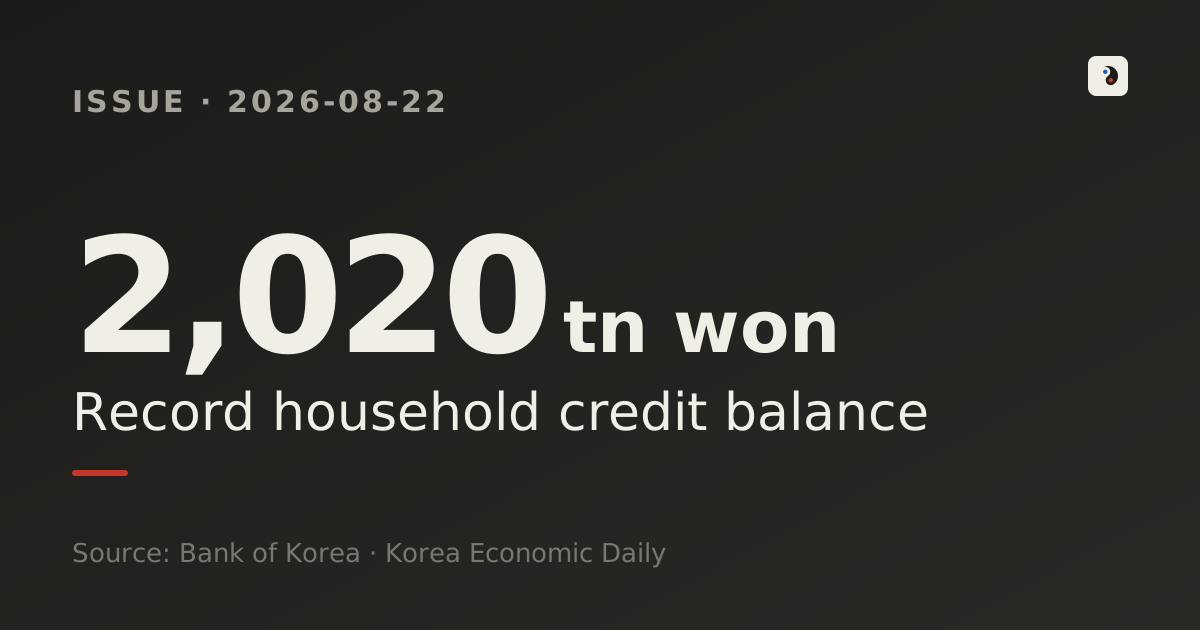
Korea's Household Debt Passes ₩2,019.8 Trillion, Biggest Jump in 19 Quarters
South Korea's household debt hit a record ₩2,019.8 trillion in Q2 2026, its biggest quarterly jump in 19 quarters. The data behind the debt-fueled stock bets and the central bank's rate dilemma.
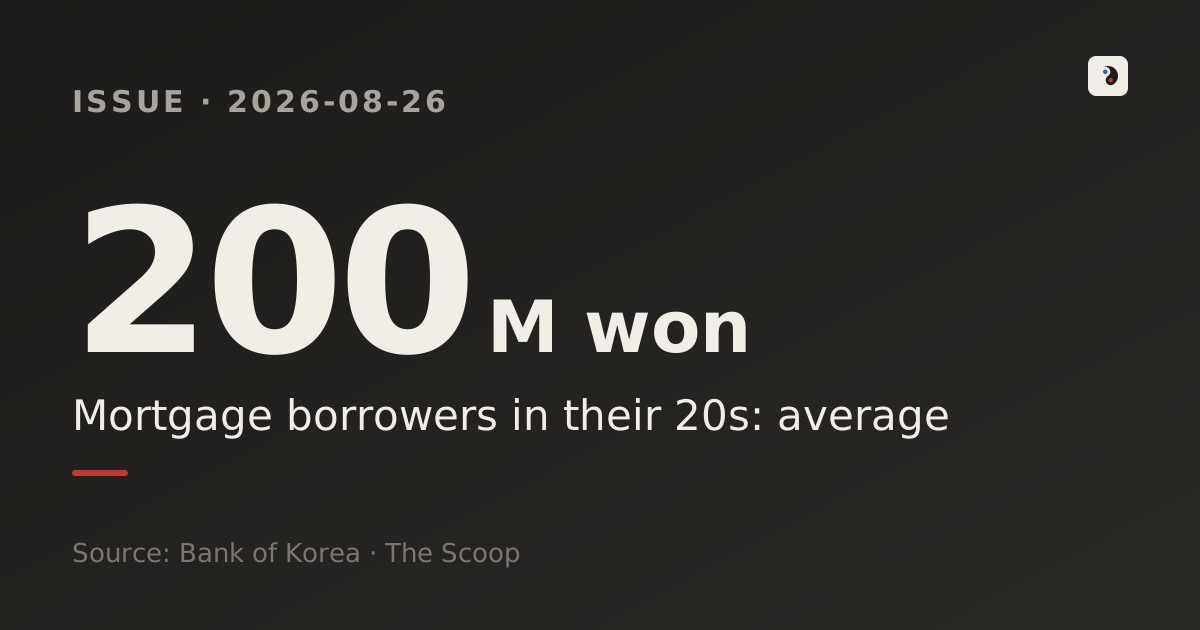
Loans Got Tighter, Yet Only 20-Somethings Borrowed More: Korea's ₩200M Mortgage Line
South Korean borrowers in their 20s now carry an average mortgage balance of ₩203.94 million, crossing ₩200 million for the first time even as lending tightened everywhere else. Here's what the Bank of Korea data reveals — and the statistical trap behind it.
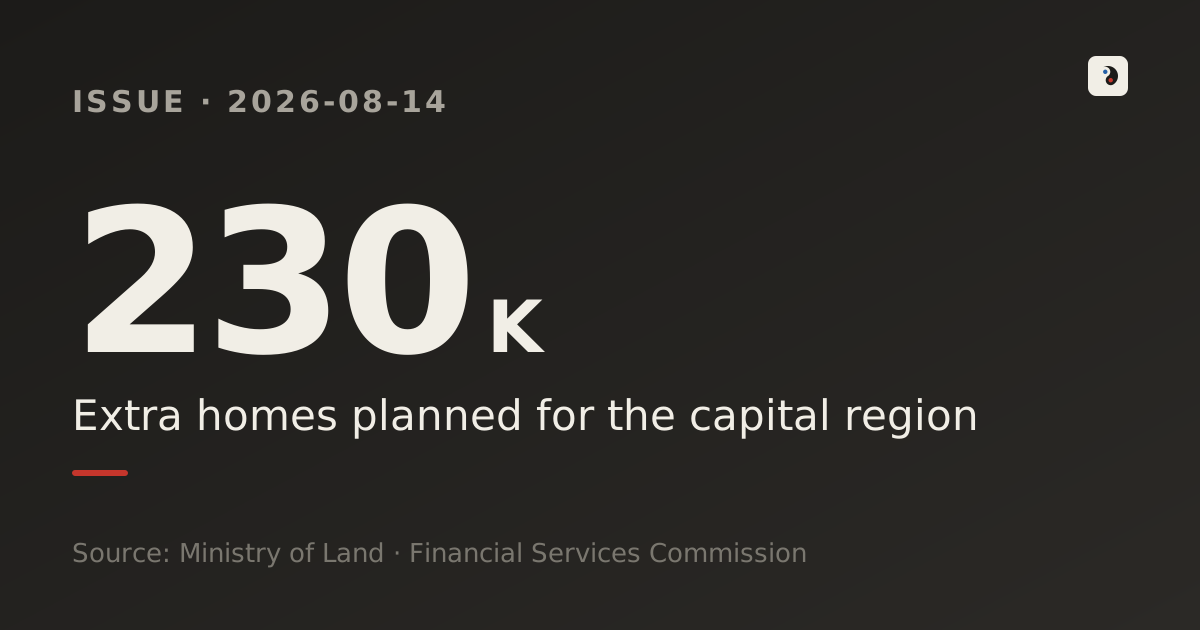
Korea Doubles Housing Loans, Adds 230,000 Homes — Will It Work?
Korea unveiled a housing plan on Aug. 13 adding 230,000+ homes and doubling household loan quotas, as Seoul's jeonse prices rose six times faster than a year ago. Here's whether it can actually cool the market.
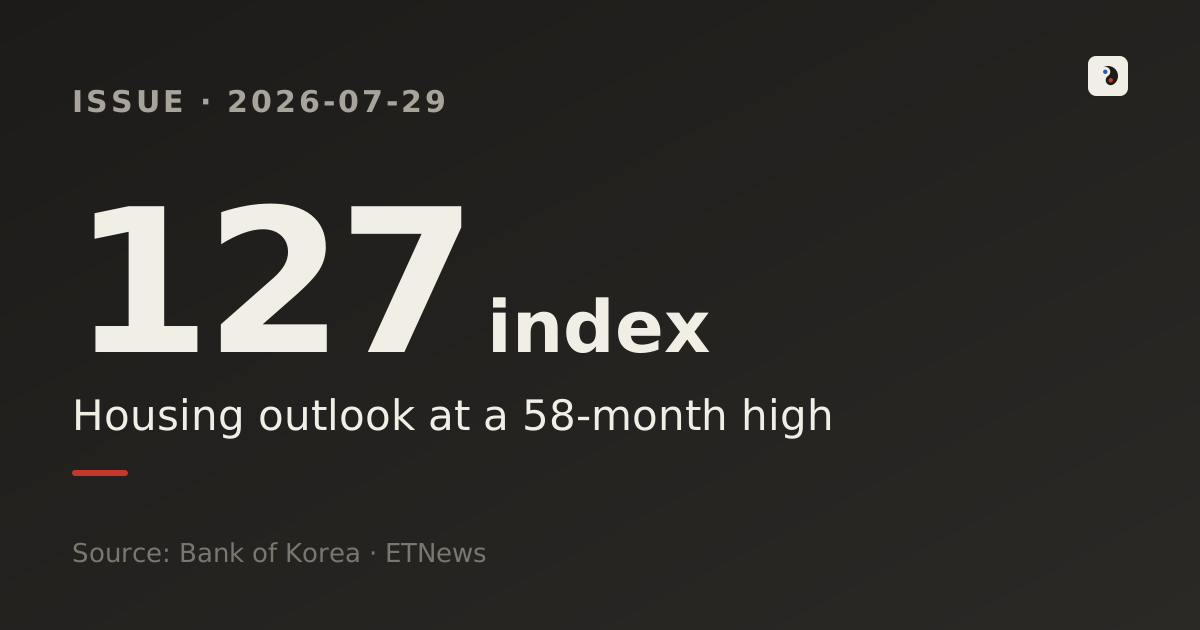
Korea Housing Price Outlook Hits 127, Highest Since the 2021 Boom
Bank of Korea data show the housing price outlook index jumped to 127, a 4-year-10-month high, even after a rate hike. Here's why supply, not cheap money, is driving the surge.