· Updated 2026-09-10
Korea's Property Tax U-Turn: Gangbuk Prices Jump, Not Gangnam
Correction (2026-09-10): The scope, comparisons and interpretation of key figures have been reviewed and corrected below. The original publication date is retained.
The government said it fixed the property tax. In the end, it just reset to where it started — while Seoul's price map quietly flipped.
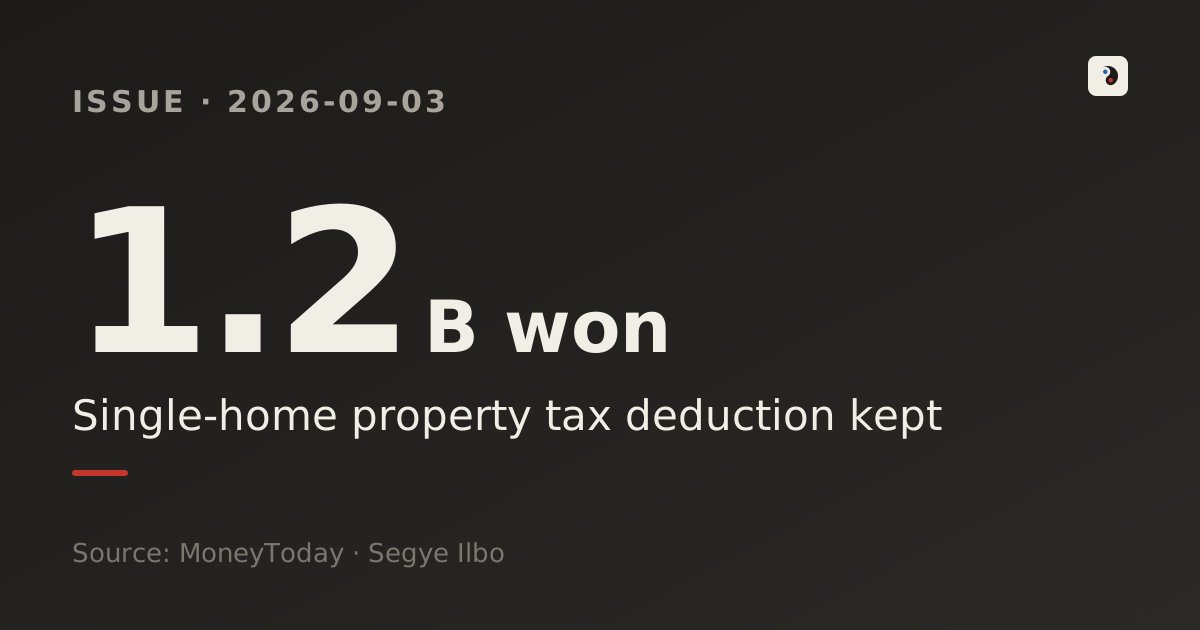
- The government wanted to cut the tax deduction for non-resident single-homeowners to 900 million won, but on September 1 the cabinet kept it at the current 1.2 billion won.
- The 0.30% rise is the week-on-week change for 14 northern Seoul districts in the survey dated August 17, 2026. It is not the August monthly change or an estimate of the tax reform’s causal effect.
- The government is also releasing greenbelt land for 100,000 new homes in the capital region, but the tax bill still needs to clear the regular National Assembly session, so the final numbers won't be settled until December.
What happened
On September 1, the government's cabinet finalized its 2026 tax reform. The most closely watched piece was the comprehensive real estate tax (jongbuse) deduction for non-resident single-homeowners: the government had originally planned to cut it from the current 1.2 billion won to 900 million won, while raising the deduction for owner-occupants from 1.2 billion to 1.4 billion won — taxing absentee owners more to fund a break for residents. Twenty-nine days after announcing that plan, the government dropped it: non-residents keep the current 1.2 billion won deduction. The tax burden cap, which the government wanted to raise from 150% to 200%, also stays at 150%, and the 1 billion won cap on the long-term holding deduction for capital gains tax is untouched. The resulting package of 11 tax-law amendments went to the National Assembly by September 3, where it now faces regular-session review.
Why the government backed down
The original idea was to split the tax burden by residency status — taxing absentee single-homeowners more heavily to curb "gap investment" and non-resident multiple-home ownership. But the backlash was immediate: people who rent while owning one home, or who live away for work or overseas postings, would have seen their tax bills jump too. Even the ruling Democratic Party's own housing-market task force said there was no reason to separate residents from non-residents. Facing public anger and dissent inside its own party, the government backed off — keeping the direction (a tax cut for owner-occupants of expensive single homes) while dropping the part that would have hit the market hardest.
By the numbers
Korea's property tax system looks different once you compare it internationally — which helps explain why the reaction is so loud even though the burden itself is fairly light.
Korea's property holding tax comes to just 0.6% of GDP — far below the UK (3.3%), the US (2.8%), and Japan (2.1%). Yet the backlash is loud because Korea is essentially the only country that levies both a local property tax and a national comprehensive real estate tax on the same home — splitting the bill in two makes the burden feel bigger than it is.
The debate: can taxes tame home prices?
Identifying causes requires transactions, listings and lending conditions over the same period. One week’s regional price differences cannot establish that tax reform shifted demand northward.
What's next
Differences between the ruling and opposition parties remain heading into the regular session, so today's deduction and cap figures could still change before final passage in December. Alongside the tax changes, the government is also releasing greenbelt land for 100,000 homes in the capital region — about 27,000 units are confirmed so far, with the rest expected to be announced between late September and October. But the areas the market is actually watching, like Gangnam and Yongsan, are excluded again, so it remains to be seen whether tax relief plus more supply is enough to deflate Seoul's balloon.
- Property Tax and ISA Plans Retreat as Reform Heads to Parliament — Money Today (2026.09.01)
- Amid Public Backlash, Non-Resident Property Tax Deduction Restored to 1.2 Billion Won — Segye Ilbo (2026.09.01)
- Non-Resident Single-Home Tax Deduction Reverts to 1.2 Billion Won; ISA Plan Withdrawn — Edaily (2026.09.01)
- Regular National Assembly Session Opens With Budget and Bill Battles Ahead — Newsis (2026.09.01)
- Seoul Prices Rise as Gangnam Falls — Buyers in Their 30s Turn to Gangbuk — Asia Economy Daily (2026.08.21)
- Korea Alone Among Nine Countries in Double-Taxing Property — Herald Corp (citing National Assembly Budget Office) (2026.07.30)
- Greenbelt Release to Supply 100,000 Homes — Gangnam, Yongsan Left Out — Financial News (2026.08.16)
- Tax Reform U-Turn After 29 Days: Property Tax and ISA Plans Reset — News Who Plus (2026.09.01)
This is nuloq's own analysis, based on the public reporting and the National Assembly Budget Office data listed under Sources, produced with the help of AI tools. It's for information only, not investment or legal advice, and reflects the situation as of September 3, 2026 — we'll correct it if the facts change or an error turns up.
Related posts
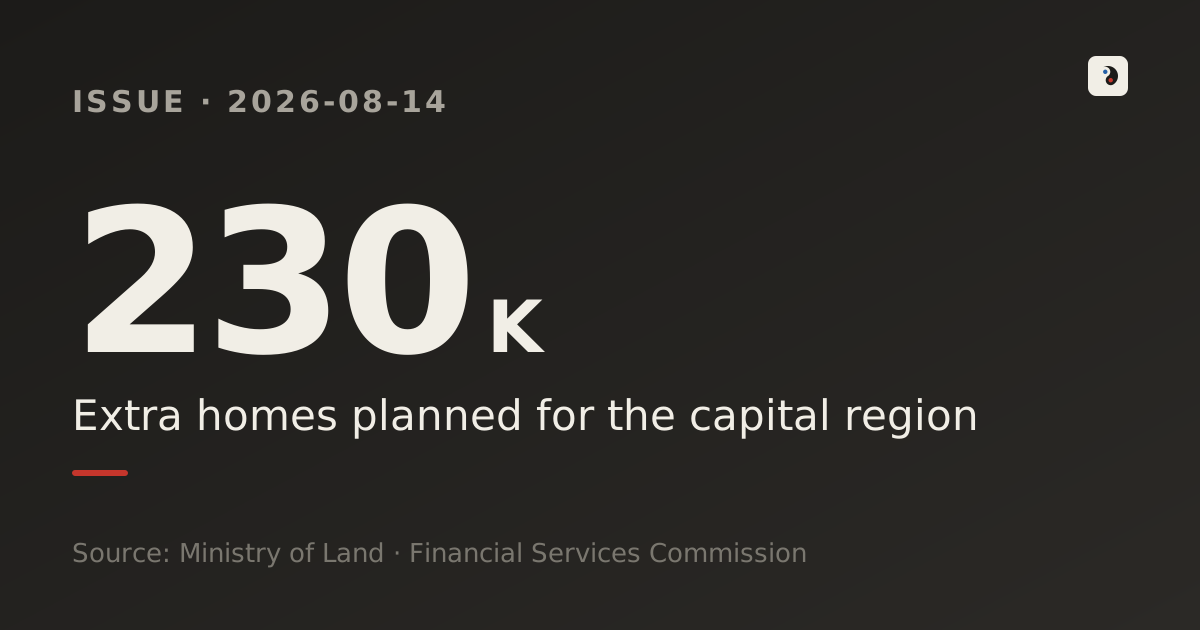
Korea Doubles Housing Loans, Adds 230,000 Homes — Will It Work?
Korea unveiled a housing plan on Aug. 13 adding 230,000+ homes and doubling household loan quotas, as Seoul's jeonse prices rose six times faster than a year ago. Here's whether it can actually cool the market.
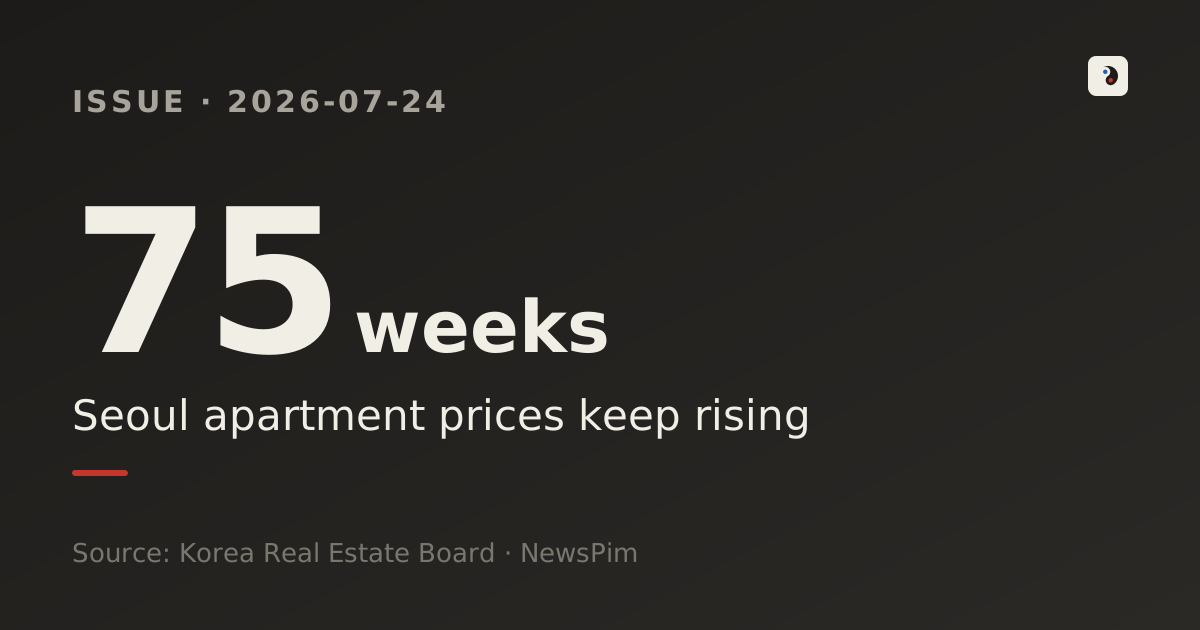
Seoul Home Prices Rise 75 Straight Weeks Despite Rate Hike — Korea's August Tax Overhaul
Seoul apartment prices have risen for 75 straight weeks, closing in on the 85-week record under the Moon administration — even after a rate hike. Here's why Korea's coming tax overhaul could be different, in numbers.

Special counsel: up to 180 days of investigation — where does “690 days” come from?
We split the amended act's 20-day preparation period from its 180-day maximum investigation period. Then, in plain words: what the 690-day total, the 2.709 billion won cost estimate and two warrant rejection rates from different dates each mean.
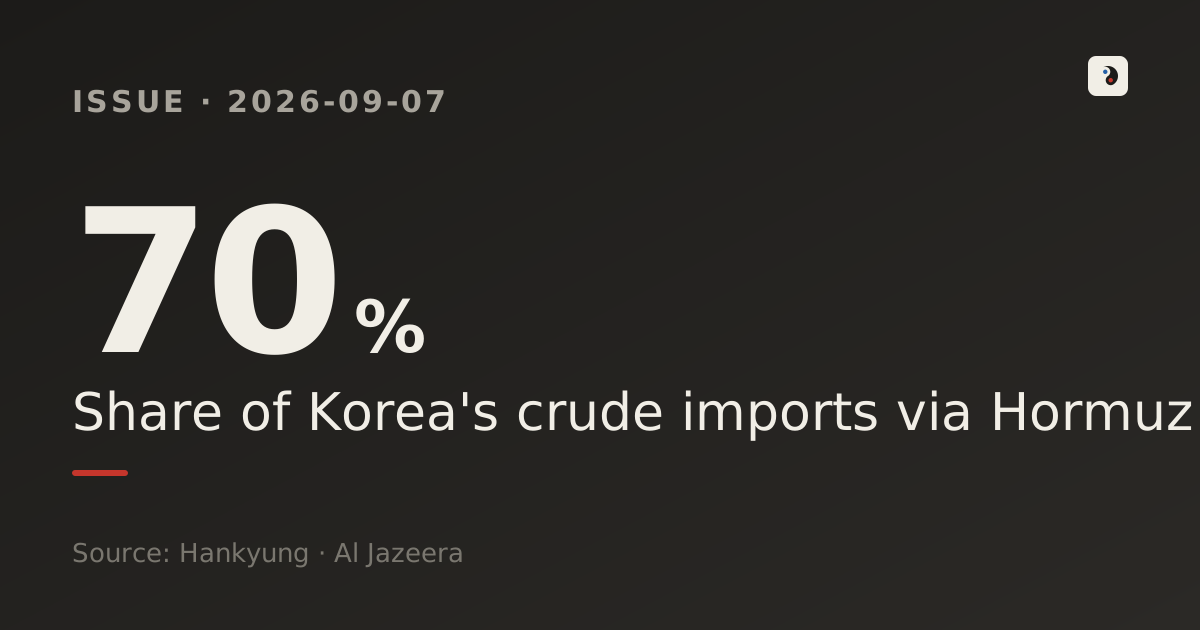
150 Troops, 70% of Oil: South Korea's Hormuz Dilemma by the Numbers
Squeezed between US pressure and Iran's war warning, South Korea is weighing sending 150 troops to the Strait of Hormuz — the route for 70% of its oil imports. Here's the dilemma in numbers.