· Updated 2026-09-10
Korea's 554 Trillion Won Pension Shift From Banks to Brokerages
Correction (2026-09-10): The scope, comparisons and interpretation of key figures have been reviewed and corrected below. The original publication date is retained.
Once as safe and unremarkable as a bank deposit, Korea's retirement pension money is shifting toward funds and ETFs that savers choose for themselves.
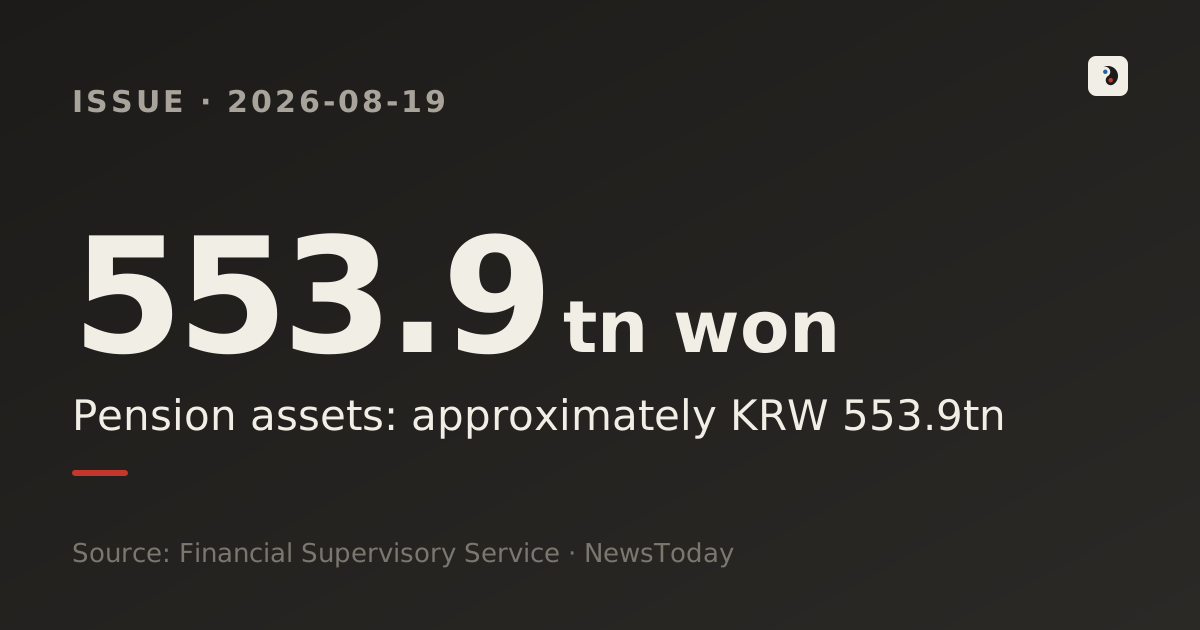
- Retirement-pension assets were approximately KRW 554 trillion in Q2 2026. Banks held 50.8%, while securities firms approached 30%.
- A 2024 rule allowing "in-kind transfers" made switching easy — brokerage assets jumped 46.6% over the past year, more than double the 19.5% growth at banks.
- Korean retirement plans and US 401(k) plans differ in portfolios, currencies and measurement conditions. The quoted return gap alone proves neither why individuals transfer nor one provider sector’s superiority.
What happened
South Korea's retirement pension assets reached 553.88 trillion won by the end of Q2 2026, up 45 trillion won (8.9%) from 508.73 trillion won in Q1. By plan type, defined-benefit (DB) plans grew to 224.2 trillion won (+1.1%), defined-contribution (DC) plans to 163.3 trillion won (+14.1%), and individual retirement pensions (IRP) to 166.4 trillion won (+15.7%) — DC and IRP, where individuals choose their own investments, grew far faster than employer-managed DB plans.
The bigger story is which industry holds the money. Banks still hold the most, at 281.5 trillion won, but their share slipped from 51.9% a year earlier to 50.8%. Brokerages, meanwhile, grew to 165 trillion won — a 29.8% share, just shy of 30%. On August 19 alone, reports put another 5.2 trillion won in fresh outflows from banks to brokerages, confirming this isn't a one-off but a recurring monthly pattern.
Why now — switching got easier
Until recently, moving a retirement pension meant cashing out funds and ETFs entirely, then repurchasing similar holdings at the new provider — a process that could lock in losses or trigger tax headaches. Most people simply left their money where it was. An in-kind transfer system introduced in October 2024 changed that: holdings can now move to another provider without being liquidated first. That's the moment money long parked at banks started actually moving.
A second push came from the default option system, effective July 2023. If a saver doesn't actively choose how to invest, their contributions are automatically placed into a pre-approved default fund — and that approved list includes performance-based funds, not just principal-guaranteed products. That broke the old habit of defaulting to a bank time-deposit-style product.
The numbers
Over the past year, brokerage-held assets grew 46.6%, from 112.6 trillion won to 165 trillion won. Bank-held assets grew just 19.5% over the same period, less than half the brokerage pace.
The gap traces back to returns. Over the five years from 2019 to 2023, the average annual return on U.S. 401(k) plans was 10.12%, versus just 2.42% for Korean retirement pensions. Over 20 years, the gap barely narrows — 8.6% versus 2.3%. Still, moving to a brokerage doesn't automatically fix this.
Even within the default-option system, returns across the four investment tracks varied by as much as 5.7x — yet 85% of participants' assets sit in the lowest-returning track, pulling the overall weighted average down to just 3.69%. Having more choices and actually using them turn out to be two different things.
The debate — return vs. safety
Labor groups and some pension experts warn that the growing share of performance-based products, from 11.3% of assets in 2022 to 17.4% (75.2 trillion won) in 2024, is quietly shifting retirement-income risk onto individuals. Their concern: workers nearing retirement have little time to recover from a market downturn.
The financial industry counters that low-cost, diversified products and stronger custodial oversight make the risk manageable, and argues the old system, with 90% of assets locked into principal-guaranteed products, was itself eroding retirement savings through returns that trailed inflation. Banks are taking the threat seriously: Shinhan Bank cut and restructured its DC-plan fee tiers last month to slow the outflow, and other major banks are weighing similar moves.
What to watch next
Industry estimates suggest banks need at least 10 trillion won in net inflows this half to hold growth near last year's roughly 16% pace — without it, their overall market share could dip below 50% as soon as next quarter. If the current trend holds, brokerages crossing the 30% mark looks like a matter of time.
For individual savers, more choice means the default option alone may no longer be enough — picking a track that matches one's risk tolerance and time to retirement will increasingly determine actual returns. On the policy side, expanding performance-based products cuts both ways: better returns, but more retirement-income volatility, which is likely to fuel calls for stronger fiduciary duties and clearer product disclosure.
- "Retirement Pension Assets Top 553.9tn Won... DC/IRP Boost Bond Demand" (Kiwoom Securities) — News2Day (뉴스투데이) (2026.08.12)
- 554tn Won Pension "Great Migration": Money Leaves Banks for Brokerages, ETFs — Joseilbo (조세일보) (2026.08.12)
- Banks' 50% Pension Market Share at Risk — Fee Cuts as a Defense — Money Today (머니투데이) (2026.08.10)
- From Banks to Brokerages: The Pension Money Move [550tn Won Pension War, Pt.1-2] — eToday (이투데이) (2026.08.18)
- Money Today Print Edition Headlines — Aug. 19 — Money Today (머니투데이) (2026.08.19)
- [Op-ed] The U.S. 401(k) and Korea's Pension System — Newspim (뉴스핌) (2026.07.23)
- Bigger Retirement Pensions, Bigger Individual Investment Risk — Maeil Labor News (매일노동뉴스) (2026.05.18)
- Default Option Grows Bigger, but Returns Stuck at 3.7% Amid "Stable" Concentration — Nongmin Shinmun (농민신문) (2026.03.05)
This is nuloq's own analysis of the public reporting and statistics listed under Sources, produced with the help of AI tools. It's for information only, not a recommendation to buy any financial product, and reflects publicly available data as of August 19, 2026. We correct the text if facts change or errors are found.
Related posts
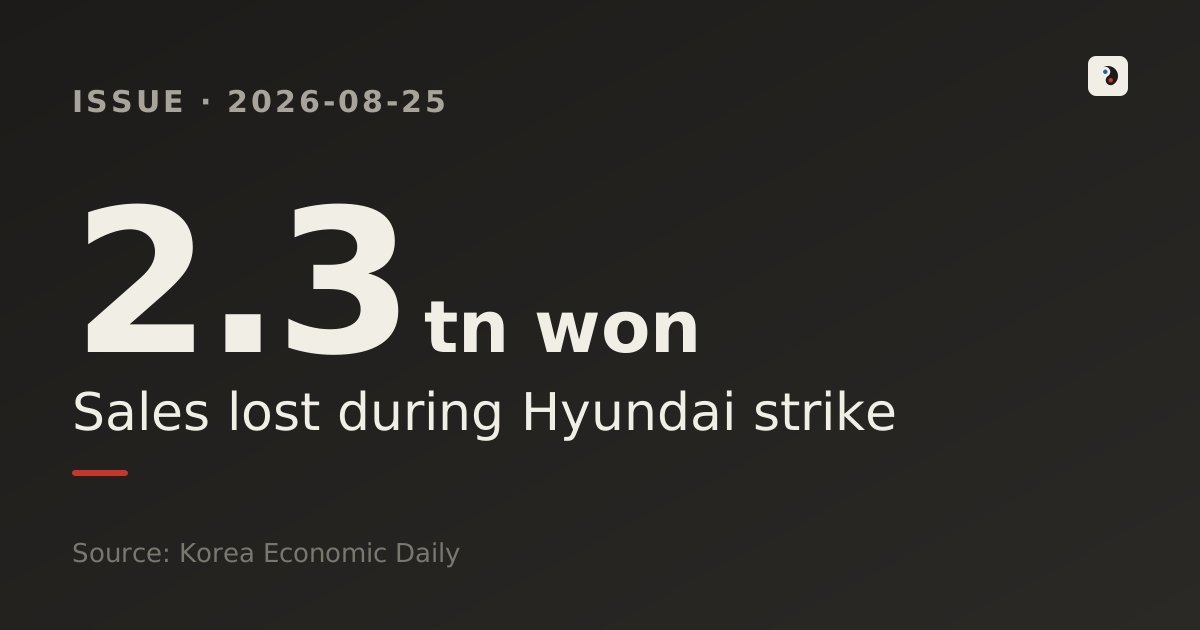
Hyundai's 111-Day Wage Standoff Ends — 3 Numbers Behind the Deal
After 111 days and Korea's first full strike in a decade, Hyundai's union got a wage deal. Here's what the 2.3 trillion won in losses actually bought.
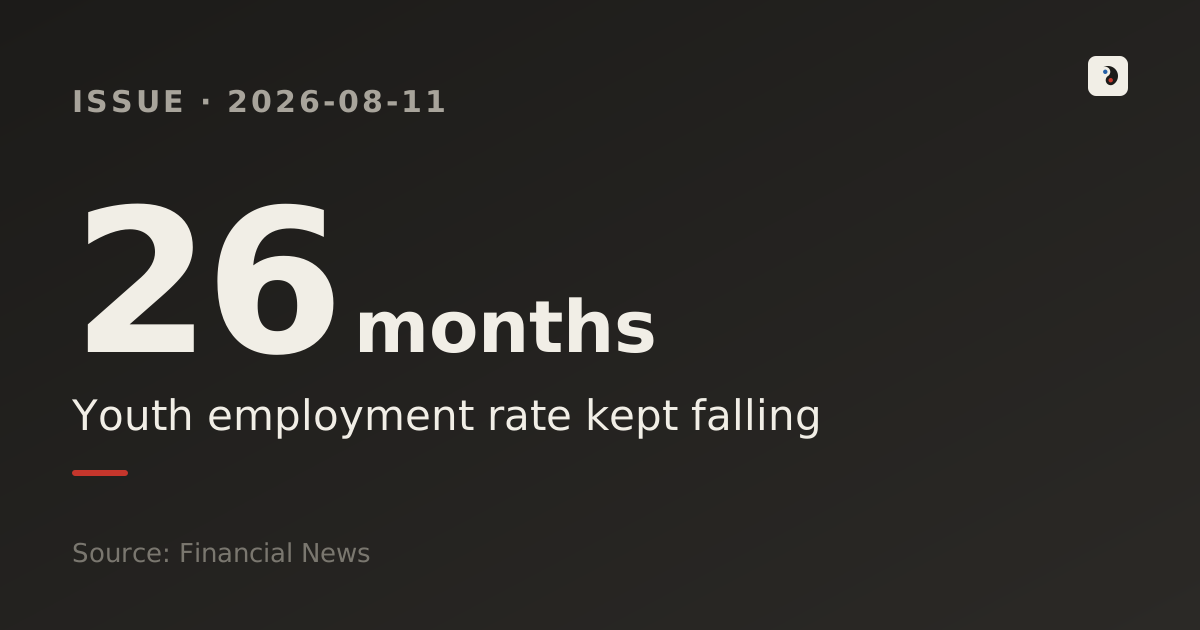
Korea Youth Employment Falls 26th Month — New Jobs Plan
South Korea's youth employment rate has fallen for 26 straight months to 43.9%. Here's why, and whether the government's new jobs plan can reverse it.
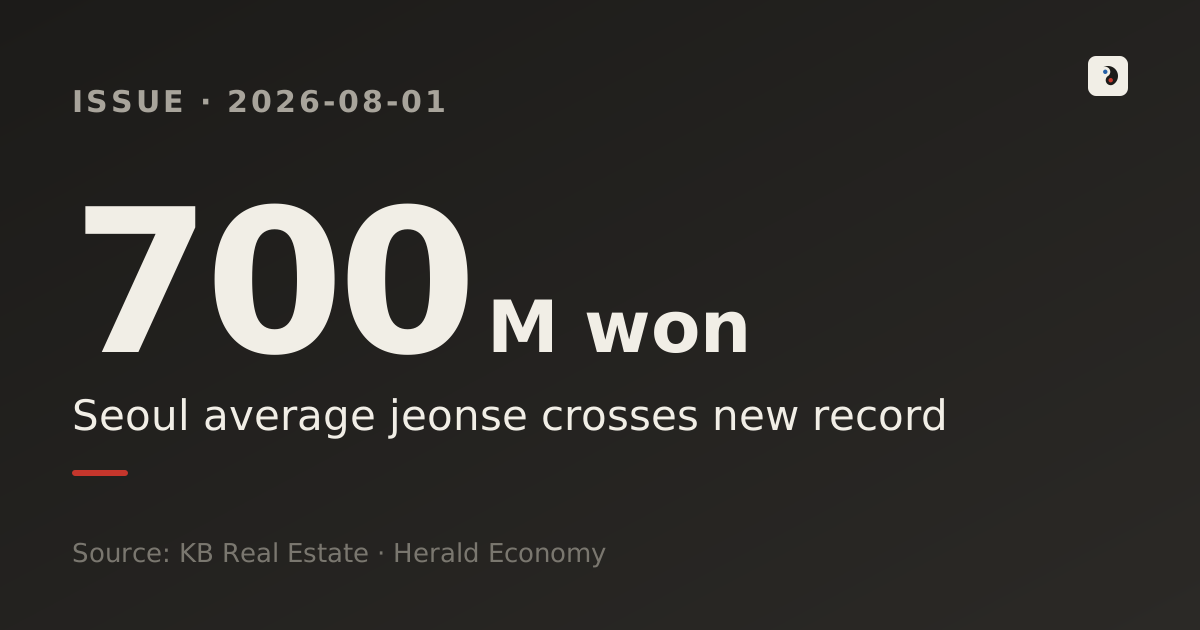
Seoul Jeonse Deposits Top ₩700 Million for the First Time as Supply Halves
Seoul's average apartment jeonse deposit hit ₩704.6 million in July, a record high. New housing supply just fell 48% — here's the data behind the crunch.
150 Troops, 70% of Oil: South Korea's Hormuz Dilemma by the Numbers
Squeezed between US pressure and Iran's war warning, South Korea is weighing sending 150 troops to the Strait of Hormuz — the route for 70% of its oil imports. Here's the dilemma in numbers.