· Updated 2026-09-10
Korea Youth Employment Falls 26th Month — New Jobs Plan
Correction (2026-09-10): The scope, comparisons and interpretation of key figures have been reviewed and corrected below. The original publication date is retained.
Youth employment in Korea has been shrinking for 44 straight months. Today the government unveiled a recovery plan — here's what the numbers say about whether it can work.
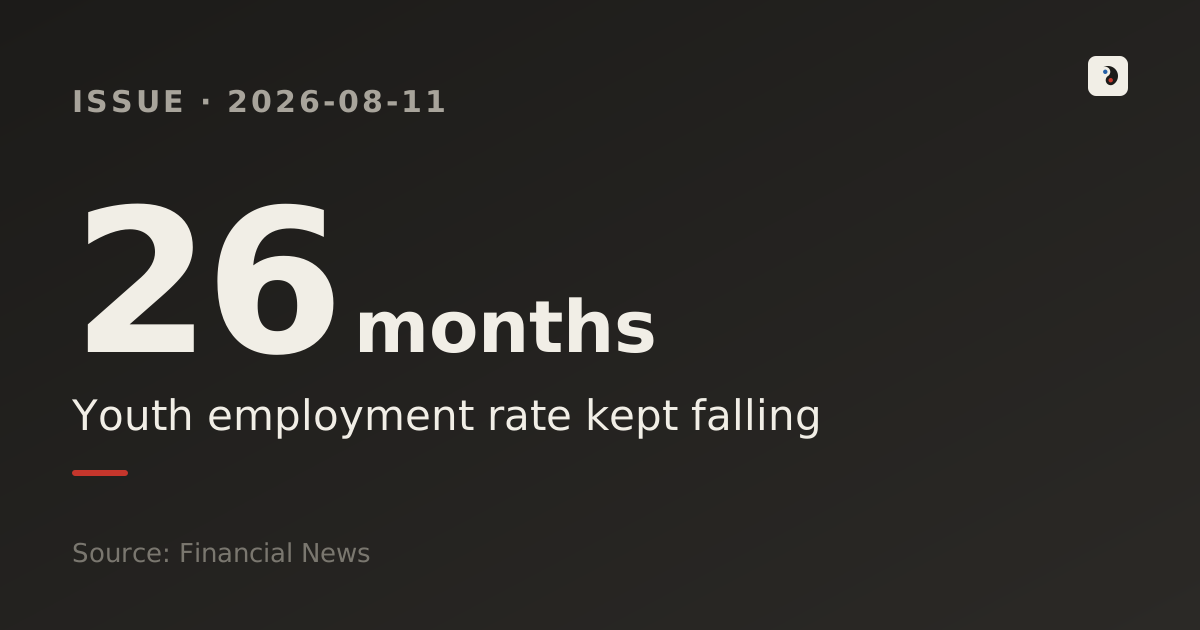
- Korea's youth (15–29) employment rate fell to 43.9% in June, down 1.7 points year-on-year and the 26th straight monthly decline; manufacturing jobs have now fallen for 24 months in a row.
- On August 11, the government unveiled a "Youth Employment Recovery Plan" targeting 200,000+ skilled workers trained and 200,000+ quality jobs created by 2030 in chip, AI-data-center, and physical-AI megaprojects.
- Korea’s 7.2% covers ages 15–29 in May 2026; the OECD’s 11.4% covers ages 15–24 in April. Different ages and months prevent a direct assessment of Korea’s relative labour-market performance.
What happened
South Korea's youth (ages 15–29) employment rate came in at 43.9% in June — down 1.7 percentage points from a year earlier, and the 26th consecutive month of decline in a slide that began in May 2024. Manufacturing employment fell by 97,000 over the same period, marking 24 straight months of losses.
Total employment rose to 29.154 million, up 63,000 — but that gain was propped up by workers in their 60s and the service sector. Korea's youth population itself shrank by 147,000 over the same period, so an aging population is casting a shadow over the youth jobs numbers too.
On August 11, the government unveiled its "Youth Employment Recovery Plan" at a cabinet meeting. The core goal: train 200,000+ specialists for the semiconductor, AI-data-center, and physical-AI "megaprojects," and create 200,000+ quality jobs in the private and public sectors by 2030. The plan also promises stronger incentives at every stage of a young worker's path — from job search to hiring, onboarding, and career growth.
Why now — the roots of a 26-month slide
A decline this long is unusual. Statistics Korea data show the youth employment rate climbing out of its pandemic low (42.3% in 2020) to reach 46.4% in 2022 — the best it had been since the pandemic. That momentum has since reversed, dragging the rate back down into the low-to-mid 40s this year.
The causes are layered. First, 24 straight months of manufacturing job losses have narrowed the stable-job track many young workers preferred. Second, analysts point to companies scaling back entry-level hiring as they adopt AI, raising the bar for young people trying to enter the workforce for the first time. Third, there's a demographic factor: the youth population itself is shrinking, which shapes the employment-rate math. That the new plan pairs "training" with "job creation" signals the government is trying to tackle both the supply of workers and the demand for jobs at once.
By the numbers
Over the past year, youth employment and unemployment moved in opposite directions. Statistics Korea's annual supplementary survey on youth (conducted each May) shows the employment rate falling from 46.2% to 43.8% — down 2.4 points — while the unemployment rate rose from 6.6% to 7.2%, up 0.6 points. Fewer young people are working; more are looking.
Korea’s 7.2% covers ages 15–29 in May 2026; the OECD’s 11.4% covers ages 15–24 in April. Different ages and months prevent a direct assessment of Korea’s relative labour-market performance.
Will the plan work? Views are split
Industry figures and government officials argue that funneling young workers early into the new jobs created by the megaprojects can solve labor shortages and youth unemployment at the same time — semiconductor and AI-data-center firms have long complained of a chronic shortage of skilled workers.
Labor-market economists, though, say the headline numbers — "200,000 trained, 200,000 jobs" — matter less than the quality of those jobs. Seoul has rolled out youth jobs plans before, and the employment rate has kept falling for 26 straight months regardless. Young workers say what they want isn't a number on a press release but stable, long-term positions — so whether this plan actually creates hiring incentives that stick will be the real test.
What to watch next
The government plans to follow up with a detailed policy package within the third quarter. Three things are worth tracking:
- Whether the "200,000 jobs" turn into real postings and hires — or amount to a repackaging of existing plans.
- How well the labor demand from the megaprojects matches what young workers actually want (IT, R&D, and similar fields).
- Whether next month's employment data extends the streak to 27 months — or marks the turning point.
Until the detailed plan lands in Q3, it's too early to say whether today's announcement was a genuine turning point or just another declaration.
- Despite chip boom and state support, youth employment rate falls to 43.9% for a 26th straight month — Financial News (Korea) (2026.07.15)
- May 2026 Supplementary Survey on Youth, Economically Active Population Survey — Dazabi Insurance News (2026.07)
- "Resting" population among householders in their 30s is rising — a labor-statistics column — Maeil Labor News (2026.06)
- Weekly Schedule of Economic and Social Ministries, Aug 10–14 — Etoday (2026.08.09)
- Youth Employment Recovery Plan to Be Announced — Weekly Preview, Ministry of Economy and Finance — Edaily (2026.08.09)
- Government to Unveil Youth Employment Recovery Plan in Q3, Training 200,000+ for Advanced Industries — Ajunews (Asia Economy) (2026.07.16)
- Warning Lights on Annual Employment Rate: First Post-Pandemic Decline Risk Amid Youth Slump, Chip Concentration — Financial News (Korea) (2026.08.06)
- Why Korea's Youth Unemployment Rate, Lower Than the OECD Average of 11.4%, Is Still No Cause for Comfort — Youth Assembly (2026.07)
This analysis was researched and written by nuloq with the help of AI tools, drawing on the reporting and official statistics listed above. It's meant to inform, not to serve as investment, legal, or medical advice, and reflects information available as of August 11, 2026. We'll correct anything found to be inaccurate.
Related posts
Hyundai's 111-Day Wage Standoff Ends — 3 Numbers Behind the Deal
After 111 days and Korea's first full strike in a decade, Hyundai's union got a wage deal. Here's what the 2.3 trillion won in losses actually bought.
Korea's 554 Trillion Won Pension Shift From Banks to Brokerages
South Korea's pension market hit 554 trillion won in Q2 2026, with banks' share falling to 50.8% as brokerages near 30%. The data behind the shift, and why now.
Seoul Jeonse Deposits Top ₩700 Million for the First Time as Supply Halves
Seoul's average apartment jeonse deposit hit ₩704.6 million in July, a record high. New housing supply just fell 48% — here's the data behind the crunch.
150 Troops, 70% of Oil: South Korea's Hormuz Dilemma by the Numbers
Squeezed between US pressure and Iran's war warning, South Korea is weighing sending 150 troops to the Strait of Hormuz — the route for 70% of its oil imports. Here's the dilemma in numbers.