· Updated 2026-09-10
Won internationalisation: reading the historical 0.1% payment share from 2022
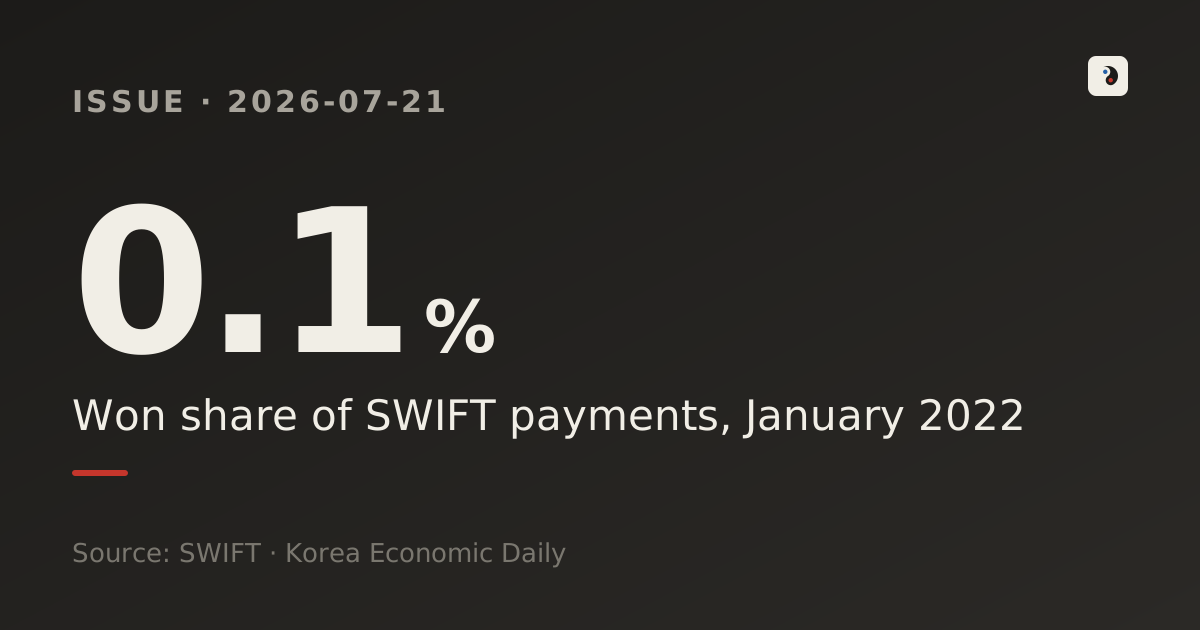
Correction (2026-09-10): The scope, comparisons and interpretation of key figures have been reviewed and corrected below. The original publication date is retained.
A deep look at Seoul's boldest currency reform since the 1997 crisis — the numbers, the history, and the risks.
- On July 19, five South Korean agencies unveiled a "Won Internationalization Roadmap," following 24-hour FX trading and promising an offshore won settlement network by January 2027.
- The quoted 0.1% won payment share refers to January 2022. It is historical, not the current 2026 share; an updated comparison requires SWIFT data for the same date.
- Experts warn that easier capital access also means faster transmission of US rate shocks and a possible loss of monetary policy autonomy.
What happened
On July 19, South Korea's Ministry of Economy and Finance, Financial Services Commission, Bank of Korea, Financial Supervisory Service, and Korea Securities Depository jointly unveiled a "Won Internationalization Roadmap" aimed at turning the won from a "restricted currency" into a "freely convertible currency." The government had already moved to round-the-clock domestic FX trading on July 6 — running without a break from 6 a.m. Monday to 6 a.m. Saturday — and plans to build a new offshore won settlement network by January 2027 that would let people open and settle won accounts abroad.
Foreign users will be able to send won to one another through their own accounts at offshore won settlement institutions without opening a domestic bank account, and such transactions will see the advance-reporting and bank-verification requirements under Korea's foreign exchange law significantly eased.
Why now — 30 years as a "restricted currency"
The won's "restricted currency" status traces back to the 1997 Asian financial crisis. In 1993, the government made an exception allowing financial institutions to raise short-term trade financing and loans through overseas branches, opening the door to a wave of short-term foreign debt. When that hot money fled all at once in November 1997, the exchange rate spiked and Korea slid into a sovereign default crisis. Ever since, Korea has tightly restricted foreigners' access to the won — a framework that has held for nearly three decades. As Newspim reported, the Ministry of Economy and Finance itself has framed this roadmap as "a reform that rewrites the foundation of exchange-rate policy since the financial crisis," a sign that this goes well beyond routine housekeeping.
The numbers — historical payment share and market access
The government's steady expansion of FX trading hours reads as another attempt to close that gap. Before July 2024, Korea's domestic FX market was open only 6.5 hours a day, from 9 a.m. to 3:30 p.m. on weekdays. That July, closing time was pushed to 2 a.m. the next day, and since July 6, 2026, the market has run virtually nonstop, 24 hours a day on weekdays. According to Hankyung, that expansion also cut morning-session exchange-rate volatility by 41.6%.
The debate — benefits and risks arrive together
If won internationalization advances, companies could save on currency-conversion and hedging costs, and foreign investors would gain easier access to Korea's capital markets. The Korea Capital Market Institute (KCMI) views won internationalization as a net positive for capital-market deepening and FX liquidity. But the same research flags a trade-off: as won trading becomes freer, external shocks — such as US Federal Reserve rate moves — would transmit into Korea faster, and a widening US-Korea rate gap could erode the Bank of Korea's monetary-policy autonomy.
There's a cautionary comparison close by. China has pursued yuan internationalization without full capital-account liberalization, instead opening gradually through Hong Kong's offshore market — and the yuan's share of global payments still sits around 3%. Even the yuan's share of Korea's payments to China only recently crossed 1% (1.2%) for the first time, a reminder that internationalizing an Asian currency has been a hard problem for every country that has tried it.
What's next — what to watch
If the offshore won settlement network launches on schedule in January 2027, the first test will be whether the won's share of global payments actually rises. Just as important is whether the government's promised "multi-layered risk-management system" holds up when capital flows swing sharply. If the US raises rates again just as won access has widened, and capital rushes out, won internationalization could boomerang into greater exchange-rate volatility. If, instead, the payment share climbs gradually without major shocks, this roadmap will likely be remembered as the most fundamental shift in Korea's exchange-rate policy since 1997.
- "Foreigners Can Now Trade Won Freely Offshore" — Government Unveils Won Internationalization Roadmap — Asia Today (2026.07.19)
- Foreigners to Open Accounts and Trade Abroad — Government Speeds Up "Won Internationalization" — Seoul Shinmun (2026.07.20)
- Ministry to Unveil Won Internationalization Roadmap This Month — "A Reform of Exchange Policy's Foundations Since the Crisis" — Newspim (2026.07.08)
- The Won Sheds Its "Restricted Currency" Tag — Government Unveils Roadmap to Free Convertibility — Herald Economy (2026.07.18)
- FX Market Goes 24 Hours — Morning-Session Volatility Falls 41% — Hankyung (2026.07.06)
- The Won's Share of Global Payments Is 0.1% — "Korea Becoming a Reserve-Currency Nation? Unrealistic" — Hankyung (2022.02.22)
- Reconsidering the Benefits and Risks of Won Internationalization — Korea Capital Market Institute (KCMI) (2025.03.07)
- Yuan Internationalization as Seen From China — Strengthening Status, Not Chasing "Reserve Currency" — Kyunghyang Shinmun (2026.01.20)
This is nuloq's own analysis based on the public reporting and official data listed under Sources, written with the help of AI. It is for information only — not investment, legal, or medical advice — and reflects the situation at the time of writing. We correct the text if errors are found.
Related posts
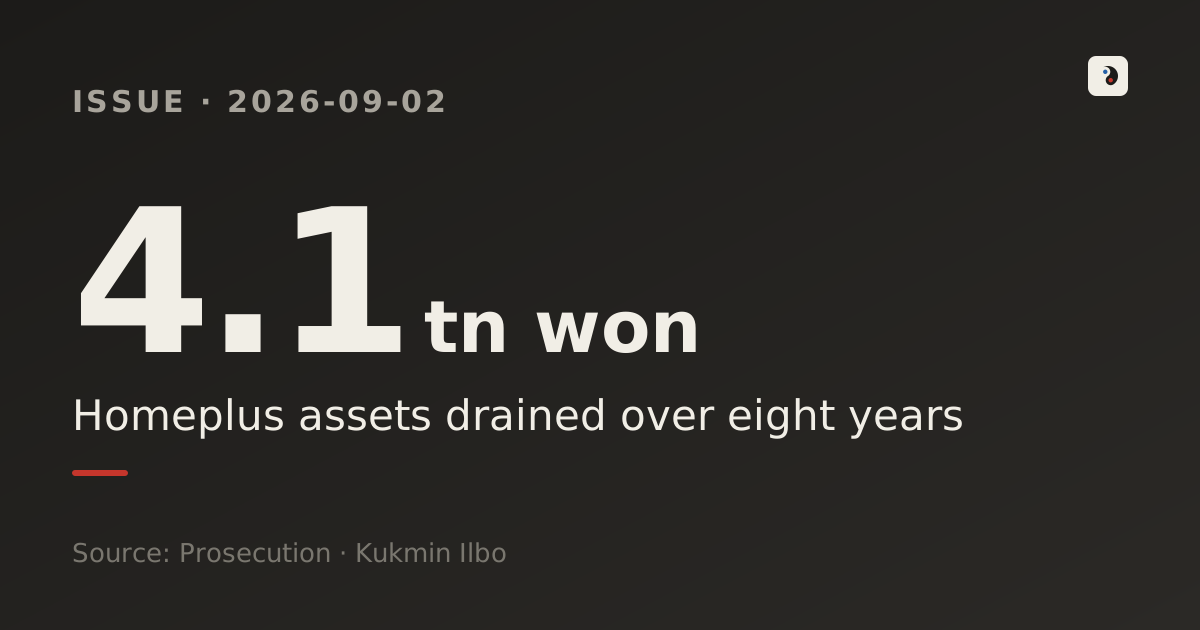
Homeplus Creditor Vote: MBK's ₩4.1 Trillion Exit, ₩1.9 Trillion Accounting Mystery
Creditors voted Sept. 2 on Homeplus's fate. Here's how MBK drained ₩4.1 trillion from the retailer over eight years, then turned ₩1.9 trillion of debt into equity six days before its rehabilitation filing.
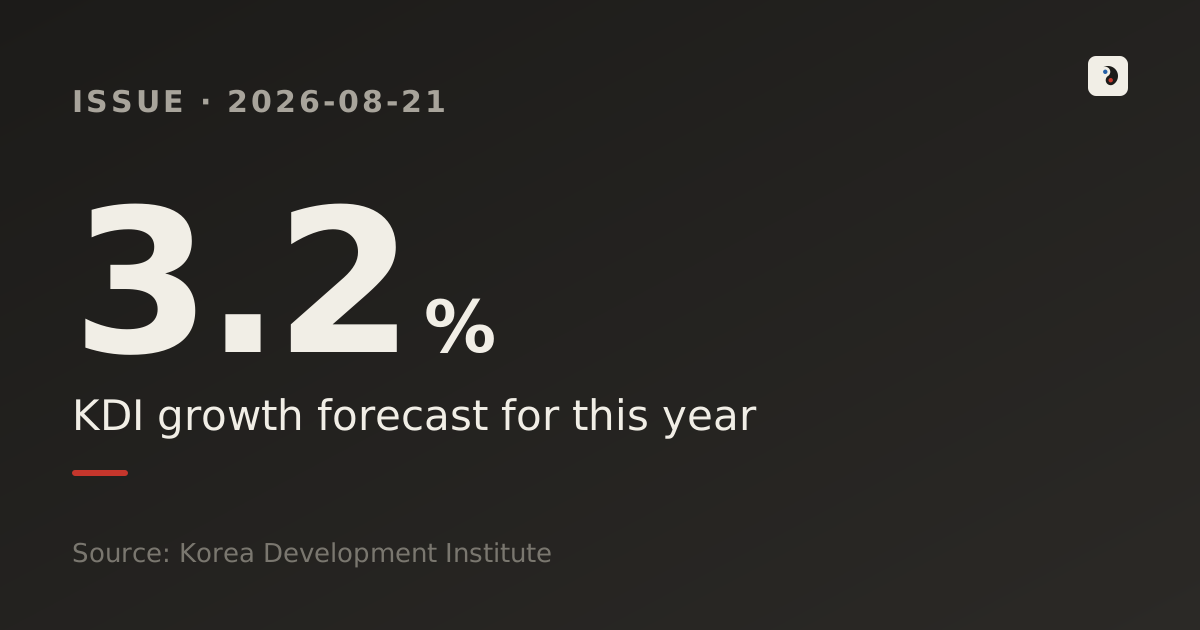
Korea's Growth Forecast Hits 3.2% — So Why Are New Jobs Falling?
KDI raised South Korea's 2026 growth forecast to 3.2% in 3 months on a chip boom — but new-jobs forecast fell from 170,000 to 110,000. The numbers, explained.
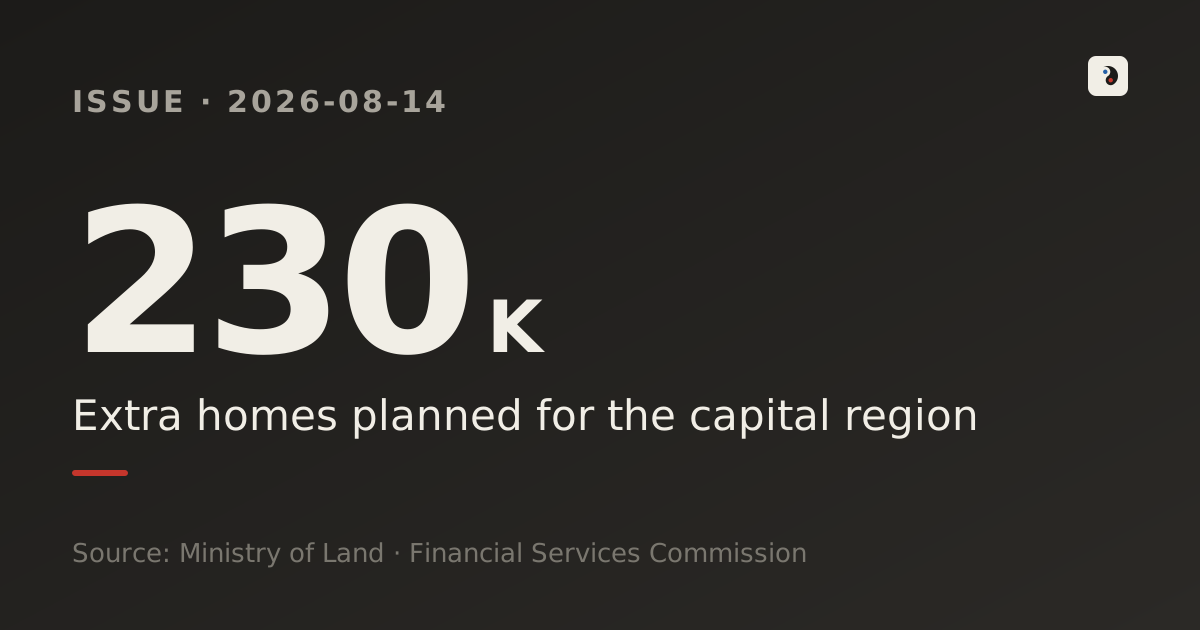
Korea Doubles Housing Loans, Adds 230,000 Homes — Will It Work?
Korea unveiled a housing plan on Aug. 13 adding 230,000+ homes and doubling household loan quotas, as Seoul's jeonse prices rose six times faster than a year ago. Here's whether it can actually cool the market.
Chips Hit 46.8% of Korea's Exports — Inside a Record-High Warning Sign
Korea's exports hit a record $21.3B in early August, and 46.8% of it was chips alone. Here's the data behind how a share once in the low 20s doubled in two years — and why the boom itself is a red flag.