2026-07-15 Jobs Rebound Hides a Youth Slump, 120mm Rains, Samsung Union Wave
An in-depth, data-driven look at the three issues Korea is watching today — with the context and numbers the headlines leave out.
Jobs Rose by 63,000 — While Youth Employment Fell by 197,000
Korea's job count turned positive again after just one month. But break the table apart and the gains and losses split cleanly in two — here is the structure the word 'rebound' hides, in numbers.
A number turning positive is not automatically good news.
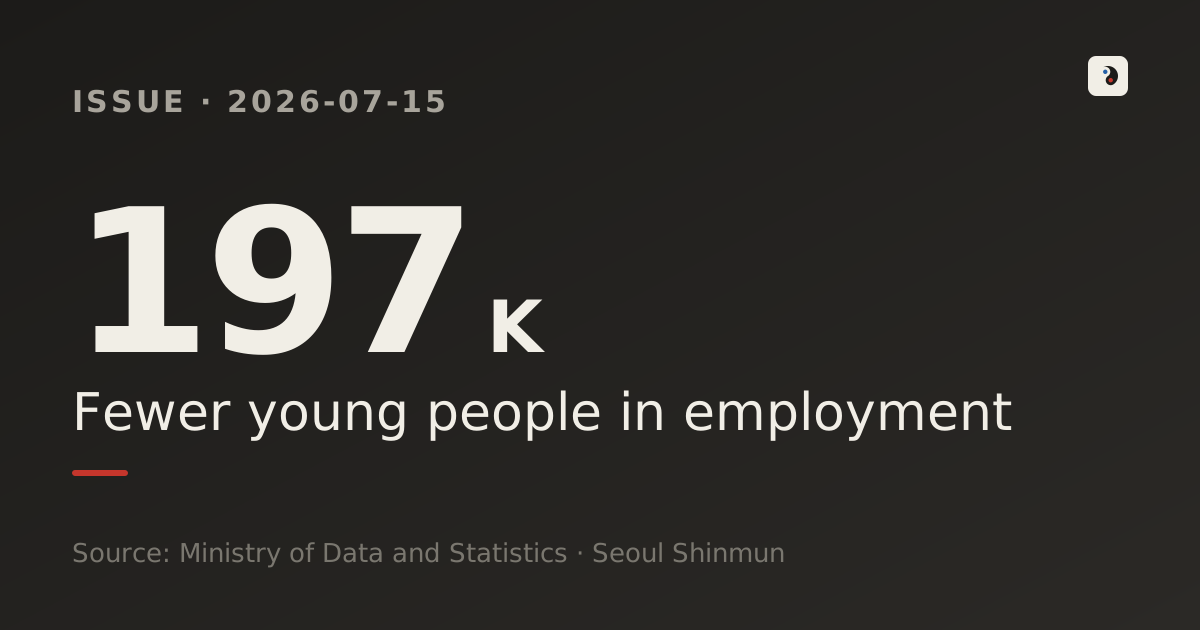
According to the June employment report released on the 15th by the National Data Service (Korea's statistics agency), employment reached 29,154,000 — up 63,000 from a year earlier — rebounding in a single month from May's drop of 40,000 caused by the Middle East crisis. Yet in the very same release, the employment rate for those 15 and older fell 0.2 percentage points to 63.4%, its third consecutive monthly decline. Job counts and the employment rate moved in opposite directions.
By the end of this piece, you will see the generational and sectoral split that the '63,000 jobs added' headline conceals.
Reading the numbers: three times the net gain came from those 60+
Decompose the change and the picture shifts. Health and social welfare added 214,000 jobs and workers aged 60 and over added 211,000 — while youth (15–29) lost 197,000 jobs, a 44th consecutive month of decline, and manufacturing (-97,000, 24 straight months) and construction (-67,000) kept shrinking. With gains among those 60+ alone more than triple the total net increase of 63,000, this rebound was effectively propped up by care-sector and senior jobs.
Context and outlook: growth forecast at 3%, employment slipping for three months
The youth employment rate fell 1.7 percentage points to 43.9%, its 26th straight month of decline since May 2024. The report landed in the very week the government raised its growth forecast to 3% and unveiled its '3-4-5 vision' policy goals (Seoul Shinmun), making the contrast starker. Korea's semiconductor-led export boom creates few jobs directly — a mismatch between capital-intensive growth and the jobs young people seek. Until that changes, the calm-looking 2.8% unemployment rate (unchanged from last year) will keep masking a widening divide.
This month's real report card is not 'how many jobs were added' but 'who gained and who lost.'
After 50mm-an-Hour Rain: 4 Things to Check Today
Overnight, rain of up to 50mm per hour swept the capital region and Gangwon, which has already passed 100mm cumulative. With the second half of monsoon season underway, here are 4 checks to make before the next rain cloud.
The first downpour of the late monsoon season swept across central Korea overnight.
The Korea Meteorological Administration forecast very heavy rain from the evening of the 14th to dawn on the 15th — 20–30mm per hour over the capital region, Gangwon and Chungcheong, and 30–50mm per hour in northern Gyeonggi and Gangwon — with cumulative rainfall in the capital region expected to top 120mm. Gangwon has indeed passed 100mm, with small-scale damage including 8 fallen trees (Newspim). The Ministry of the Interior and Safety, chaired by Minister Yun Ho-jung, convened a response meeting of 10 central agencies and 16 local governments and ordered preemptive closures of underpasses and landslide-prone areas.
By the end of this piece, you will have 4 checks for your home and commute before the next rain band arrives.
Background: why underpasses and landslides get closed first
There is a reason the ministry drew its first control lines at underpasses and landslide-prone slopes. Once rain exceeds 30mm per hour, water fills low-lying and underground spaces faster than people can decide to evacuate — as the 2023 Osong underpass tragedy showed, it turns deadly within minutes. The repeated lesson: by the moment a road 'still looks passable,' it is already too late.
Action: what to check while the rain pauses today
This monsoon is running in short, intense bursts. The 4 items below only work if you check them now, during the lull — once water starts rising, your options shrink fast.
Disaster preparedness is cheapest before the rain, and most expensive once the water is rising.
Two in One Month — Why Samsung Affiliates Keep Unionizing
Semes, Samsung Electronics' subsidiary and Korea's No. 1 chip-equipment maker, just got its first union — the second Samsung affiliate this July after Samsung SDS. Here is how far 'union-free Samsung' has come, six years after abandoning the doctrine.
The phrase 'union-free management' is fast becoming a dictionary relic.
On the 15th, a labor union formally launched at Semes — Korea's largest semiconductor-equipment maker, 91.54% owned by Samsung Electronics. The union will recruit across all sites in Dongtan, Cheonan, Hwaseong and Pyeongtaek, aiming for its first collective bargaining next year. Its core demands: securing the calculation basis for performance bonuses and client-contribution profits, and reviewing a bonus scheme linked to Samsung Electronics' semiconductor (DS) division. Moves to organize are also under way at other equipment firms such as Tokyo Electron Korea.
By the end of this piece, you will see what has been unfolding inside once union-free Samsung over six years.
Background: six years after the 2020 pledge, the parent is past half
The starting point was chairman Lee Jae-yong's 2020 declaration ending 'union-free management.' Six years on, as of this May, union membership inside Samsung Electronics — 70,850 in the supra-company union and 16,286 in the National Samsung Electronics Union — exceeds half of its roughly 130,000 employees (FNNews). On July 6, Samsung SDS saw its first union launch, signing up 2,000 members within two hours (Newspim); nine days later, Semes followed. A wave that crossed the halfway mark at headquarters is now spreading to affiliates and the equipment industry.
Why now: they demand the formula, not just the pay
What is telling is the demand itself. The Semes union's first priority is not a raise but 'the calculation basis for bonuses.' When the AI chip boom enlarges an equipment subsidiary's contribution while the formula behind rewards stays opaque, people react less to absolute pay than to comparable fairness. The moment their bonus sits next to the parent DS division's, organizing becomes a matter of arithmetic, not ideology.
The spread of unions is not grand ideology — it is another name for the demand to know how one's share is calculated.
Each issue is nuloq's own analysis, drawing on the original reporting and public data (official statistics and institutional sources), written with the help of AI. See each card's link and in-text citations for sources.
Related posts
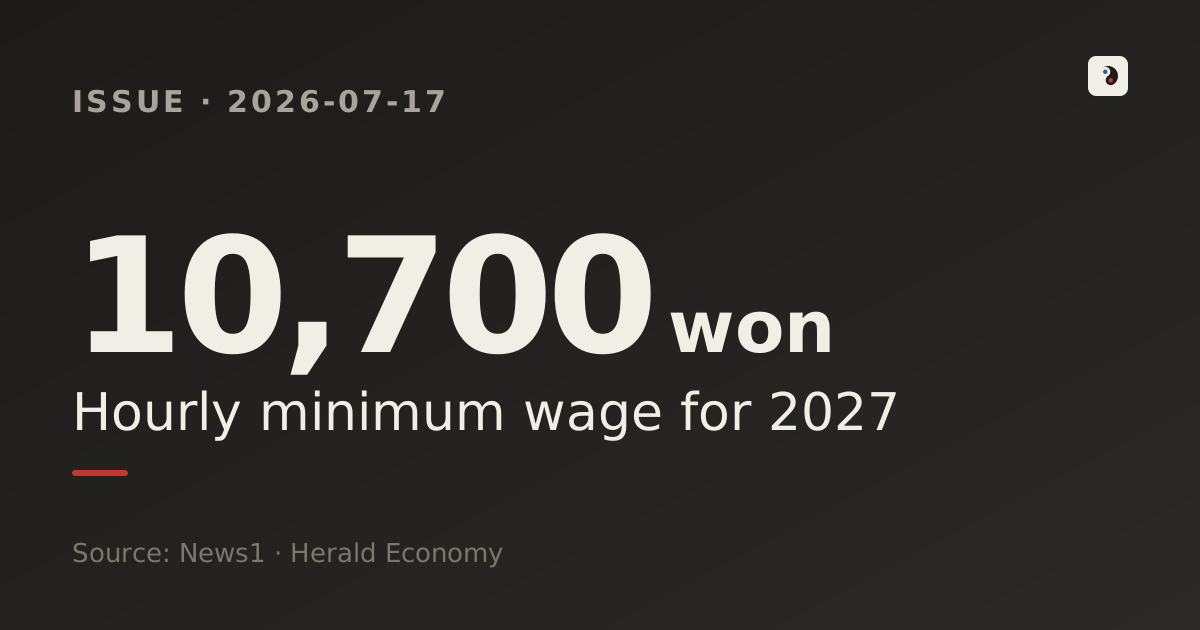
Korea's Minimum Wage Hits 10,700 Won — Why Both Sides Are Furious
South Korea's 2027 minimum wage rose to 10,700 won an hour. Small businesses carry record debt, while 12% of workers still aren't paid even that much.
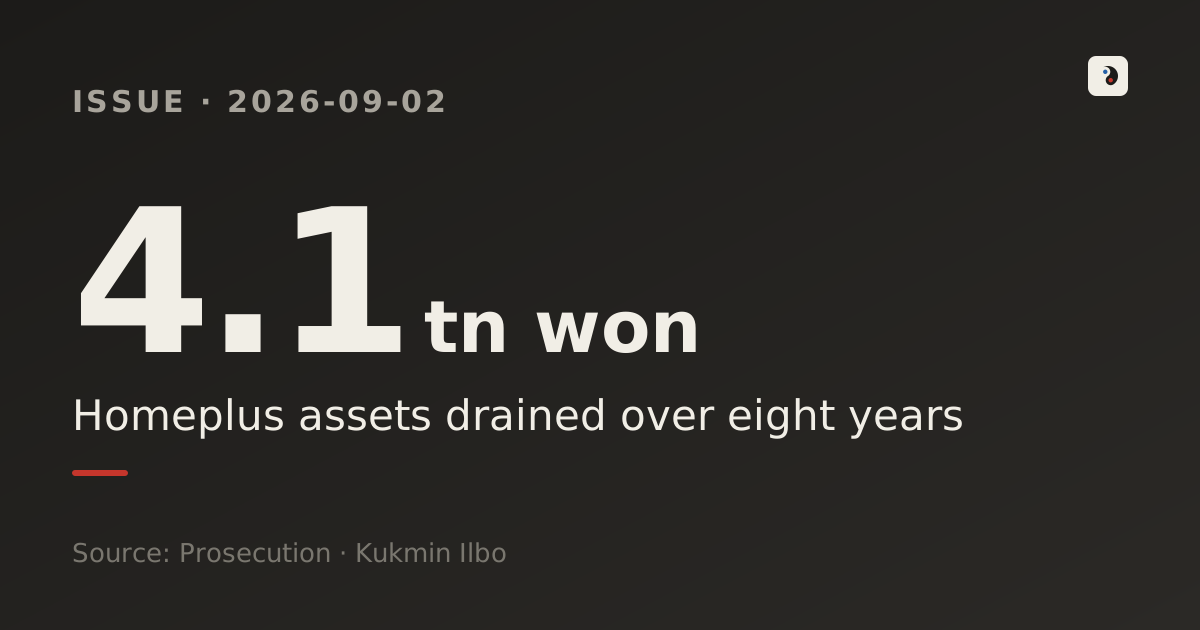
Homeplus Creditor Vote: MBK's ₩4.1 Trillion Exit, ₩1.9 Trillion Accounting Mystery
Creditors voted Sept. 2 on Homeplus's fate. Here's how MBK drained ₩4.1 trillion from the retailer over eight years, then turned ₩1.9 trillion of debt into equity six days before its rehabilitation filing.
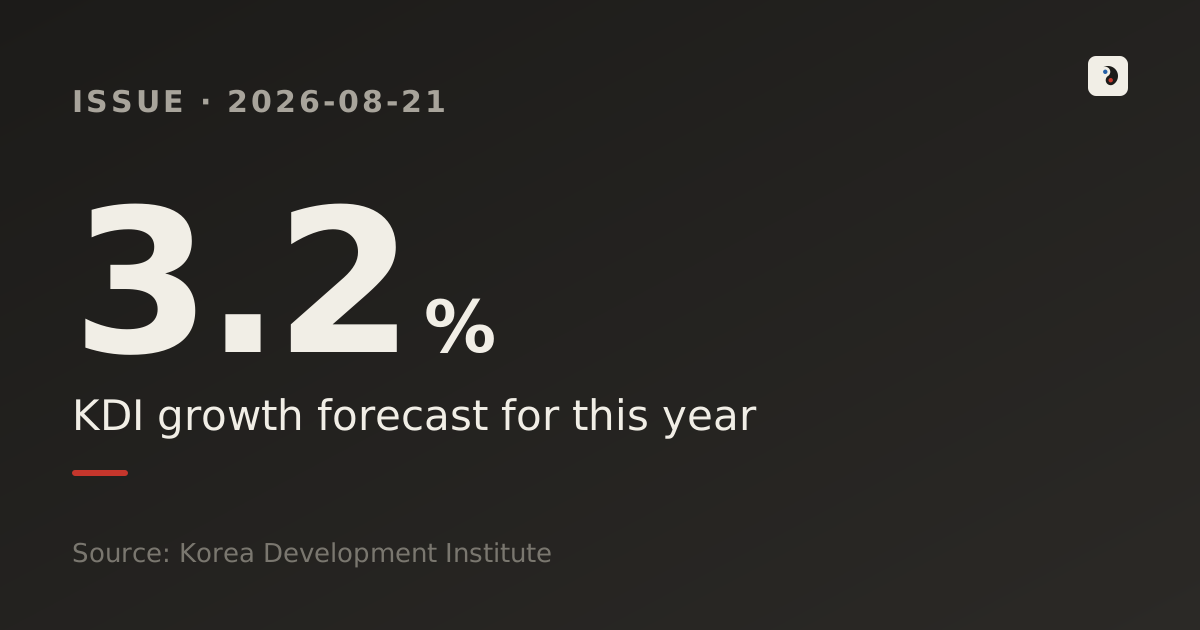
Korea's Growth Forecast Hits 3.2% — So Why Are New Jobs Falling?
KDI raised South Korea's 2026 growth forecast to 3.2% in 3 months on a chip boom — but new-jobs forecast fell from 170,000 to 110,000. The numbers, explained.
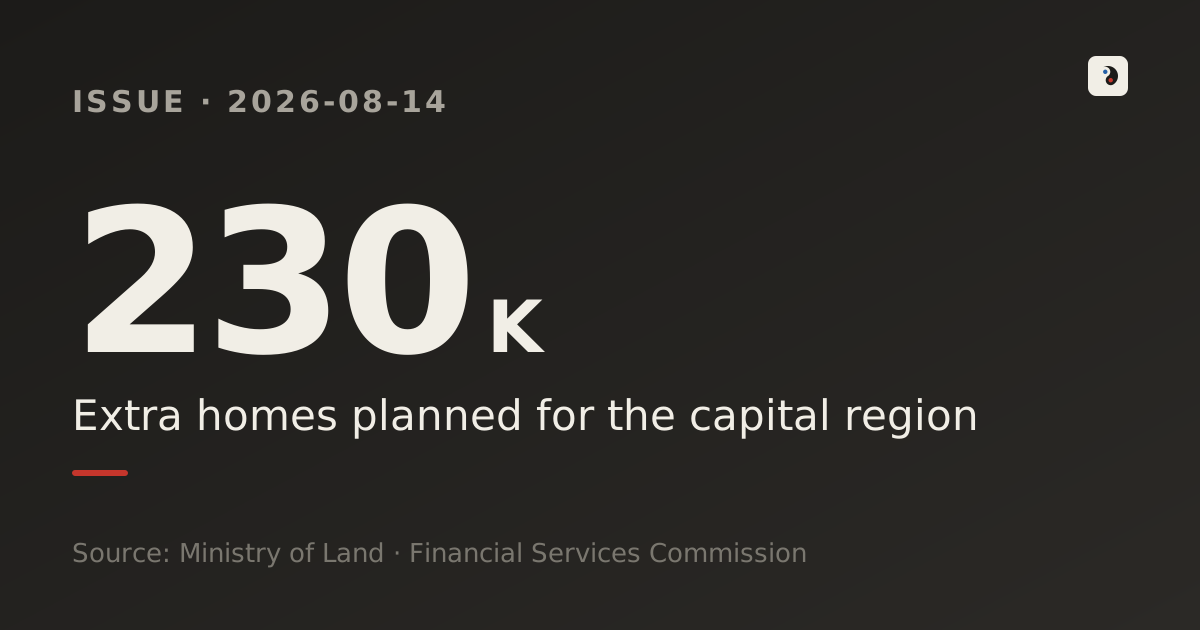
Korea Doubles Housing Loans, Adds 230,000 Homes — Will It Work?
Korea unveiled a housing plan on Aug. 13 adding 230,000+ homes and doubling household loan quotas, as Seoul's jeonse prices rose six times faster than a year ago. Here's whether it can actually cool the market.