· Updated 2026-09-10
2026-07-16 Rice Packs Up 12%, a 550-Trillion-Won AI Bet, 933 Heat Cases: What 3 Numbers Mean
Correction (2026-09-10): The scope, comparisons and interpretation of key figures have been reviewed and corrected below. The original publication date is retained.
A 12% hike on Hetbahn rice packs, a 550-trillion-won AI data center bet, and 933 heat illness cases before the real peak — we dug into today's three issues with comparisons and forecasts the original articles didn't give you.
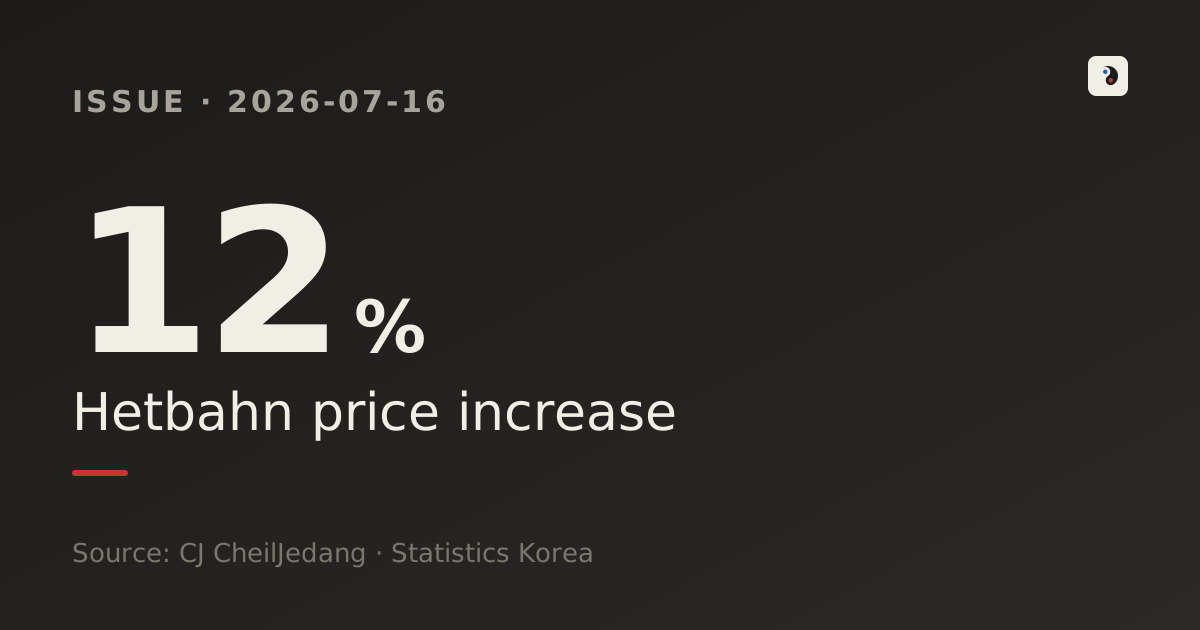
Rice Packs Up 12%: The End of Korea's 0.9% Food Inflation Illusion
CJ CheilJedang raises prices on 27 items including Hetbahn rice packs by 8% on average from July 30. Here is what the deceptively calm official figure of 0.9% processed-food inflation has been hiding about the second half.
When Korea's biggest food company moves its price tags, the whole grocery bill follows.
CJ CheilJedang will raise prices on 27 items across 8 categories — including Hetbahn instant rice, dumplings and grilled fish — by 8% on average, starting July 30 at large marts and August 1 at convenience stores. Hetbahn goes up 12%, grilled fish 8.4%, dumplings 4.6%; the company cites accumulated costs of raw materials and naphtha-based packaging. Convenience-store staples like Cupbahn and desserts, plus sauces and chilled noodles, are excluded this time.
By the end of this piece, you will see why the calm-looking 0.9% processed-food inflation figure is bound to change soon.
The illusion in the 0.9% figure
Statistics Korea's June CPI report shows overall prices up 3.2% — the steepest in 30 months — while processed food rose just 0.9% year-on-year. That gap doesn't mean food prices were stable; it means food makers had been absorbing cost pressure in their margins. A 12% Hetbahn hike is roughly 4 times the overall inflation rate (3.2%) — effectively an official declaration that the absorbing is over.
What was raised, and what was spared, matters more
The hikes are concentrated on the flagship instant rice, which has few substitutes, while high-visibility convenience items like Cupbahn and desserts are frozen — a design that minimizes consumer backlash. According to Asia Today, Ottogi, Lotte Chilsung and others are also raising prices, so the No. 1 player's move reads as a domino signal for the entire industry.
Outlook: it will show up in Q3 statistics
New prices apply from July 30 at marts and August 1 at convenience stores, so the processed-food index has nowhere to go but up from August — right into the September Chuseok holiday grocery season. The 0.9% will be the first number to break in the second half.
Korea's 0.9% processed-food inflation wasn't stability — it was a hike waiting to happen. That's today's one-line takeaway.
A 550-Trillion-Won Data Center Push and One AI Agent per Citizen
Korea will launch a free ChatGPT-style service called 'AI for Everyone' this year and aims for one AI agent per citizen next year. We map out the 550-trillion-won private investment behind it — and what will decide its success.
Few countries have promised to put an AI assistant in every citizen's hands.
At the July 16 second-half policy briefing chaired by President Lee Jae-myung, the Ministry of Science and ICT reported plans to grow AI data centers into a national strategic industry and to launch 'AI for Everyone' (Moduui AI), a free general-purpose AI service, within the year — scaling it into a "one AI agent per citizen" service next year. Company applications run until August 11, with a beta due in late September.
Read to the end and you will see where the 550 trillion won goes — and what the real bottleneck is.
Where the 550 trillion won goes
Private companies — SK, GS, Naver and others — are investing 550 trillion won in AI data centers, with power capacity of 5GW for SK, 2.4GW for GS and 1GW for Naver, according to Korean press reports. Combined, that is 8.4GW — the output of roughly six modern large nuclear reactors (1.4GW class). The government's role is not the money: it is securing 50,000 GPUs and using a pan-government task force to clear power, land and permitting bottlenecks.
What 'AI for Everyone' is really aiming at
Science Minister Bae Kyung-hoon has publicly declared a challenge for "second place among the world's AI models" (Money Today). It is not pure bravado — Naver's AI Tab search passed 10 million users just 18 days after launch (Seoul Economic Daily). Remove the subscription barrier for the whole population, and Korea could become the country where usage data and feedback for model improvement accumulate fastest.
The bottleneck is power, not models
If 8.4GW of electricity and the land for it don't arrive on time, the 550 trillion won stays a number on a blueprint. That is also why the industry is pleading for tax reform that stops treating data centers as real-estate rental businesses (Sisa Journal-e). The year-end launch schedule for 'AI for Everyone' will be the first test of the whole plan.
The decisive front in the AI race is no longer models — it is power supply and execution speed. That's today's lesson.
933 Heat Illness Cases Are a Preview — How to Prepare for the Real Peak
Korea has logged 933 heat illness cases and 3 deaths this year. Fewer than last year — but don't relax: the two weeks from late July to early August, when over half of all cases hit, are just beginning.
This summer's real heat test hasn't started yet.
Korea's disease control agency (KDCA) ER surveillance counts 933 heat illness cases and 3 suspected deaths through July 15 (Money Today). On July 11 alone, 99 people were rushed to emergency rooms (Financial News), and on the 16th the heat continued with daytime highs of 37°C and heat advisories centered on the southeast (Segye Ilbo).
This piece explains why the next two weeks are the most dangerous of the year — and what to prepare today.
The trap in "fewer than last year"
As of July 12, this year's count was 741 — 52.3% below the same period last year (1,555) — and deaths fell from 9 to 2. But that is an early-innings score: the peak of the heat hasn't arrived.
Half the cases haven't happened yet
As the Hankook Ilbo noted, heat illness cases pile up from late July to early August, when heat peaks. In 2018, 60.7% of the year's cases — and in 2024, 50.9% — were concentrated in roughly those two weeks. Statistically, most of this year's cases are still to come.
Three things to start today
- Avoid outdoor work and exercise between noon and 5 p.m., and drink water before you feel thirsty.
- On heat-advisory days, call to check on elderly people living alone and those with chronic conditions.
- If dizziness or nausea hits, move to a cool place immediately — and call 119 if someone loses consciousness (KDCA prevention rules).
This summer's report card will be decided in the next two weeks — the cheapest preparation is the one you do today.
Each issue is nuloq's own analysis, drawing on the original reporting and public data (official statistics and institutional sources), written with the help of AI. See each card's link and in-text citations for sources.
Related posts

Kospi Circuit Breakers Two Days Straight, 40.3°C Record Heat, a 1,000-Trillion-Won AI Bet — Korea in Three Numbers
Korea's Kospi fell 5.98% to 5,663.24 — the first back-to-back circuit breakers in the market's history. Add a 40.3°C heat record in Yangsan and a 1,000-trillion-won AI datacenter alliance: here is the context the headlines skip.
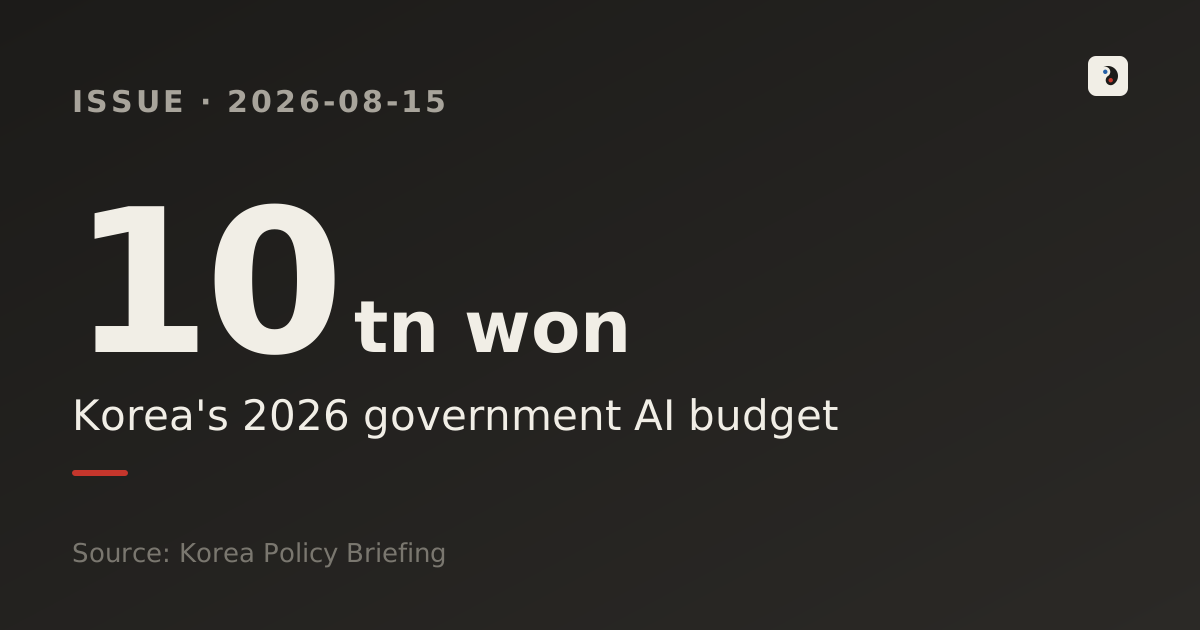
South Korea's AI Budget Jumps 211% to ₩10.1 Trillion — Can It Catch Up?
South Korea's 2026 AI budget jumped 211% to ₩10.1 trillion. As President Lee's Liberation Day speech leans into an 'AI top-3' vision, we checked the numbers.
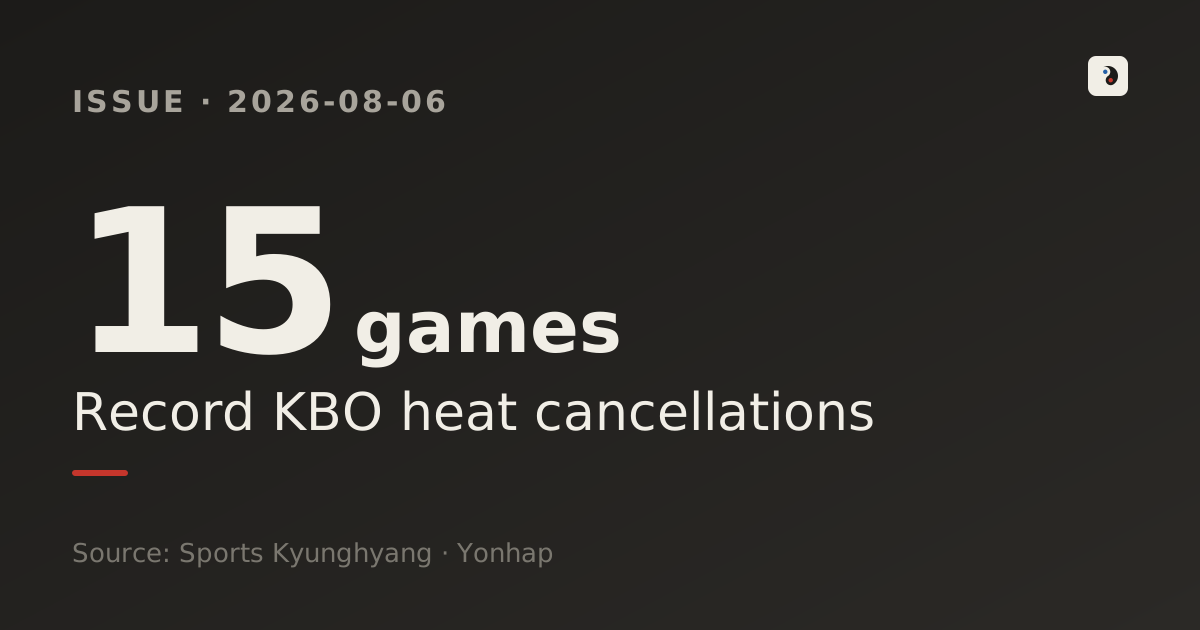
Korea Baseball Heatwave Crisis: Why KBO's New Heat Rule Failed in a Day
KBO scrapped its new heat-cancellation rule a day after announcing it, following a fan's CPR emergency. Here's what a temperature-only safety rule missed, in the numbers — plus a record 15 games called off this season.
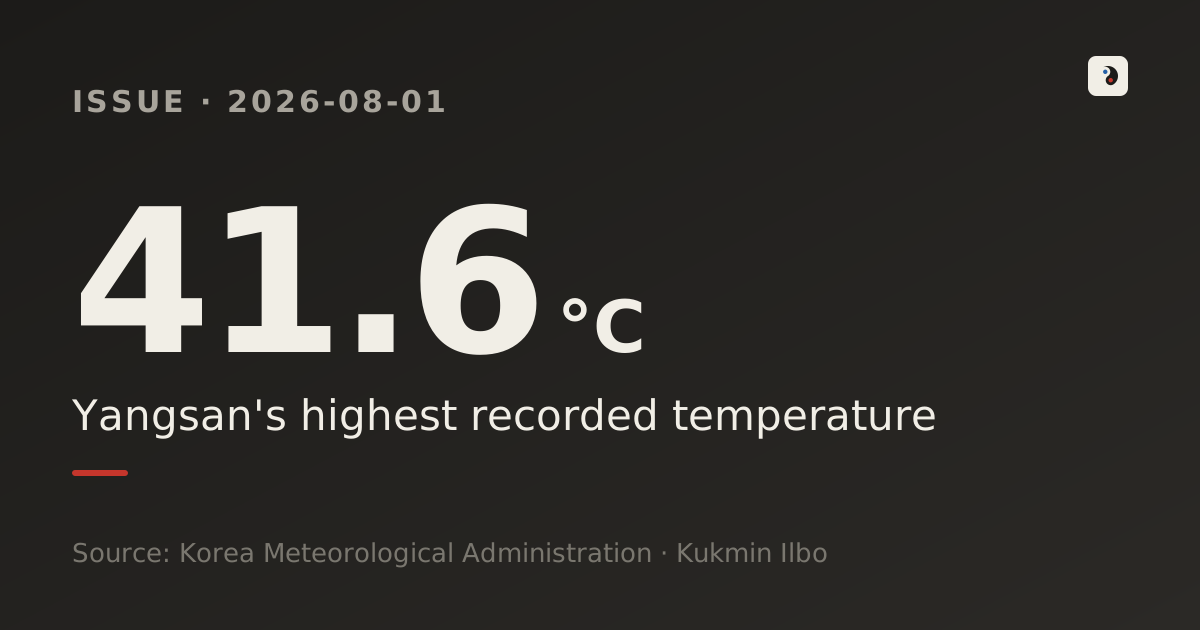
Korea July Exports Hit $98.9B, Yangsan Logs Record 41.6°C — What Three Numbers Reveal
South Korea's July exports reached $98.89 billion, the second-highest month ever — semiconductors alone added $41 billion (+178.8%). The same day Yangsan hit 41.6°C, an all-time national record, and a one-night DUI crackdown caught 320 drivers. Here is the context behind the numbers and what comes next.