Korea Baseball Heatwave Crisis: Why KBO's New Heat Rule Failed in a Day
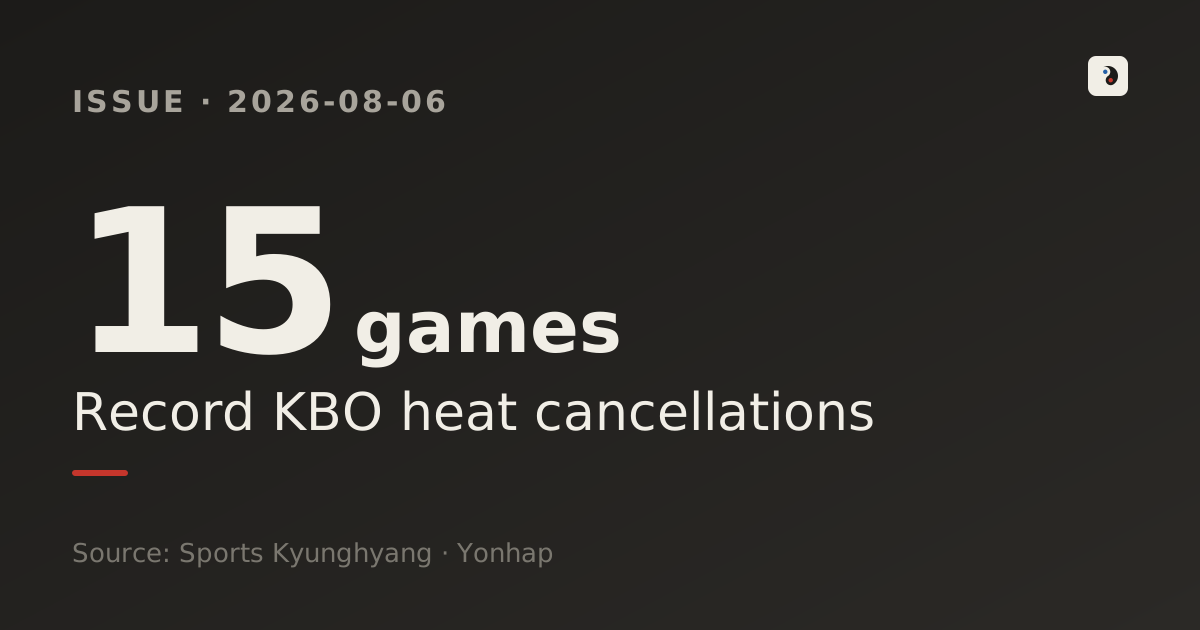
A fan still collapsed even though the region wasn't under the highest heat alert. What did KBO's new rule — scrapped a day after it was announced — actually miss?
- KBO canceled every first-team and farm-league game for two straight days (Aug 5-6) for the first time ever, pushing this season's heat-related cancellations to a record 15 games.
- The "feels-like 38°C / actual 39°C" cancellation rule introduced just a day earlier didn't stop a CPR emergency at an Incheon game — the region was only under a lower-tier heat warning, so the rule didn't apply — and KBO scrapped the rule within a day of announcing it.
- An emergency committee on August 6 is now discussing a combined temperature-humidity standard, and possibly a rethink of the season structure itself.
What happened
At the SSG-LG game in Incheon on August 4, 25 spectators showed symptoms of heat-related illness and two were taken to hospital; during the ninth inning, a man in his twenties collapsed and had to be resuscitated with CPR. The catch: under the rule KBO had announced just the day before — cancel games where the heat index hits 38°C or the actual temperature hits 39°C, triggering the top-tier heat alert — this particular game didn't qualify for cancellation. Incheon was only under the next-tier-down heat warning that day, so the game went ahead; first pitch came at 34.7°C with 66% humidity.
KBO ultimately canceled every first-team and farm-league game scheduled for August 5 and 6. Five stadiums — Jamsil, Incheon, Busan, Gwangju, and others — sat empty for two straight days, something that had never happened before in KBO's history. On the 6th, club general managers and the players' union met in an emergency committee to redesign the safety rules from scratch.
Why the rule collapsed in a day: the structural gap in a temperature-only standard
The detailed criteria KBO issued on August 4 simply layered the Korea Meteorological Administration's three-tier heat-advisory system (advisory, warning, and severe warning) onto game-operation rules. The problem: even though the weather agency's alerts use "feels-like temperature," they're regional forecast figures — they don't capture the humidity, airflow, or sun exposure of a specific stadium's stands at a specific hour. Incheon's 66% humidity may well have made the real risk there higher than the reported temperature suggested, yet the game was exempted simply because the administrative tier hadn't reached "severe warning."
The incident exposed the limits of judging safety on a single axis like temperature. Humidity, radiant heat, and crowd density all shape real-world risk, and when one administrative tier decides cancel-or-play for everyone, borderline games are where accidents keep recurring. KBO's decision to declare a "rethink from scratch" just a day after announcing the rule was effectively an admission of that structural gap.
By the numbers
The first-ever heat cancellation was an LG-Lotte game at Ulsan Munsu Stadium in August 2024, and that entire season saw only 4 games canceled for heat. In 2025, not a single game was canceled. By August 5, 2026, 15 games had already been called off — a record — with nearly two months of the season still to go.
Heat-illness reports followed the same trajectory. Per the Korea Disease Control and Prevention Agency's sentinel surveillance, daily reports jumped from 96 on August 2 to 186 on August 4 — nearly doubling in two days — and the cumulative death toll reached 21 by August 5, already surpassing the same point in the previous year. Given that the full-season death tolls were 29 in 2025 and 34 in 2024, this year is already tracking close to those totals with less than half the season gone.
The fault line: safety versus the schedule, and who decides
Among club front offices, two camps coexist: those saying "player performance and safety should come first," and those countering that "overhauling the whole schedule is overkill." Canceled games ultimately have to be made up as doubleheaders or squeezed into a reshuffled back half of the season, adding player fatigue and cutting into broadcast and ticket revenue. The players' union, by contrast, is unambiguous that spectator and player safety comes first — and the fact that the rule was only rethought after a CPR emergency is exactly why that priority debate is happening now.
Internationally, KBO's dilemma isn't unique to Korea. Major League Baseball has suspension rules for rain, but no league-wide rule that postpones games for heat alone — player-safety discussions continue, but nothing has been codified. Tennis's Australian Open, by contrast, already runs an Extreme Heat Policy that pauses play once a combined temperature-and-humidity index crosses a threshold. The "combined standard" KBO is now trying to build looks, in effect, much closer to the Australian Open model.
What comes next: the choice facing KBO
Reports suggest the August 6 committee discussed replacing the single temperature threshold with a combined heat-humidity index, alongside options as drastic as a multi-week mid-summer break or shifting the season's start and end dates entirely. Changing the season structure itself, though, is entangled with broadcast contracts, stadium leases, and overseas spring-training schedules, so a quick resolution is unlikely.
What's clear is that the jump from 4 games in 2024 to 15 in 2026 isn't a one-off blip. If heatwaves keep growing longer and more intense, as the weather agency's outlook suggests, similar borderline accidents are likely to recur next season too. Whether the standard KBO builds this time is a single number or a combination of a composite index plus on-the-ground discretion will shape how this problem plays out every summer from here on.
- Crazy weather has stopped baseball: two days of cancellations, a flip-flopping rule — Sports Kyunghyang (2026.08.06)
- KBO's patchwork response only deepened the confusion after a fan collapsed — Sports Kyunghyang (2026.08.06)
- Record heat cancels all pro baseball games Aug 5-6; KBO holds emergency committee — Kyunghyang Shinmun (2026.08.05)
- KBO rethinks its heat rule from scratch a day after announcing it — Sports Kyunghyang (2026.08.05)
- KBO details heat-delay and cancellation criteria: "cancel above 39°C actual or 38°C feels-like" — Money Today (2026.08.04)
- Pro baseball played through the heat: 25 fans show heat-illness symptoms, two collapse — Korea Economic Daily (2026.08.04)
- Pro baseball's first heat cancellation in two years; games to start up to an hour later — MBC News (2026.08.04)
- Fourth straight day of heat-illness deaths; toll hits 21, surpassing last year's pace — Segye Ilbo (2026.08.05)
- Extreme heat: daily heat-illness reports surge to 186, cumulative deaths hit 19 — Newsis (2026.08.04)
- Baseball Faces an Enormous Climate Problem, and There's No Baseball Solution to It — North Side Baseball (2026, background)
- Extreme heat brings Australian Open to a halt — NBC News (2026, background)
This piece is nuloq's own analysis, compiled and written with AI assistance from the news reports and public health data listed in Sources. It's for information only, not investment, legal, or medical advice, and reflects facts confirmed as of August 6, 2026 — we'll correct it if anything changes or turns out wrong.
Related posts
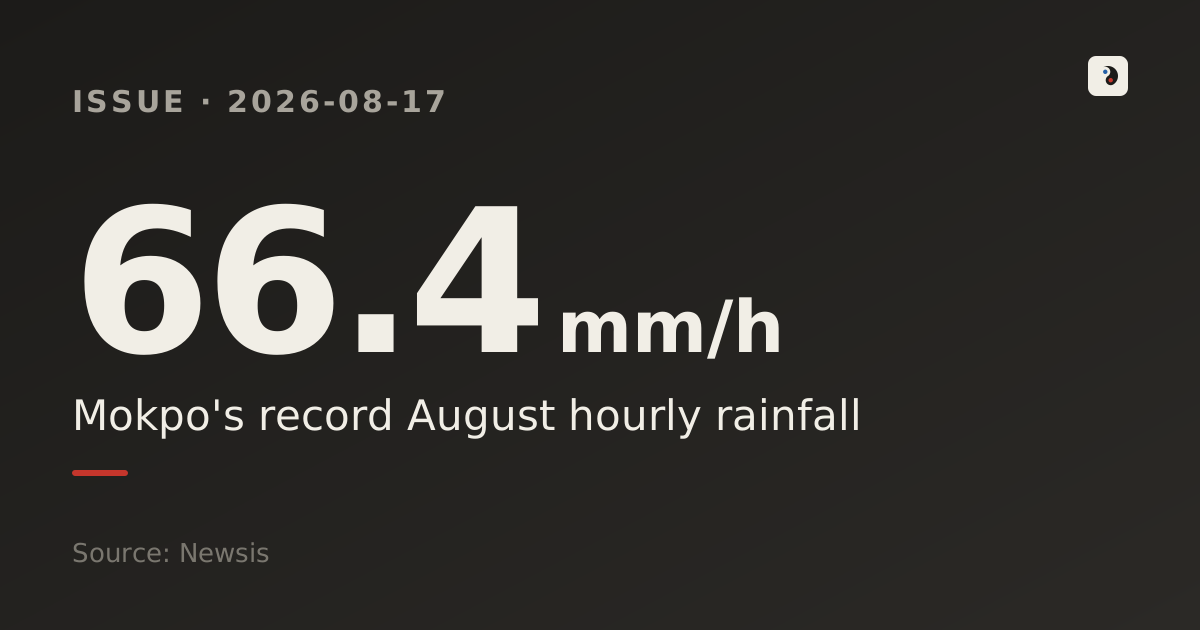
South Korea's Drought Flips to Record Floods in 10 Days
South Korea's driest reservoirs in decades were hit by record hourly rainfall just ten days later. The numbers behind Korea's 'climate whiplash' — and what comes next.
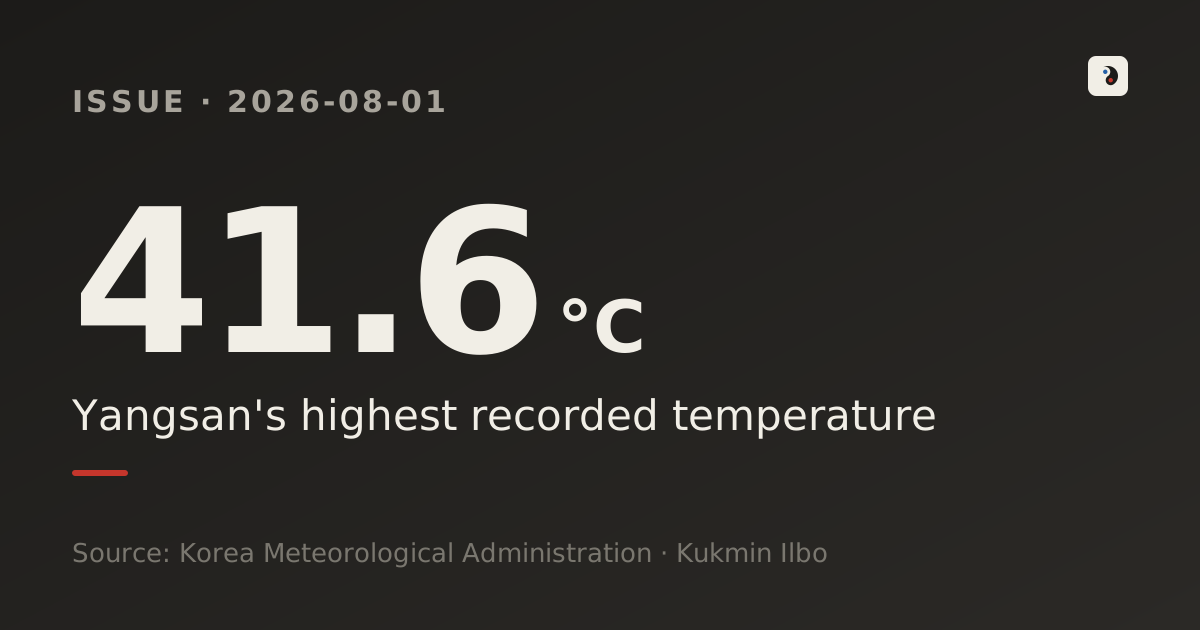
Korea July Exports Hit $98.9B, Yangsan Logs Record 41.6°C — What Three Numbers Reveal
South Korea's July exports reached $98.89 billion, the second-highest month ever — semiconductors alone added $41 billion (+178.8%). The same day Yangsan hit 41.6°C, an all-time national record, and a one-night DUI crackdown caught 320 drivers. Here is the context behind the numbers and what comes next.
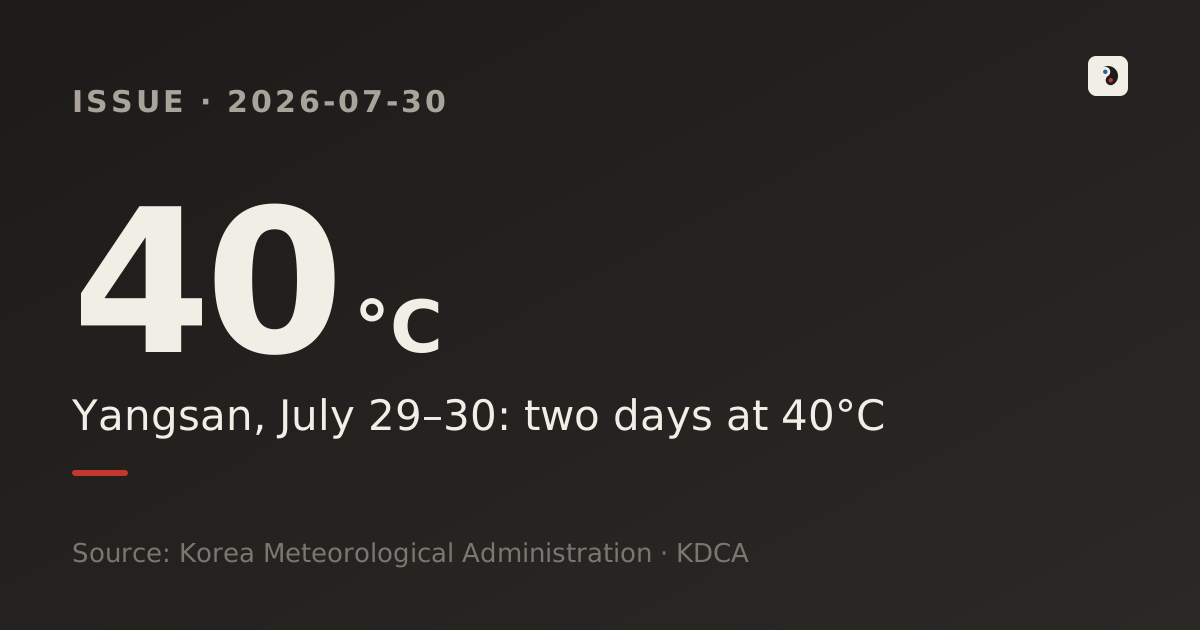
Yangsan’s 40°C days, investigation powers and leveraged losses: July 30 briefing
Yangsan recorded 40.3°C on July 29, 2026 and 40.0°C at 13:10 on July 30. The consecutive-day record refers to Yangsan observations since 2008, not a first across all Korean stations.
Kospi Circuit Breakers Two Days Straight, 40.3°C Record Heat, a 1,000-Trillion-Won AI Bet — Korea in Three Numbers
Korea's Kospi fell 5.98% to 5,663.24 — the first back-to-back circuit breakers in the market's history. Add a 40.3°C heat record in Yangsan and a 1,000-trillion-won AI datacenter alliance: here is the context the headlines skip.