KOSPI Record 17.91% Surge, Korea's 70-Year Prosecution Reform and Record Tropical Nights Explained
A 1,001-point KOSPI surge, a criminal justice system rewritten after 70 years, and the most tropical nights ever recorded — we read today's three records against past data the original articles don't show, and map what comes next.
A 1,001-Point Rebound in One Day — Lessons from Korea's Worst Month Since 1990
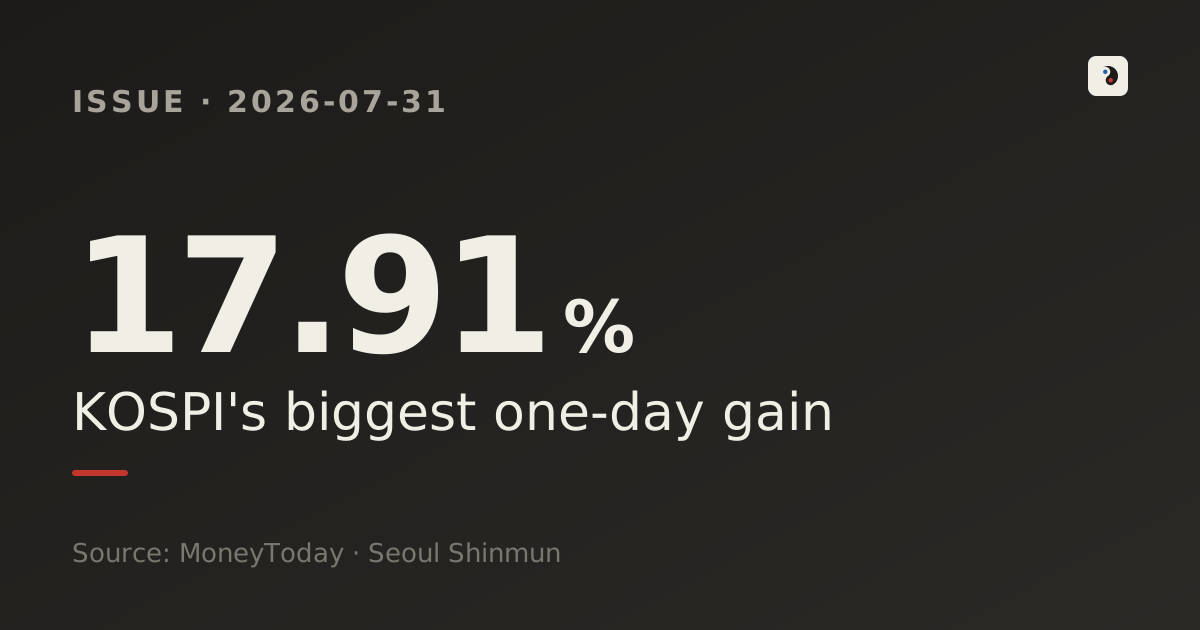
Three days after a historic crash, the KOSPI leapt 17.91% — its biggest daily gain ever. Here are the numbers, and the lesson this whiplash week leaves retail investors.
"But I sold everything yesterday" — the sentence that summed up the Seoul trading floor was a groan, not a cheer.
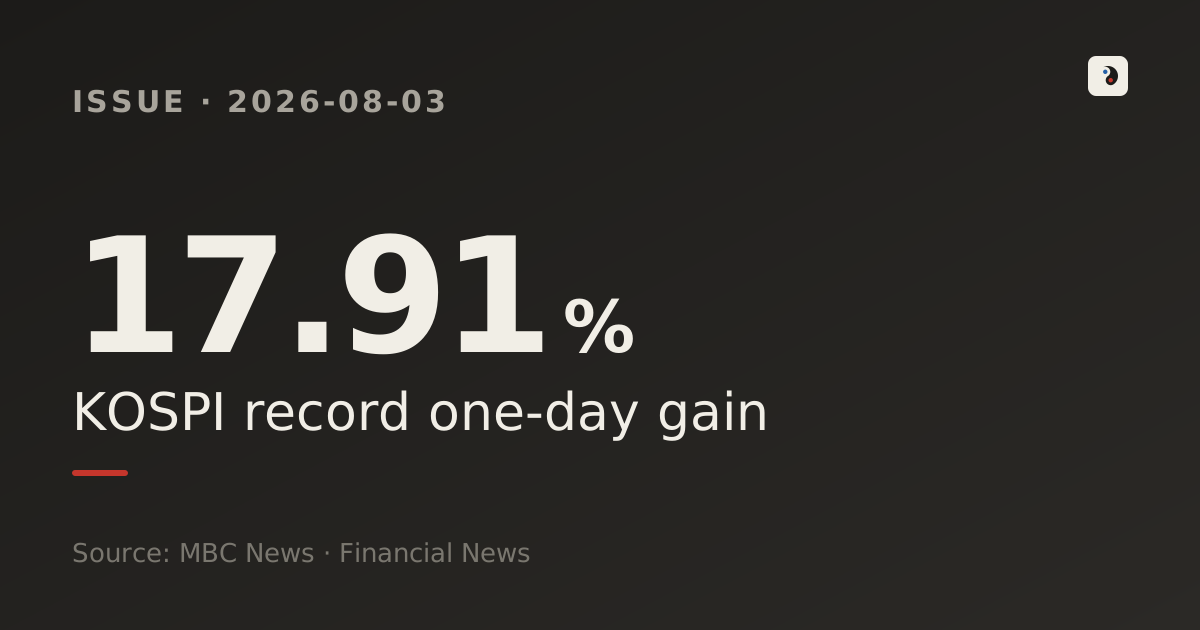
On July 31 the KOSPI, Korea's main stock index, closed at 6,595.45, up 1,001.89 points (17.91%) — rewriting both the all-time percentage and point-gain records in a single day. Overnight, strong Microsoft earnings revived AI-chip sentiment in New York, and foreign investors bought a net 7.2412 trillion won of Korean shares. Samsung Electronics rose 26.81% to 262,500 won, and SK Hynix hit its 29.95% daily limit at 1,718,000 won — its first limit-up close since 2009, 17 years ago.
Read on to see just how unusual this rebound is historically — and the lesson those dazzling numbers leave for retail investors.
Set beside the previous records
According to Money Today, the previous record daily gain was 11.95%, set on October 30, 2008, in the rebound from the global financial crisis — today beat it by 5.96 percentage points. The previous point-gain record, 612.52 points on June 9 this year, was surpassed by a factor of 1.6. The old pattern held once again: record rebounds follow extreme crises.
July was still the worst month on record
Per Herald Business, the KOSPI slid from 8,476.48 at end-June to 6,023.66 on July 28 — down 28.94% in July alone, the worst monthly drop since 1990, deeper than October 1997 (-27.25%) in the Asian currency crisis and October 2008 (-23.13%) in the financial crisis. Even after today's surge, the index remains roughly 22% below its end-June level. One day of fireworks did not fill a month-deep valley.
What retail investors should chew on
While foreigners logged their largest net purchase ever, individual investors answered with their largest net sale ever (Money Today) — shares dumped near the bottom by exhausted retail traders became the fuel of the rebound. Seoul Shinmun reports that turnover in leveraged products had shrunk to about a quarter of its level during the crash phase — the record rebound arrived precisely where aggressive betting had capitulated.
A crash and a melt-up can share the same week — the difference between staying in the market and trying to time it was this week's tuition fee.
Korea Ends Prosecutors' 70-Year Investigation Powers — 3 Changes for Your Case
Korea's National Assembly passed a criminal procedure reform ending prosecutors' direct and supplementary investigations, with 175 votes in favor. Three concrete changes if you have a case in the system.
The basic architecture of Korean criminal justice, in place since 1954, changed with a single vote.
On July 31 the National Assembly passed a revision of the Criminal Procedure Act abolishing prosecutors' direct investigation powers and their right to directly conduct supplementary investigations of cases referred by police: 175 in favor, 2 against, 1 abstention out of 178 present (Financial News). Lawmakers of the opposition People Power Party boycotted the vote in protest.
This card walks you through what actually changes for complainants and defendants, and which variables remain.
What changes
Prosecutors can no longer investigate referred cases themselves; they may only issue a "supplementary investigation request" to the police (Etoday). Investigation belongs to the police, indictment decisions to prosecutors — a sharper division of roles. For people with a pending case, the most tangible change: follow-up questioning after referral will now come from the police, not the prosecutor's office.
The scale, in numbers
In the Supreme Prosecutors' Office's first survey of referred cases at 12 district offices in March–April this year, 25,152 of 55,174 cases (45.59%) were resolved through prosecutor-led supplementary investigation (Newspim). The Justice Ministry has credited that work with uncovering crimes against women, children and people with disabilities (Hankook Ilbo). Four to five of every ten referred cases will now change hands entirely — making police capacity and expertise the immediate next challenge.
Remaining variables
The opposition is publicly demanding a presidential veto (Pressian). How the system lands in practice will depend on the promulgation schedule and how fast police staffing is reinforced.
One thing to remember today — after referral, follow-up investigation now belongs to the police, not the prosecution.
8.8 Tropical Nights, an All-Time Record — Why Night Heat Breaks Us First
Korea has averaged 8.8 tropical nights this summer, the most ever observed. Behind 1,638 heat illness cases and 12 deaths lies a country whose nights no longer cool down.
On the last day of July the daytime high still reached 38°C — and the heat refused to retreat after dark (MBC).
Per the Korea Disease Control and Prevention Agency (KDCA), heat illness cases this year reached a cumulative 1,638 as of July 30, with 12 deaths. More than 420,000 livestock animals have died in the heat (Financial News). And in Korea Meteorological Administration (KMA) statistics, this summer's nationwide average of tropical nights — nights whose low stays at or above 25°C — stands at 8.8 days, the most since observation records began.
This card shows why night heat is more dangerous than daytime heat, and who collapses first.
What "6th in heat days, 1st in tropical nights" means
This summer's count of extreme-heat days is 8.2 — ranked 6th all-time — yet tropical nights rank 1st at 8.8, already past the previous record of 7 days set in 1994 (KMA statistics, YTN). In other words, the nights are more anomalously hot than the days. When the nighttime low never drops below 25°C, the body loses its window to recover from the day's heat stress and faces the next day's heat already weakened.
The people behind the numbers
Of the 76 heat illness cases recorded on July 29 alone, the three who died were aged 91, 83 and 68 (Financial News). Doctors warn that "trying to hold out just a little longer can kill within moments" (Money Today). The old habit of treating heat as a test of endurance — finishing the field work, switching off the air conditioner over the electricity bill — puts the elderly and outdoor workers in danger first.
The worst is still ahead
According to Hankook Ilbo, the peak danger window for heat illness is late July through early August. With the tropical-night record already broken, agencies agree the climax is only beginning.
In a summer when nights refuse to cool, endurance is not a virtue but the most common cause of casualties — with heat, avoiding it is winning.
Today's three stories are nuloq's own analysis, layering public data — Supreme Prosecutors' Office, KMA and KDCA statistics, and past market records — over the original reporting; AI tools assisted in the writing. Every source is listed in each card's link button and in the citations in the text and infographics.
Related posts
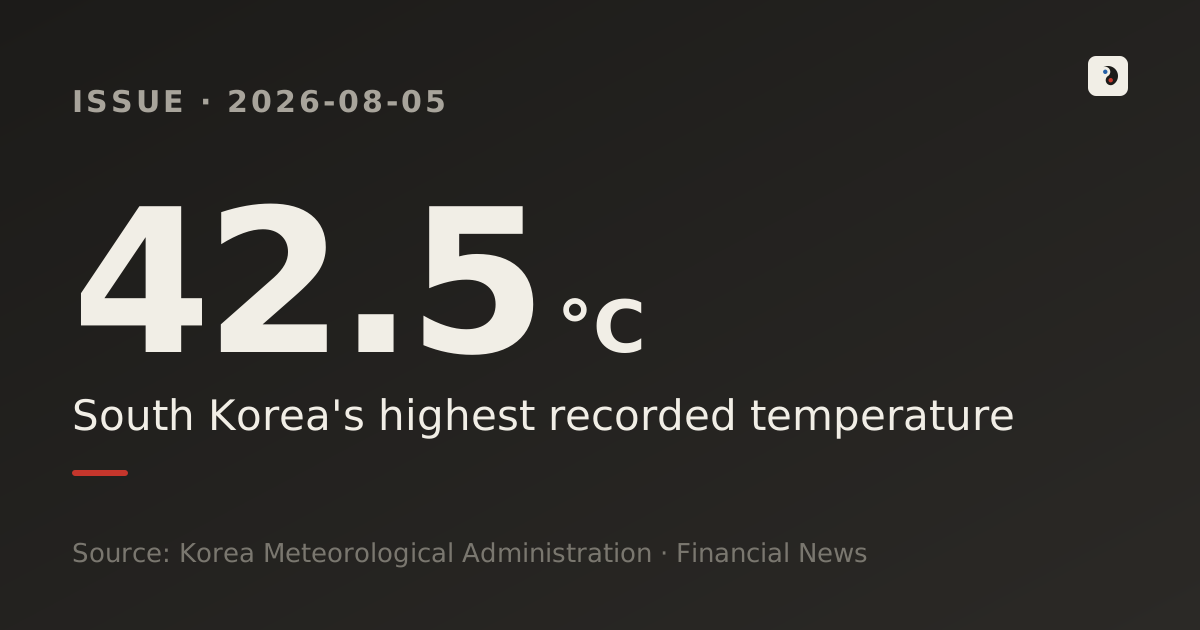
Korea Hits 42.5°C, a 122-Year Heat Record — Seoul's First Extreme Alert
South Korea just recorded 42.5°C, its hottest day in 122 years, as Seoul issued its first-ever top-tier heat warning. Deaths have topped 21 — but the real toll may be far higher.
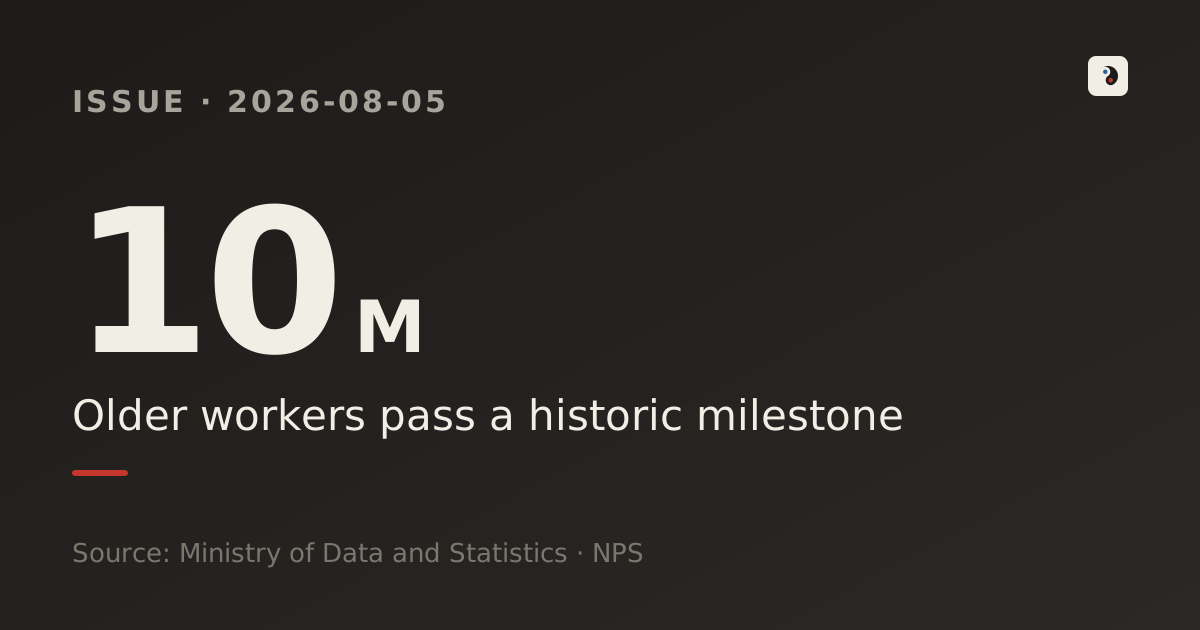
Korea Elderly Workers Top 10 Million, KOSPI Jumps 3.76%, Galaxy Z8 Hits 1.44M Presales — Why 3 Records Fell in One Day
Koreans aged 55-79 in work topped 10 million for the first time. Why they leave jobs at 53 yet hope to work until 73.6, what 29 sidecar halts in six months say about the KOSPI's 3.76% surge, and the price math behind 1.44 million Galaxy Z8 presales — all in numbers.
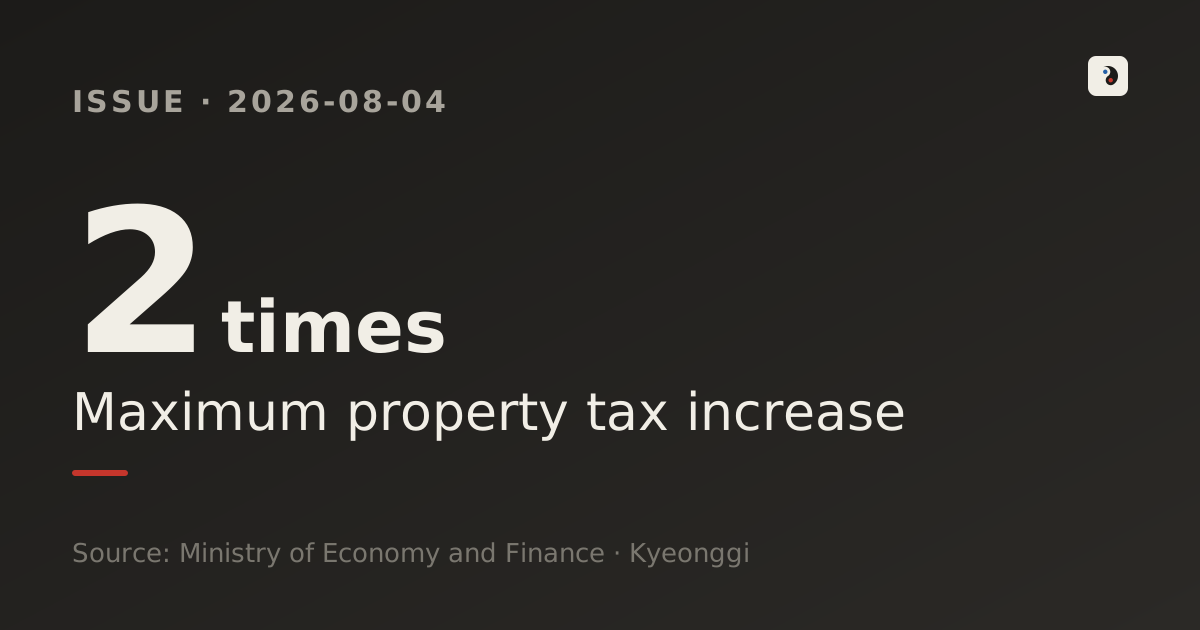
Korea Doubles Top Property Tax, KOSPI Sinks 5.12%, K-Beauty Grows 10x in Brazil
Korea's 2026 tax reform doubles the top property tax - and 64% of its 3.4tn won revenue gain comes from that single levy. Plus the structure behind the KOSPI's 5.12% plunge and K-beauty's 10x surge in Brazil.
KOSPI Surged a Record 17.91% in One Day — What SK Hynix's Limit-Up Really Means
KOSPI jumped a record 17.91% in one day and SK Hynix hit its price limit for the first time in 17 years. Here's the data behind Korea's wild semiconductor rally.