· Updated 2026-09-10
Korea Hits 42.5°C, a 122-Year Heat Record — Seoul's First Extreme Alert
Correction (2026-09-10): The scope, comparisons and interpretation of key figures have been reviewed and corrected below. The original publication date is retained.
A heat index of 38°C triggered a brand-new alert level for the first time ever — here's what's behind the numbers.
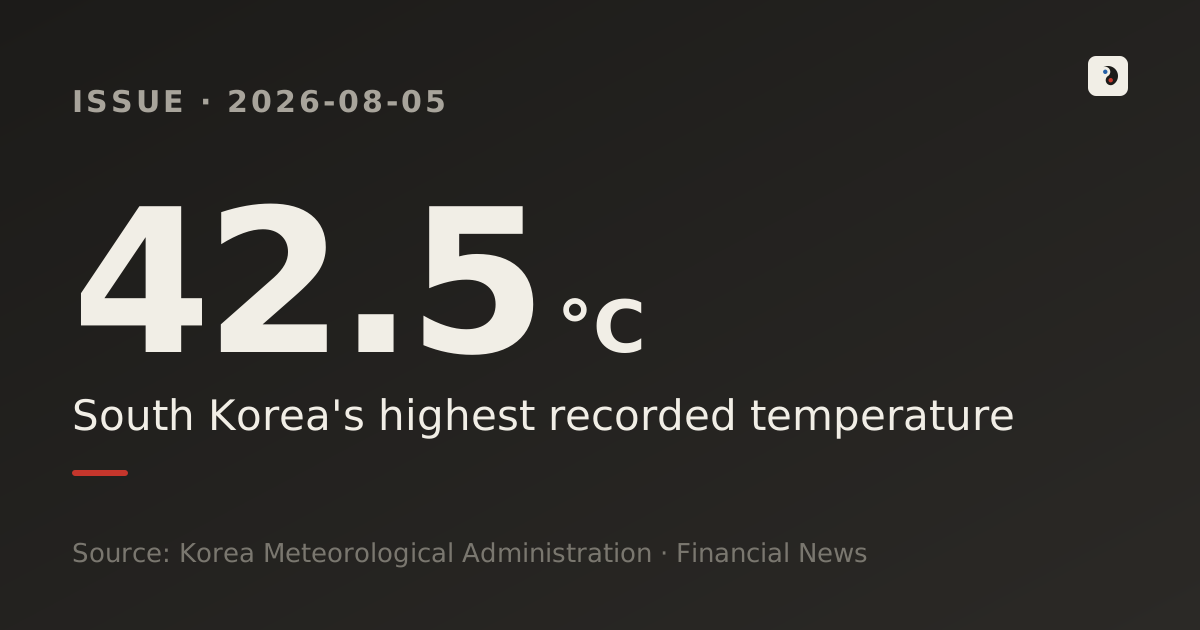
- Yangsan, in South Gyeongsang Province, hit 42.5°C on August 2 — Korea's hottest day in 122 years of modern weather records — and on August 4, Seoul issued its first-ever top-tier "Extreme Heat Warning" under a new alert system.
- The 48 reported surveillance deaths and estimated 929 excess deaths in 2018 use different definitions and methods. Their roughly 19-fold ratio cannot be read as underreporting or a confirmed death count.
- Regulators now require a 20-minute break every two hours once the heat index hits 33°C, and recommend halting outdoor work at 38°C — but the real question is whether that rule is enforced on the ground, not just written down.
What happened
On August 2, Yangsan in South Gyeongsang Province recorded 42.5°C, the highest temperature ever measured in Korea since modern observation began in 1904 — breaking the previous record of 41.0°C set in Hongcheon, Gangwon Province, in 2018.
As the heat wave dragged on, Seoul issued its first-ever "Extreme Heat Warning" — the top tier of a new three-level system — at 11 a.m. on August 4, covering 11 districts including Gangnam, Songpa, Seocho, Gangdong, Gangseo, Gwanak, Yangcheon, Guro, Dongjak, Yeongdeungpo, and Geumcheon. It was the first time this top alert had ever been triggered in Seoul since the new system launched on June 1. The warning was extended to parts of Gyeonggi and Incheon at 11 a.m. the next day.
Heat-illness reports reached a cumulative 2,221 cases with an estimated 19 deaths by August 3. Then, on August 4 alone, 186 new cases were reported — a single-day record for the year — and two more deaths were confirmed, pushing the cumulative death toll to roughly 21.
Why now — the background
Starting June 1, the Korea Meteorological Administration overhauled its heat-wave alert system for the first time in 18 years, and its warning zones for the first time in 22. The old system used only air temperature across two levels (advisory, warning); the new one uses "heat index" — which factors in humidity — across three levels: 33°C for an advisory, 35°C for a warning, and 38°C for the new top-tier Extreme Heat Warning. The goal is to better capture the danger people actually feel.
The weather agency explained the overhaul by noting that "the frequency and intensity of dangerous weather keep rising because of climate change." This first-ever top-tier alert therefore shows two things at once: a new, more sensitive threshold just came online, and the heat was severe enough to actually cross it.
Korea isn't alone. In a single week, June 22-28, 2026, excess deaths topped 10,000 across 27 European countries — this summer's extreme heat is breaking records simultaneously around the globe.
By the numbers
A 1.5°C jump might look small, but it means the hottest moment in 122 years of record-keeping was broken again just eight years later. At the same time, the alert system moved from air temperature to heat index, and from two tiers to three — the heat itself and the yardstick used to measure it are intensifying together.
The 48 reported surveillance deaths and estimated 929 excess deaths in 2018 use different definitions and methods. Their roughly 19-fold ratio cannot be read as underreporting or a confirmed death count.
Heat-illness statistics only count cases diagnosed in an emergency room as heatstroke or heat exhaustion. They miss the indirect deaths that happen when extreme heat worsens an existing heart condition or chronic illness. That's why researchers argue you need to look at "excess mortality" — how many more people died than in a typical year — to see the real scale of a heat wave.
The debate — different angles
On the job. Amendments to Korea's occupational safety law (October 2024) and its enforcement rules (July 2025) made it a legal obligation for employers to give a 20-minute break every two hours once the heat index hits 33°C. But halting outdoor work altogether at 38°C — the Extreme Heat Warning threshold — remains only a recommendation. Labor groups want that turned into an enforceable right to stop work; construction and business groups warn of project delays and added costs.
Who's most at risk. Analysis by Korea's disease-control agency shows people on basic livelihood welfare, those living alone, foreign residents, and the elderly face a much higher risk that heat illness turns severe enough to require hospitalization or ends in death. At a heat index of 38°C, overall mortality risk rises 1.16-fold, and death from cardiovascular disease rises 1.14-fold — a gap that a single number like "average temperature" doesn't show.
Local response. Cities are stepping up — Seoul has mobilized a full emergency response, and provinces like North Chungcheong are expanding road-sprinkling to cool down hot spots. But experts argue that beyond short-term measures like alerts and sprinklers, Korea needs structural investment — cooling infrastructure, better housing — to genuinely adapt.
How other countries have faced this
Europe's 2003 heat wave killed as many as 70,000 people, including 14,802 in France alone. That disaster is what pushed European countries to build early-warning systems and heat-action plans in the first place.
And yet, in just one week — June 22-28, 2026 — excess deaths topped 10,000 across 27 European countries. Even with warning systems more than two decades old, experts say adaptation measures still can't keep pace with how fast climate change is intensifying heat waves.
The lesson for Korea is clear. An early-warning system — the new three-tier alerts, the Extreme Heat Warning — is only the first step. Without what comes next — enforceable work stoppages, support for vulnerable groups, cooling infrastructure — a warning alone can't stop people from dying. That's what Europe's last twenty-plus years have shown.
What's next
If the heat wave persists past mid-August, Extreme Heat Warnings could be issued more often and in more places. This first time the top tier was ever triggered may become the new normal baseline for Korean summers.
As long as halting outdoor work at 38°C stays a recommendation rather than a rule, its real-world effectiveness will depend on how strictly it's enforced. This heat wave could accelerate the debate over turning that recommendation into law.
To close the gap between official heat-illness statistics and the true toll, some researchers argue Korea should routinely calculate excess mortality tied to extreme heat after each season. If that happens, the benchmark for next year's heat-wave debate could shift — from "how many people were rushed to the hospital" to "how many lives were actually lost."
- Gangnam heat index hits 38°C… Seoul's first "Extreme Heat Warning" — Financial News (Korea) (2026.08.03)
- "42.5°C" — hottest in 122 years, disaster-level heat kills even a man in his 20s — Financial News (Korea) (2026.08.02)
- Extreme Heat Warning expands across greater Seoul… estimated heat deaths reach 19 — Newspim (2026.08.04)
- 186 heat-illness cases in a single day, a record this year… two more deaths — Financial News (Korea) (2026.08.04)
- Heat-wave alerts overhauled after 18 years, warning zones redrawn after 22 — Korea Meteorological Administration press release (2026)
- Outdoor work to halt above 38°C heat index… Ministry of Employment and Labor announces heat-wave measures — Korea.kr (government policy briefing) (2026)
- 4,460 heat-illness cases this summer, second-highest on record — The Medical (Korea) (2025)
- Excess deaths top 10,000 in Europe alone, world on alert over unprecedented heat wave — Kyunghyang Shinmun (2026.07.14)
- 2003 European heat wave — Wikipedia (Korean edition) (accessed 2026)
- Analysis of heat-related illness and excess mortality from the 2018 heat wave in South Korea — Journal of the Korean Geographical Society (2020)
This is nuloq's own reporting and analysis, based on the news coverage and public data from Korea's weather and health authorities listed under Sources, produced with the help of AI tools. It is for information only — not investment, legal, or medical advice — and reflects what was confirmed as of August 5, 2026; we correct the text if errors are found or the situation changes.
Related posts
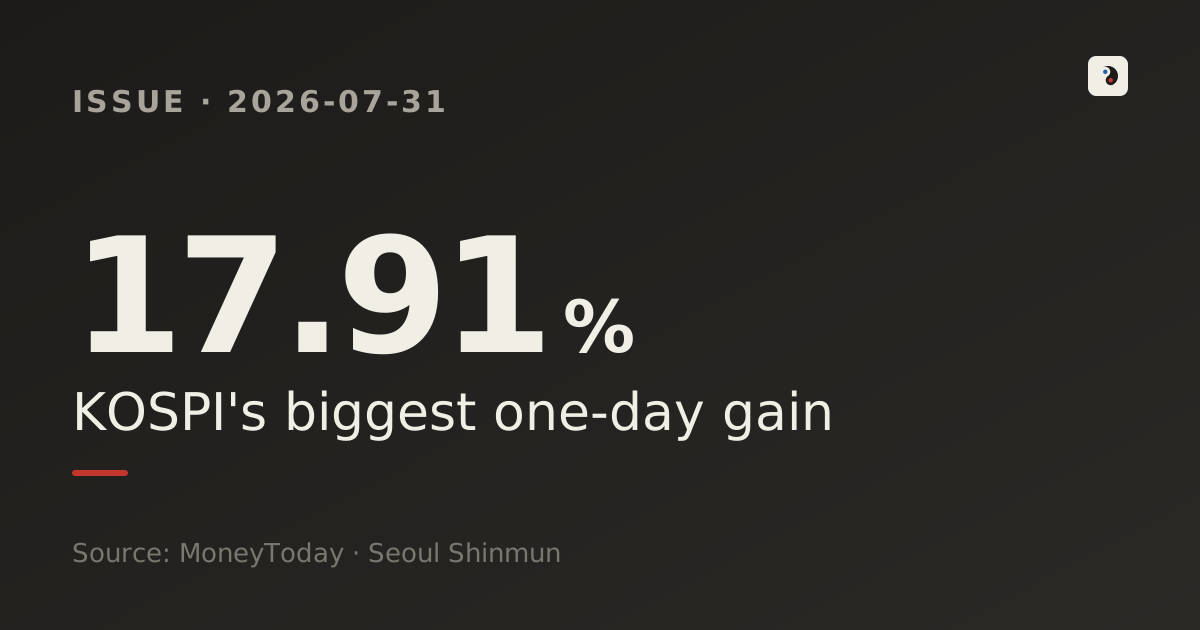
KOSPI Record 17.91% Surge, Korea's 70-Year Prosecution Reform and Record Tropical Nights Explained
The KOSPI jumped 17.91% in one day, its biggest gain ever. Korea also ended prosecutors' 70-year investigation powers, and tropical nights hit a record 8.8 days.
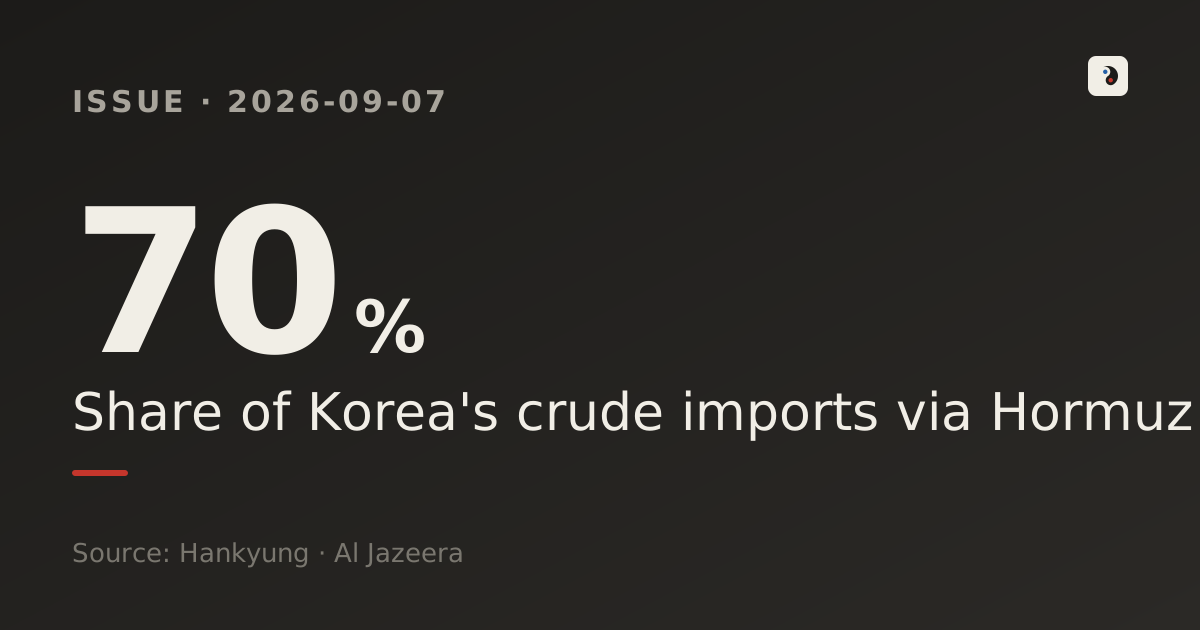
150 Troops, 70% of Oil: South Korea's Hormuz Dilemma by the Numbers
Squeezed between US pressure and Iran's war warning, South Korea is weighing sending 150 troops to the Strait of Hormuz — the route for 70% of its oil imports. Here's the dilemma in numbers.
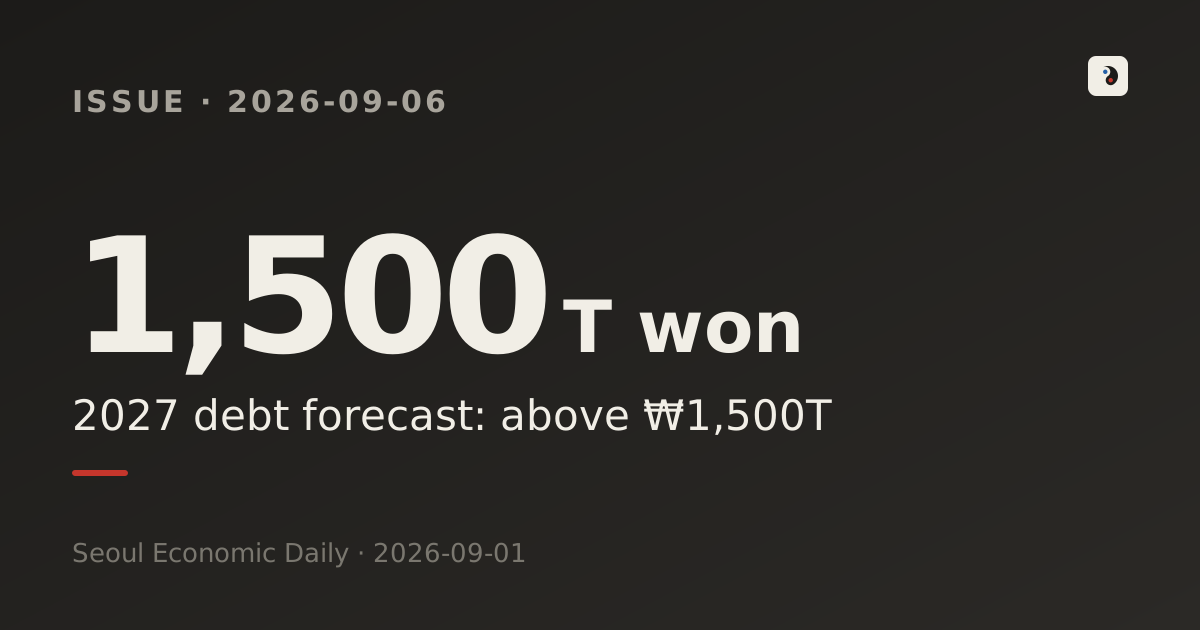
Welfare ₩148.8tn, National Debt ₩1,519.8tn — What Is the 48.3% Ratio Divided By?
We separate the two ways of counting the welfare ministry's budget, and correct the denominator of the national debt ratio to nominal GDP. We hold back judgment on why the ratio falls until the official GDP assumption can be checked, and we found no confirmed evidence that the future response fund caused the ₩106 trillion rise in debt.
A 5-Year-Old Text Threatens Korea's Justice Minister Pick
Justice minister nominee Kim Seung-won sent a text in 2021 asking regulators to speed up a drug trial approval. Five years on, that message is the flashpoint of his September 15 confirmation hearing.