· Updated 2026-09-10
South Korea's Drought Flips to Record Floods in 10 Days
Correction (2026-09-10): The scope, comparisons and interpretation of key figures have been reviewed and corrected below. The original publication date is retained.
A drought crisis alert and a flood crisis alert were issued for the same region, the same summer, ten days apart — what turned this around so violently?
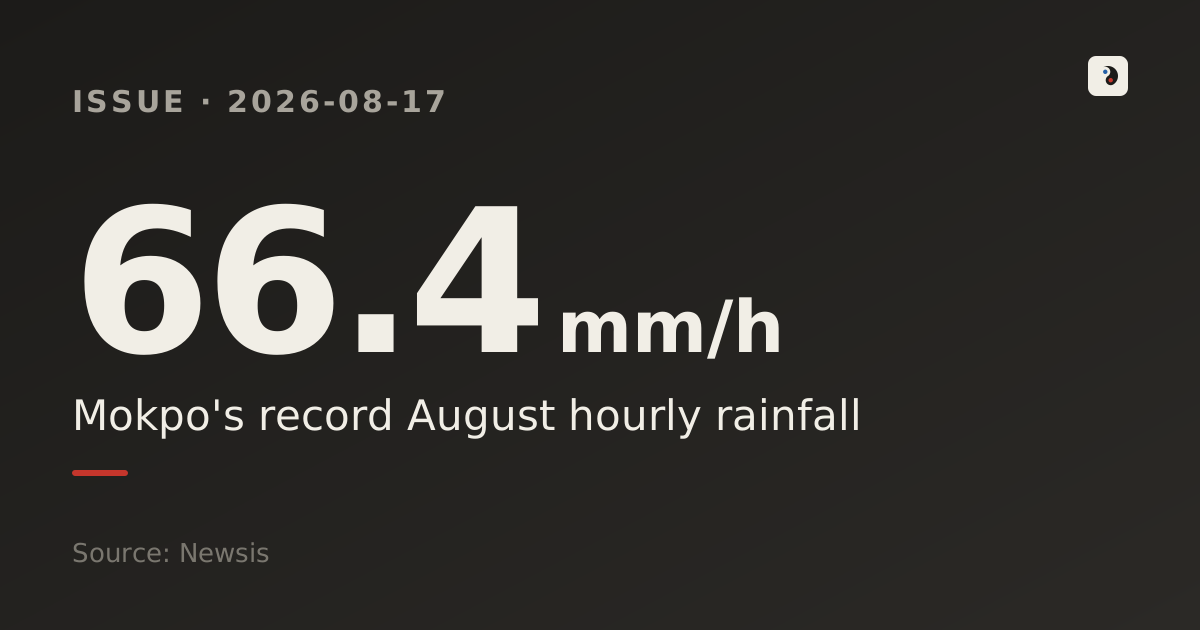
- Heavy rain hit Jeonnam overnight on August 15–16. Mokpo recorded 66.4 mm in an hour; nationwide rain-damage reports totalled 135 as of 17:00 on August 16.
- Earlier, Jangseong Reservoir stood at 28.2%, below half its normal 59.8%. This is one reservoir’s reading, not the average for all Jeonnam reservoirs.
- Scientists call this pattern "climate whiplash," and are urging integrated water management and heavier infrastructure investment.
What happened
Between the night of August 15 and the morning of August 16, South Korea's South Jeolla province was hit by rain peaking at 66.4mm an hour. In Mokpo, that broke the region's all-time record for hourly rainfall in August; in Haenam's Sani area, accumulated rainfall hit 178.5mm by 9 a.m. on the 16th. The Ministry of the Interior and Safety raised its flood crisis alert from "attention" to "caution" at 7 a.m. on the 16th, dispatching field officers and inspecting landslide-prone areas.
By 5 p.m. that day, 135 flood-damage reports had been filed nationwide — 77 cases of flooding in homes, yards and underground parking lots, 50 cases of road flooding, and 8 fallen trees. 108 of those 135 cases were concentrated in South Jeolla.
Why it matters — ten days earlier, it was a drought emergency
What makes this downpour unusual isn't just its intensity. Just days earlier, the very same region was fighting the opposite disaster: drought. The reservoir level at Jangseong Lake in South Jeolla had fallen to an all-time low of 28.2% this month — less than half its 30-year average of 59.8%. In South Gyeongsang province, reservoirs sat at just 46.5% of normal, forcing authorities to mobilize water-tanker trucks. Gwangju's July rainfall came to just 147.6mm, only 56.8% of the seasonal average of 259.4mm.
The Korea Meteorological Administration attributes the reversal to a stalled frontal boundary combined with the simultaneous influence of the North Pacific and Tibetan high-pressure systems. The monsoon front had settled narrowly over central Korea, leaving the south to bake through heat and drought — until, around the mid-August holiday, that stalled front pushed south and dumped heavy rain in a short window. In other words: it isn't that the rain stopped coming — it's that the way rain arrives is itself changing.
By the numbers
Here's the swing from drought to flood in two indicators.
The damage was also sharply concentrated: 108 of the 135 nationwide reports (80%) came from South Jeolla alone.
What is "climate whiplash"?
Scientists have a name for this pattern — "climate whiplash," also called "hydroclimate whiplash." A study published this year in the journal Nature Water found that rapid swings from drought to flood are increasing worldwide in both frequency and intensity, and warned of a "governance failure" as disaster-response systems struggle to keep pace. Researchers at UCLA point to an "expanding atmospheric sponge" — for every degree Celsius of warming, the atmosphere can hold roughly 7% more moisture — as a key driver of these extreme swings.
The pattern shows up elsewhere, too: earlier this year, Australia's Otway region in Victoria endured a major wildfire, a record flood, and a historic heat wave in sequence within just two weeks, while the UK went from an unusually wet start to the year straight into its driest July on record. Experts say South Jeolla's reversal fits squarely into this global trend.
The debate — drought relief or flood warning?
Reactions on the ground are split. For farmers and local governments watching reservoirs run dry, this rain is welcome relief — and South Jeolla's major reservoirs are expected to partially recover as a result. But rain that falls this hard in this little time was too fast for reservoirs to absorb, and instead raised the risk of flooding and landslides — one regional outlet summed it up as "drought relief hopes crossing paths with flood-damage anxiety."
Water policy is also contested. Some argue for integrated management that handles floods, drought and water quality within a single system; others say the more urgent need is targeted investment in local reservoirs and drainage infrastructure. The government, through its recently established climate ministry, is preparing an integrated water-energy response framework — but whether it can keep pace with a swing from drought to flood in just ten days remains an open question.
What comes next
- In the short term, flood response is the priority — inspecting landslide-prone areas and preparing underground spaces for flooding. The stalled front is forecast to bring more rain to the south in the coming days.
- In the medium term, reservoirs need a more flexible management system that can juggle the conflicting demands of "storing for drought" and "releasing for flood."
- In the long term, experts at home and abroad broadly agree that infrastructure design standards need to be revisited — on the assumption that swings this extreme may become the new normal rather than the exception.
For households and farms, it means the season for watching reservoir levels and flood warnings side by side has already begun. For local governments and the state, it means moving past a model that responds to "drought or flood" one at a time.
- 178.5mm accumulated, 66.4mm in one hour — record flood damage in Jeolla — Newsis (Aug. 16, 2026)
- From worst drought to record deluge — flood reports pour in from Jeolla — Money Today (Aug. 16, 2026)
- 200mm overnight downpour — flooding spreads across the south — Kyunghyang Shinmun (Aug. 16, 2026)
- "Climate polarization" grips the Korean peninsula — floods in the center, drought in the south — Kyunghyang Shinmun (Aug. 5, 2026)
- Drought emergency in the south — Gyeongnam reservoirs at 46.5% of normal, tanker trucks mobilized — Newspim (Aug. 13, 2026)
- Jangseong Lake hits record-low reservoir level amid severe summer drought — KBC Gwangju (Aug. 11, 2026)
- Ministry raises flood alert to "caution" as heavy rain hits the south — Herald Corp (Aug. 16, 2026)
- Rapid drought-to-flood weather whiplash amplifies climate change governance failure — Nature Water (2026)
- Floods, droughts, then fires: Hydroclimate whiplash is speeding up globally — UCLA Newsroom (2026)
This is nuloq's own analysis based on the public reporting and official Korea Meteorological Administration / Ministry of the Interior and Safety data listed under Sources, written with the help of AI tools. It is for information only — not disaster-response or policy advice — and reflects the situation as of the time of writing (August 17, 2026). We correct the text if errors are found.
Related posts
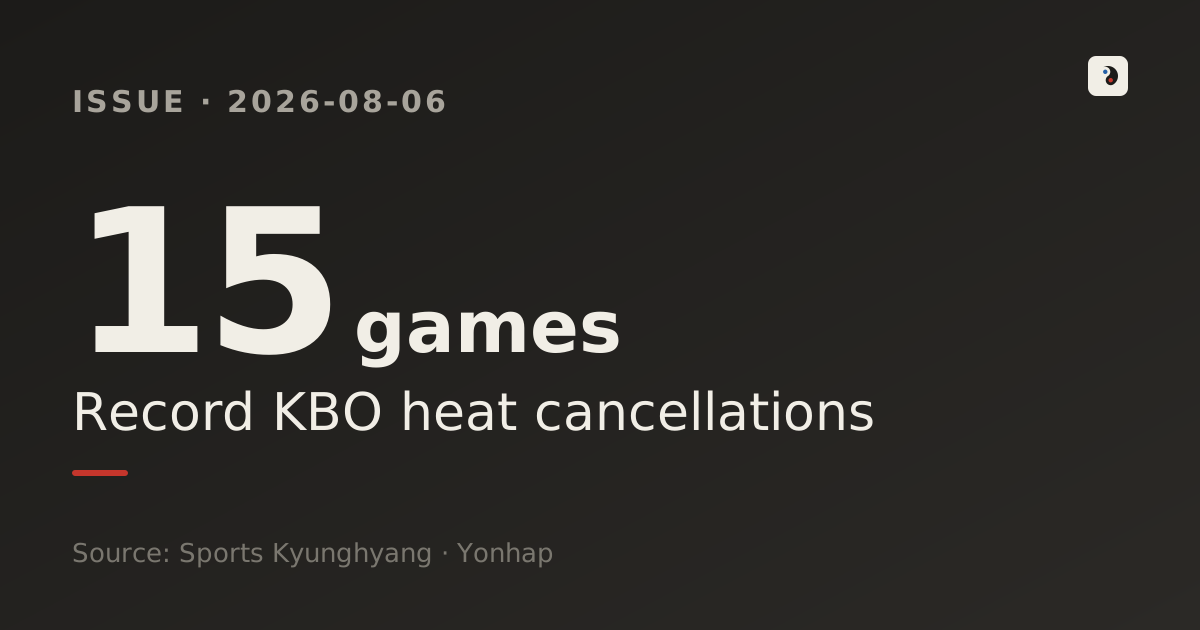
Korea Baseball Heatwave Crisis: Why KBO's New Heat Rule Failed in a Day
KBO scrapped its new heat-cancellation rule a day after announcing it, following a fan's CPR emergency. Here's what a temperature-only safety rule missed, in the numbers — plus a record 15 games called off this season.
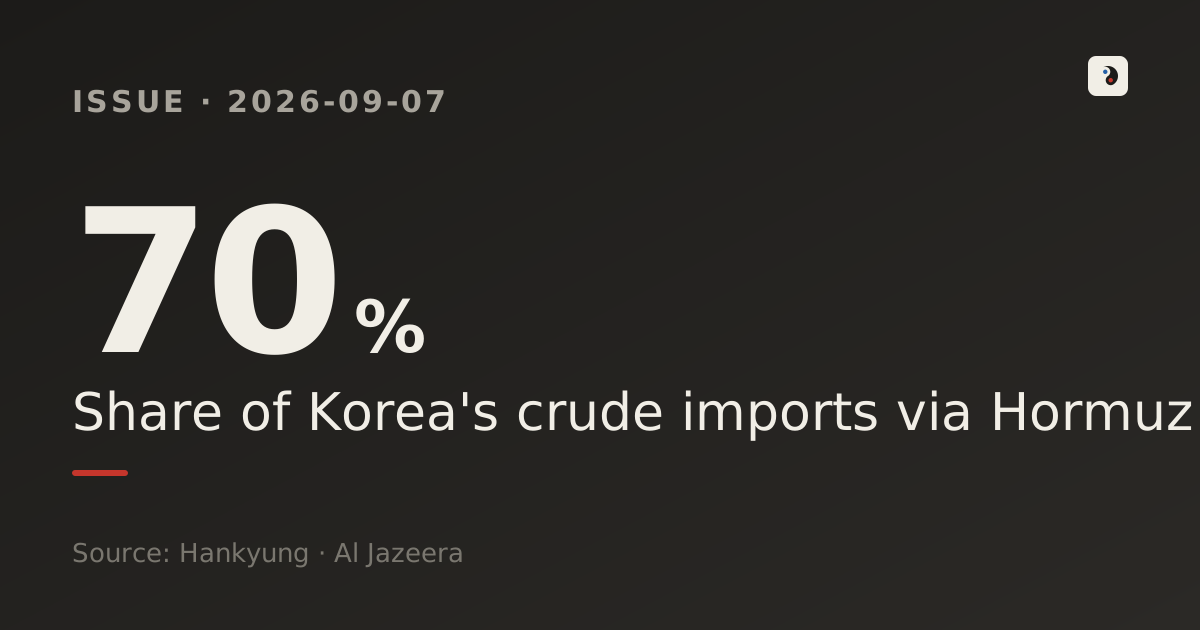
150 Troops, 70% of Oil: South Korea's Hormuz Dilemma by the Numbers
Squeezed between US pressure and Iran's war warning, South Korea is weighing sending 150 troops to the Strait of Hormuz — the route for 70% of its oil imports. Here's the dilemma in numbers.
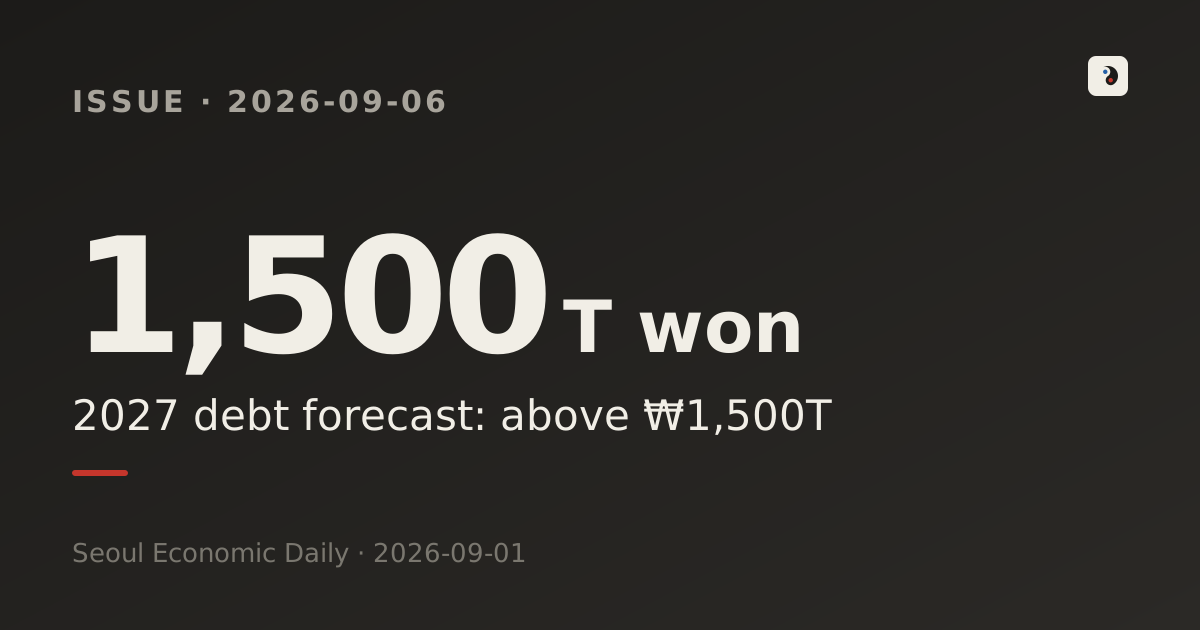
Welfare ₩148.8tn, National Debt ₩1,519.8tn — What Is the 48.3% Ratio Divided By?
We separate the two ways of counting the welfare ministry's budget, and correct the denominator of the national debt ratio to nominal GDP. We hold back judgment on why the ratio falls until the official GDP assumption can be checked, and we found no confirmed evidence that the future response fund caused the ₩106 trillion rise in debt.
A 5-Year-Old Text Threatens Korea's Justice Minister Pick
Justice minister nominee Kim Seung-won sent a text in 2021 asking regulators to speed up a drug trial approval. Five years on, that message is the flashpoint of his September 15 confirmation hearing.