· Updated 2026-09-10
Han Hak-ja Gets 2 Years, Not 13: Inside Korea's Church-Politics Scandal
Correction (2026-09-10): The scope, comparisons and interpretation of key figures have been reviewed and corrected below. The original publication date is retained.
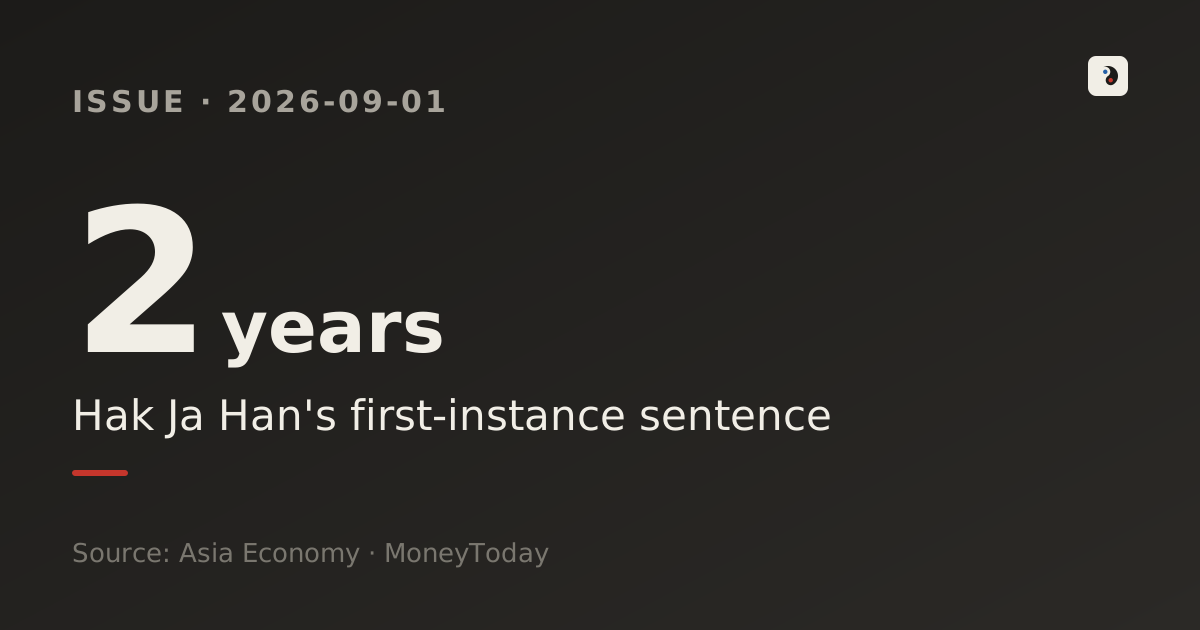
- On August 31, a Seoul court sentenced Unification Church leader Han Hak-ja, 83, to 2 years for violating South Korea's political funding and anti-graft laws — about 15% of the 13 years prosecutors demanded.
- Judges found the church treated the 2022 presidential election as a chance to expand its influence, funneling 100 million won to then-lawmaker Kwon Seong-dong and splitting 134 million won in donations to ruling-party lawmakers.
- The 132 politicians and zero indictments refer to the joint investigation’s separate 2019–2025 donations case. They do not describe all prosecutions or verdicts in Han Hak-ja’s trial or every Unification Church-related political case.
What happened
On August 31, the Seoul Central District Court's 27th Criminal Division sentenced Han Hak-ja, 83, leader of the Unification Church (Family Federation for World Peace and Unification), to one year for violating the Political Funds Act and one year for violating the Anti-Graft Act and embezzlement — two years in total. That's roughly 15% of the 13-year term the special counsel team led by Min Joong-ki had sought.
The court found Han guilty of conspiring with a former chief secretary and a former division head to hand then-lawmaker Kwon Seong-dong 100 million won in illegal political funds on January 5, 2022, and of splitting 134 million won in church funds into donations to ruling-party lawmakers that March — a tactic known as "chopped-up donations" designed to dodge disclosure limits. But the court acquitted her on a related embezzlement count, ruling that transferring funds through regional chapter accounts to prepare those donations did not show clear intent of unlawful appropriation — a split verdict across the different charges.
Why it matters: the mechanics of a church-state trade
This case isn't just tabloid fodder because of what the court said about motive. Judges concluded the church viewed the 20th presidential election as an opportunity to grow its institutional power, backing a candidate it saw as favorable with money, then seeking state support and political influence once the new administration took office. In other words, the court formally recognized a specific circuit of church-politics collusion: campaign funding → a friendly administration → policy and regulatory favors.
The reported two-year sentence is a first-instance ruling and was appealed. It is not described as final. Defendants, charges and stages of separate proceedings must be distinguished.
By the numbers
The gap between the 13 years demanded and the 2 years handed down isn't simply leniency. The Political Funds Act itself carries relatively light maximum penalties, and the court's acquittal on part of the embezzlement count further cut the sentence. Han's age — 83, with a suspended arrest order on health grounds — likely also weighed on sentencing.
The 132 politicians and zero indictments refer to the joint investigation’s separate 2019–2025 donations case. They do not describe all prosecutions or verdicts in Han Hak-ja’s trial or every Unification Church-related political case.
The dispute: a crackdown, or just "catching the feathers"?
Reactions to the verdict split sharply. Kyunghyang Shinmun's editorial board called the conviction a turning point for rooting out church-politics collusion, arguing the ruling party can no longer dismiss the pattern as the fault of a few individuals — a claim bolstered by the fact that 32 of the first 54 flagged recipients belonged to the Liberty Korea Party, the PPP's predecessor.
What's next: an appeal, and ripple effects on Kim Keon-hee's trial
The case now moves to the Seoul High Court on appeal. Given the 13-year sentence prosecutors sought, both sides are likely to keep contesting the term. Korean media widely expect the ruling to affect the separate, ongoing trial of former first lady Kim Keon-hee, since the money and gift flows established as criminal here could be cited as evidence in the case naming her as the ultimate recipient.
- Han Hak-ja gets 2 years in first trial — Asia Economy (2026.08.31)
- "Church tried to expand influence via presidential race" — Money Today (2026.08.31)
- Church-politics collusion: Han Hak-ja gets 2 years, church to appeal immediately — Edaily (2026.08.31)
- [Editorial] Han Hak-ja's sentence should be a turning point against church-politics collusion — Kyunghyang Shinmun (2026.08.31)
- Sincheonji enlisted 50,000+ members ahead of elections; Unification Church made illegal payments to 132 politicians — Hankyung (2026.08.31)
- South Korea's Unification Church leader Hak Ja Han sentenced to 2 years for corruption — The Washington Post (AP) (2026.08.31)
- [Editorial] Church-politics task force "only caught the feathers," giving corrupt politicians a pass — Digital Times (2026.08.11)
- Choi Soon-sil's 18-year sentence in the "state capture" scandal finalized — Lawtimes (2020.06.11)
This is nuloq's own analysis based on the public reporting listed under Sources, written with the help of AI tools. It is for information only — not a legal judgment about any individual or organization — and reflects the situation at the time of writing; we correct the text if errors are found.
Related posts
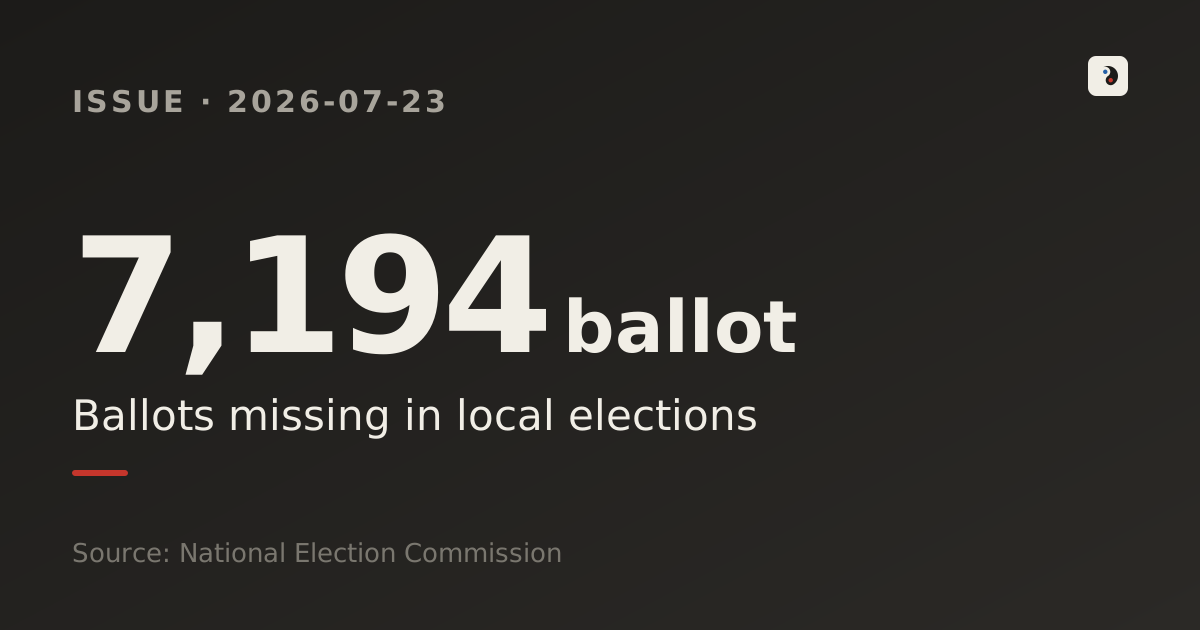
South Korea Ballot Shortage: 7,194 Missing Ballots, Now a Special Counsel Case
South Korea's June 3 local elections came up 7,194 ballots short, halting voting at 26 sites for up to 105 minutes. A special counsel is now being picked, July 23 — here's what went wrong.
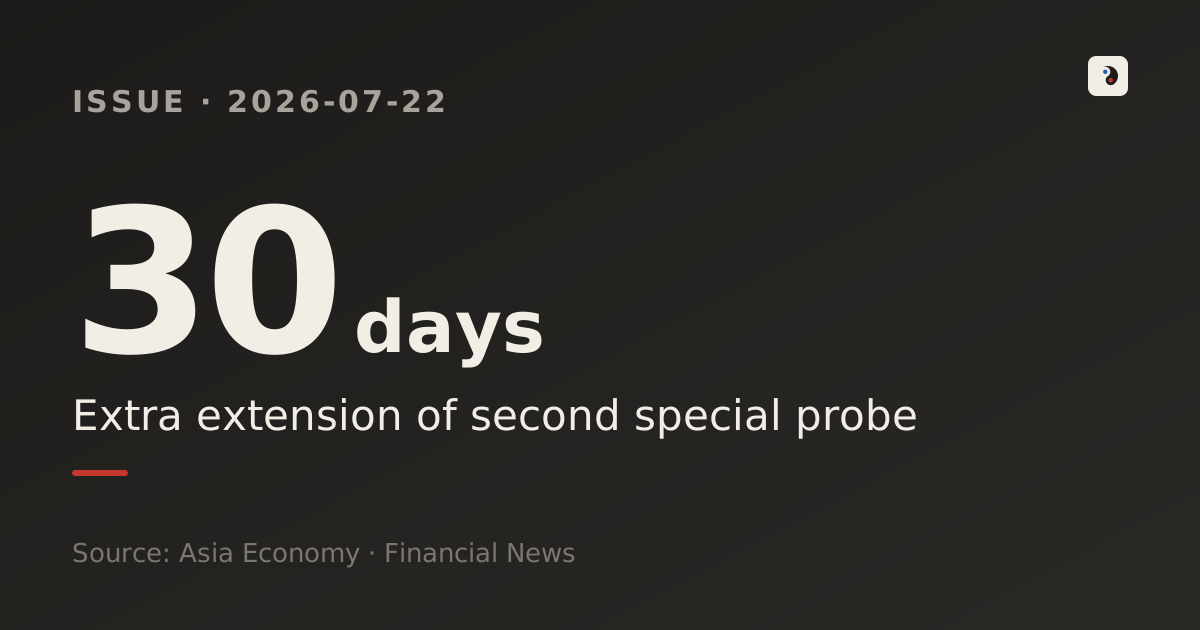
Special counsel: up to 180 days of investigation — where does “690 days” come from?
We split the amended act's 20-day preparation period from its 180-day maximum investigation period. Then, in plain words: what the 690-day total, the 2.709 billion won cost estimate and two warrant rejection rates from different dates each mean.
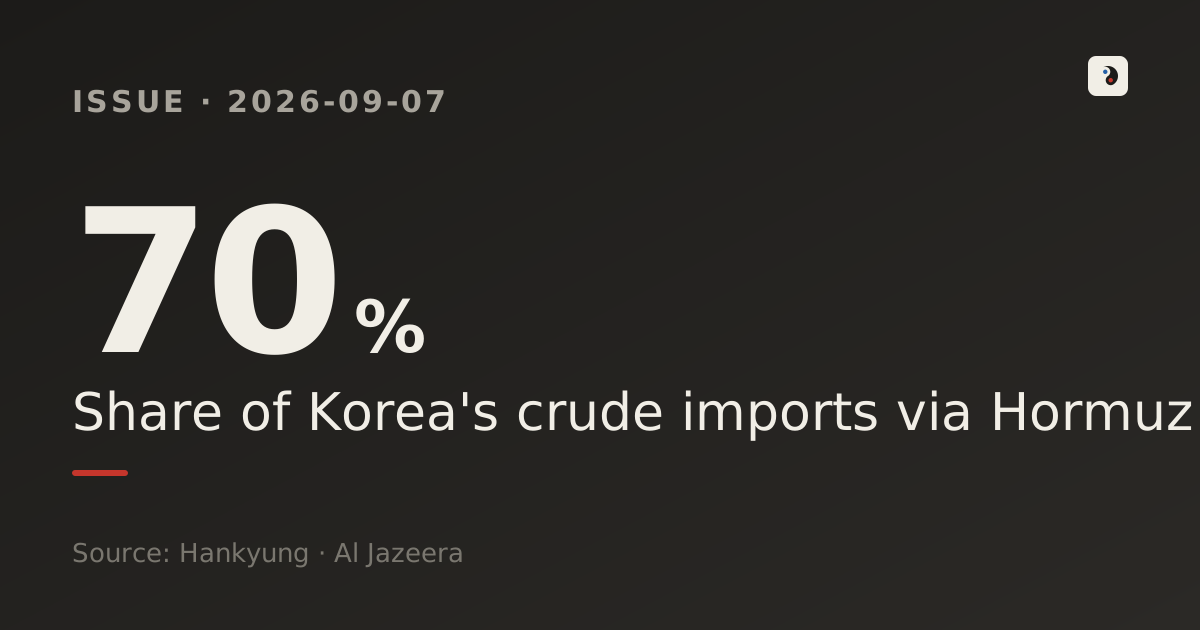
150 Troops, 70% of Oil: South Korea's Hormuz Dilemma by the Numbers
Squeezed between US pressure and Iran's war warning, South Korea is weighing sending 150 troops to the Strait of Hormuz — the route for 70% of its oil imports. Here's the dilemma in numbers.
Welfare ₩148.8tn, National Debt ₩1,519.8tn — What Is the 48.3% Ratio Divided By?
We separate the two ways of counting the welfare ministry's budget, and correct the denominator of the national debt ratio to nominal GDP. We hold back judgment on why the ratio falls until the official GDP assumption can be checked, and we found no confirmed evidence that the future response fund caused the ₩106 trillion rise in debt.