Korea Drops History Exam for Civil Servants, Adds 5 Questions
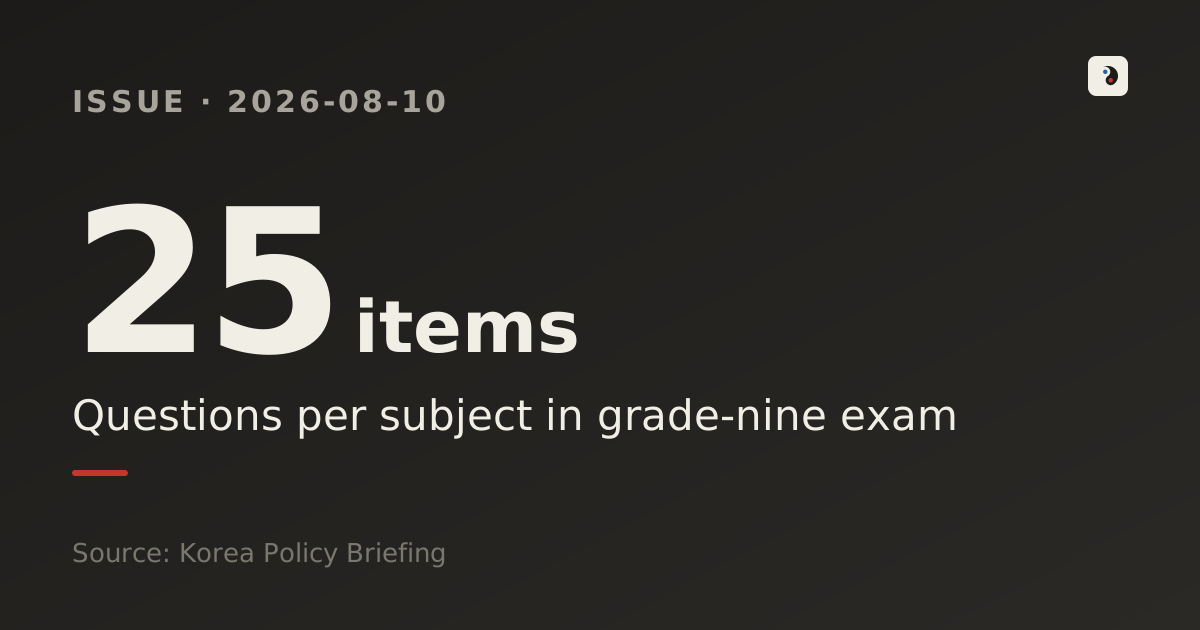
108,718 people applied for national grade-9 jobs alone. Here's how the 2027 overhaul reshapes the math for these applicants.
- From 2027, Korea's national and local grade-9 (9급) civil service exams drop the Korean history subject, replacing it with a Korean History Proficiency Test (한능검) score of Level 3 or higher.
- To offset the change, the remaining Korean-language, English, and job-specific subjects each grow from 20 to 25 questions — a move meant to preserve discriminating power.
- The change is bundled with splitting off the Public Service Aptitude Test (PSAT) into its own shared exam — part of a broader redesign that trims the number of tests while widening how each one is used.
What happened
On July 2, 2026, Korea's Ministry of Personnel Management (MPM) and Ministry of the Interior and Safety jointly unveiled the "2027 Grade-9 Recruitment Exam Reform Plan," confirming that the Korean history subject will be dropped from national and local grade-9 civil service exams and replaced with a Level 3-or-higher score on the Korean History Proficiency Test (한국사능력검정시험, run by the National Institute of Korean History). This follows up on a broader civil-service exam overhaul announced in March 2025. To compensate for removing history, the number of questions in the remaining Korean-language, English, and job-specific subjects rises from 20 to 25 each. The 2026 local (지방직) grade-9 exam will be the last one held under the current five-subject system that includes history; the new format applies starting with 2027 applicants.
Why now — the backstory
This isn't just about history. In the same reform package, the Public Service Aptitude Test (PSAT) — previously the first-stage screening test for grade-5 and grade-7 recruitment — is being spun off into a separate "common competency verification test." Until now, PSAT scores were locked to grade-5/7 hiring and couldn't be reused elsewhere; from 2027, it splits into basic and advanced tiers held once a year each (basic in July, advanced in February–March) and usable across multiple hiring tracks. The government's underlying logic is "test once, use many times." History fits the same pattern: grade-5/7 recruitment, police, firefighter and civilian-military-employee hiring, and public school teacher certification (which requires Level 3 or higher regardless of subject) already accept the history proficiency test as a qualifying credential — grade-9 was the outlier still requiring a separate written exam. The government's stated aim is to close that gap and let a certificate with no expiration date — rather than a subject that must be re-studied every cycle — cover multiple exams, cutting duplicate study time for applicants.
By the numbers
This year's grade-9 numbers hint at the backdrop for the reform. In 2026, the national grade-9 exam drew 108,718 applicants for 3,802 openings — an average ratio of 28.6-to-1, with the education-administration track spiking to 509.4-to-1. Local (지방직) grade-9 exams, by contrast, drew 141,546 applicants for 23,390 openings — an average of just 6.1-to-1, prompting commentary that "the civil-service boom has cooled." Dropping one shared hurdle won't close that gap by itself, but lowering the entry barrier appears calculated to slow the drop-off in local-level applicants.
The debate — two views
The case for the change is straightforward: the history certificate never expires, so a Level 3 score earned once can be reused across multiple exams, and it demands less repeated preparation than a subject that must be restudied every cycle. Reusing an already-validated credential also cuts administrative cost. The pushback splits two ways. First, shifting the discriminating function from a standardized national written exam to an outside test hands quality-control responsibility to the National Institute of Korean History — and whether that system can absorb exam-scale demand at this volume remains to be seen. Second, while "cutting private-tutoring costs" is the stated rationale, the history proficiency test already supports a sizable prep-course industry of its own, so critics argue the burden may simply migrate rather than disappear. Adding five questions to the remaining subjects to preserve discriminating power also means more material to study in what's left — so it's hard to say applicants' total workload actually drops.
What's next
This year's and next year's grade-9 exams run under the current rules unchanged. Since the 2026 local grade-9 exam is the last one under the five-subject system that includes history, applicants who've already been studying history don't need to adjust their timeline. But anyone targeting 2027 should start replanning now — the likely strategy is finishing history early via a Level 3 certificate, then reallocating that study time to the now-larger Korean-language, English, and job-specific subjects. Combined with the PSAT split, applicants preparing for grade-5/7 recruitment alongside grade-9 will see their entire exam calendar reshuffled. Whether the government's promised relief actually lifts application rates, or simply expands a different private-tutoring market, will only become clear once applicant trends after the first 2027 sitting are in.
- Civil service recruitment to be replaced with Korean History Proficiency Test — Newspim (2026.08.09)
- Grade-9 civil service exam questions to rise from 20 to 25 starting 2027 — Korea.kr Policy Briefing (2026.07.02)
- From 2027, grade-9 civil service exam questions per subject rise from 20 to 25 — The Kyunghyang Shinmun (2026.07.02)
- Civil service exams to change drastically from 2027, applicants on alert — Hankyung (2025.03.13)
- Cutting applicant burden — major civil service exam reform from 2027 — Asia Economy Daily (2025.03.13)
- 2026 national grade-9 civil service exam averages 28.6-to-1 competition — Korea.kr Policy Briefing (2026.02.07)
- Has the civil-service boom cooled? Local grade-9 competition ratio falls to 6.1-to-1 — Daum News (2026.06.17)
This is nuloq's own analysis based on the public reporting and official announcements listed under Sources, written with the help of AI tools. It is for information only — not career or legal advice — and reflects the situation as of August 10, 2026; we correct the text if errors are found.
Related posts
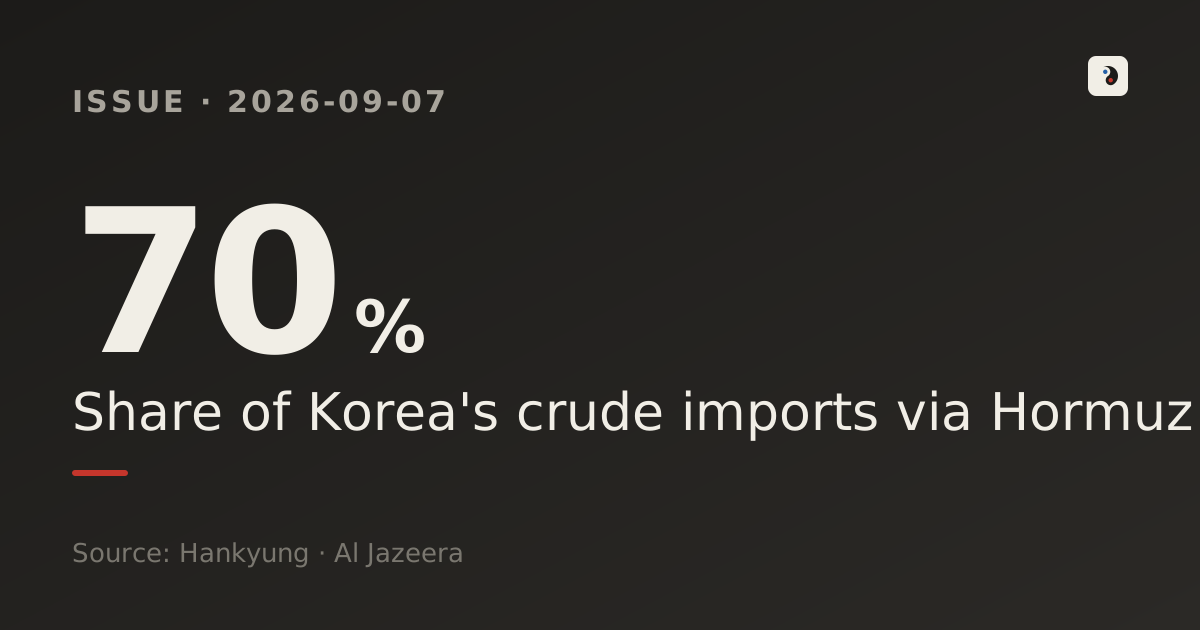
150 Troops, 70% of Oil: South Korea's Hormuz Dilemma by the Numbers
Squeezed between US pressure and Iran's war warning, South Korea is weighing sending 150 troops to the Strait of Hormuz — the route for 70% of its oil imports. Here's the dilemma in numbers.
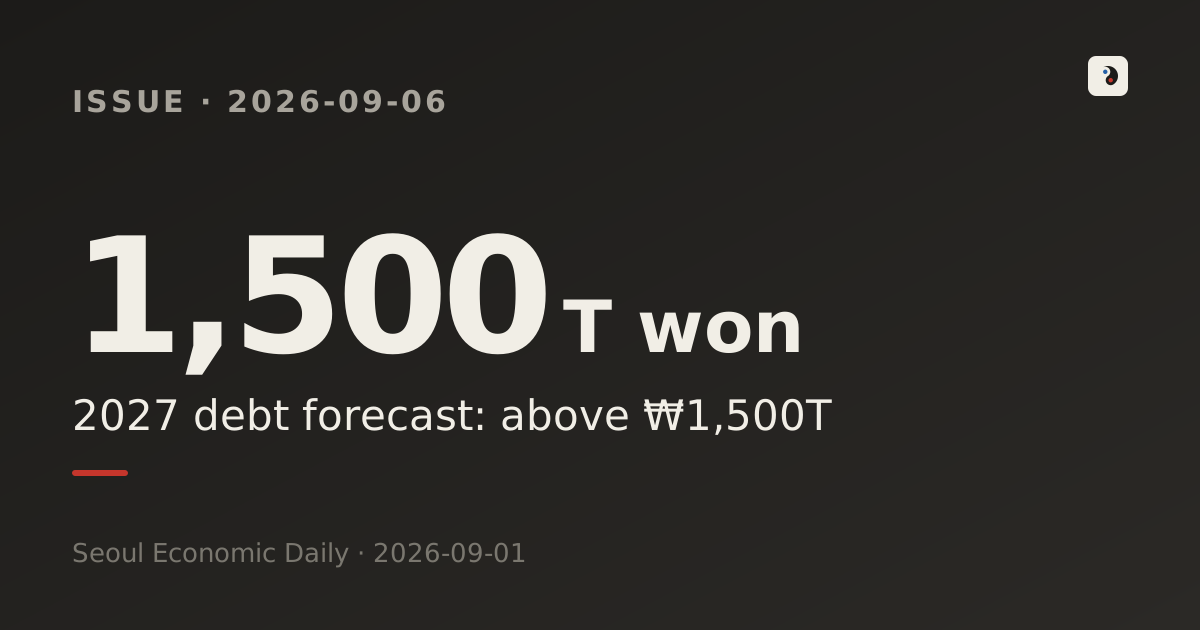
Welfare ₩148.8tn, National Debt ₩1,519.8tn — What Is the 48.3% Ratio Divided By?
We separate the two ways of counting the welfare ministry's budget, and correct the denominator of the national debt ratio to nominal GDP. We hold back judgment on why the ratio falls until the official GDP assumption can be checked, and we found no confirmed evidence that the future response fund caused the ₩106 trillion rise in debt.
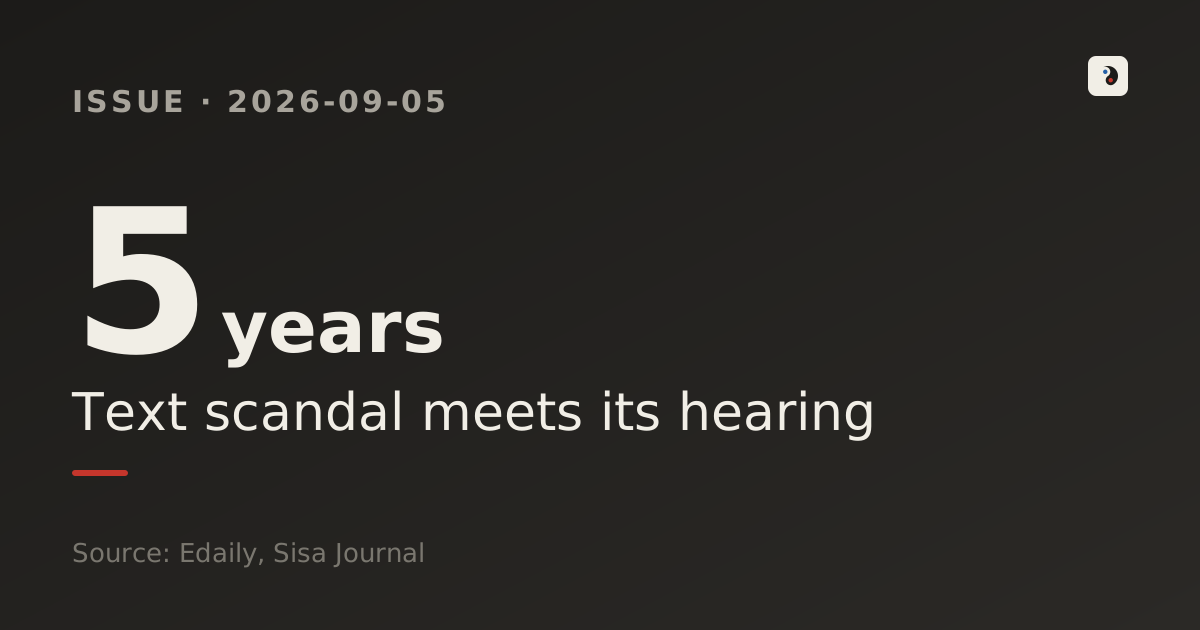
A 5-Year-Old Text Threatens Korea's Justice Minister Pick
Justice minister nominee Kim Seung-won sent a text in 2021 asking regulators to speed up a drug trial approval. Five years on, that message is the flashpoint of his September 15 confirmation hearing.
Supreme Court re-nomination dispute — what Article 104 actually sets out
We confirmed the presidential office's request for a re-nomination, and the August 18 nomination of Son Bong-gi, from the presidential office briefing. In plain words, provision by provision: which law covers candidate recommendation, nomination, the National Assembly's consent and the confirmation hearing.