· Updated 2026-09-10
South Korea's Elderly Workers Top 10 Million — Retired at 53, Working Until 73
Correction (2026-09-10): The scope, comparisons and interpretation of key figures have been reviewed and corrected below. The original publication date is retained.
Employment among people aged 55–79 passed 10 million. We distinguish the timing of aging statistics from the reasons people work.
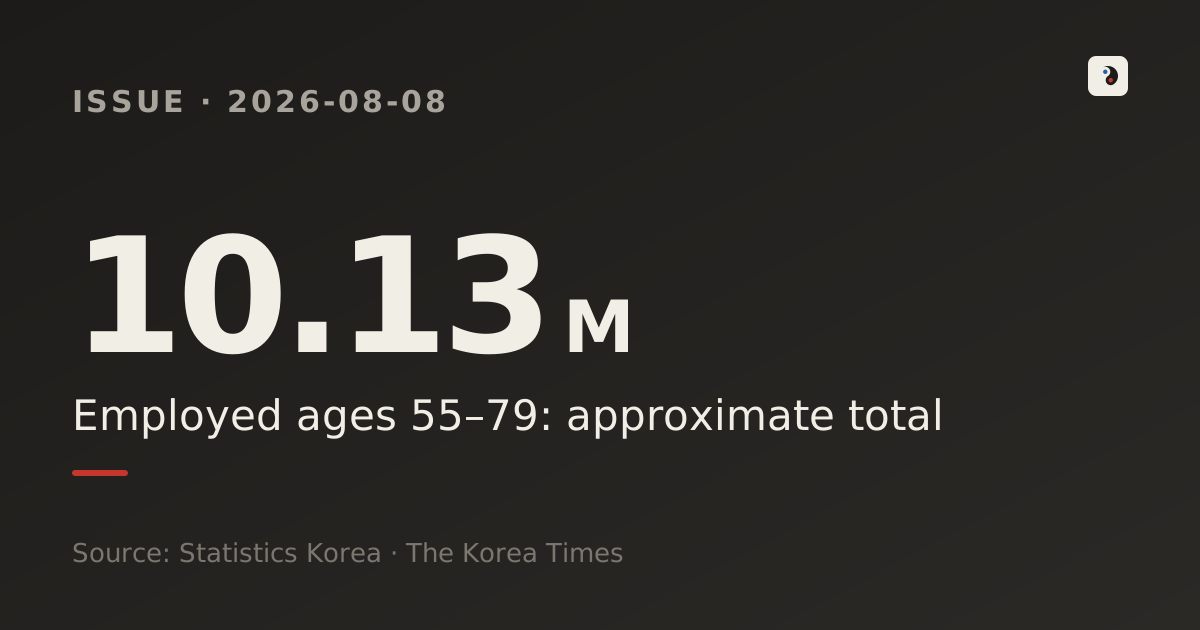
- South Korea's employed population aged 55 to 79 reached 10.125 million in May 2026 — the first time it has topped 10 million since record-keeping began in 2005, up 345,000 from a year earlier.
- The 20.7% share aged 65 or over comes from the 2025 census, released in July 2026. Its reference date is November 1, 2025, not the publication date.
- Only 1 in 10 people (13.2%) who left their longest-held job did so through mandatory retirement; most were pushed out at an average age of 53 — yet the same group says it wants to keep working until 73.6 on average.
What happened
According to the "Supplementary Survey on the Economically Active Elderly Population" released August 5 by Statistics Korea (Korea's National Data Processing Agency), the number of employed people aged 55 to 79 reached 10.125 million as of May 2026. That's the first time the figure has crossed 10 million since related statistics began in 2005 — and 1.5 times the 6.7 million recorded in 2016. Over the same period, the population aged 55 to 79 grew to 17.017 million, with the employment rate hitting a record 59.5%.
On the surface, it looks like a story of healthy, active aging. Look closer, and the picture changes.
Why now — the fastest-aging country on record
Resident-registration data had already passed the 20% threshold in December 2024. Registration and census data differ in population scope and reference date, so their threshold dates should not be conflated.
The 10-million milestone in elderly employment tracks this demographic shift almost exactly.
The numbers
Ask people why they left their longest-held job, and the picture sharpens.
Only 13.2% left through standard mandatory retirement. The rest left for reasons largely outside their control — business closures or suspensions, declining health, caregiving duties, or layoffs and buyouts — at an average age of 53.0, younger than Korea's statutory retirement age of 60.
Yet the same group says it wants to keep working until 73.6 on average — a 20-year gap between the age people actually leave their main career and the age they'd like to stop working. Why work that long? 53.4% cited the need to cover living expenses; only 36.7% cited the enjoyment of working.
The pension system is the key to that gap. Citing the OECD's "Pensions at a Glance 2025," Korea's National Pension Research Institute found that Korea's net pension replacement rate is just 35.8%, barely above half the OECD average of 61.4%. Korea's income poverty rate among people 65 and older stands at 39.7% — 2.7 times the OECD average of 14.8%, the highest among member countries. Among those 76 and older, the poverty rate climbs to 54.0%.
The debate — how far should "continued employment" go
The government and labor groups are discussing expanding "continued employment" — schemes that let workers stay at their company past retirement age — as one fix. Japan offers a model: it has effectively mandated employment through age 65, and 99.9% of eligible companies now offer rehiring, a raised retirement age, or no fixed retirement age at all.
Labor groups argue Korea needs a similar legal mandate. Business groups counter that extending retirement age without restructuring wage systems would raise labor costs and squeeze youth hiring. There's also evidence that much of the growth in elderly employment is concentrated in less stable, lower-skilled service and manual jobs rather than regular rehiring — a reminder that a rising employment rate and better job quality are not the same thing.
What comes next
Korea's national pension contribution rate, 9% in 2025, will rise 0.5 percentage points each year starting 2026, reaching 13% by 2033. That reform aims to lift the replacement rate, but its effects won't reach today's older workers in time. In the near term, how fast "continued employment" gets institutionalized — and how widely companies adopt wage-peak systems that trade a longer career for lower pay near retirement — will likely determine whether the "leave at 53" pattern narrows.
For individuals, the data is also a reminder that the national pension alone can't cover retirement. It underscores, once again, the need for multi-layered retirement planning — including workplace and private pensions.
- First-ever 10 million working elderly, "want to work until 73.6" — Herald Business (2026.08.05)
- No. of employed people aged 55-79 tops 10 mil. for 1st time — The Korea Times (2026.08.05)
- Working elderly top 10 million; only 1 in 10 retired through mandatory retirement — Newspim (2026.08.05)
- Employed older adults surpass 10 million for the first time — The Kyunghyang Shinmun (Khan) (2026.08.05)
- South Korea becomes a super-aged society, 65+ population tops 20% — Money Today (2026.07.28)
- Paying less, receiving less: Korea's national pension leaves seniors with the world's worst poverty rate — Seoul Economic Daily (2026.07.10)
- South Korea's older workforce tops 10 million for first time — UPI (2026.08.05)
This is nuloq's own analysis, based on the public data and reporting listed under Sources and written with the help of AI tools. It's for information only — not investment, legal, or medical advice — and reflects the situation as of August 2026. We'll correct the record if we find an error.
Related posts
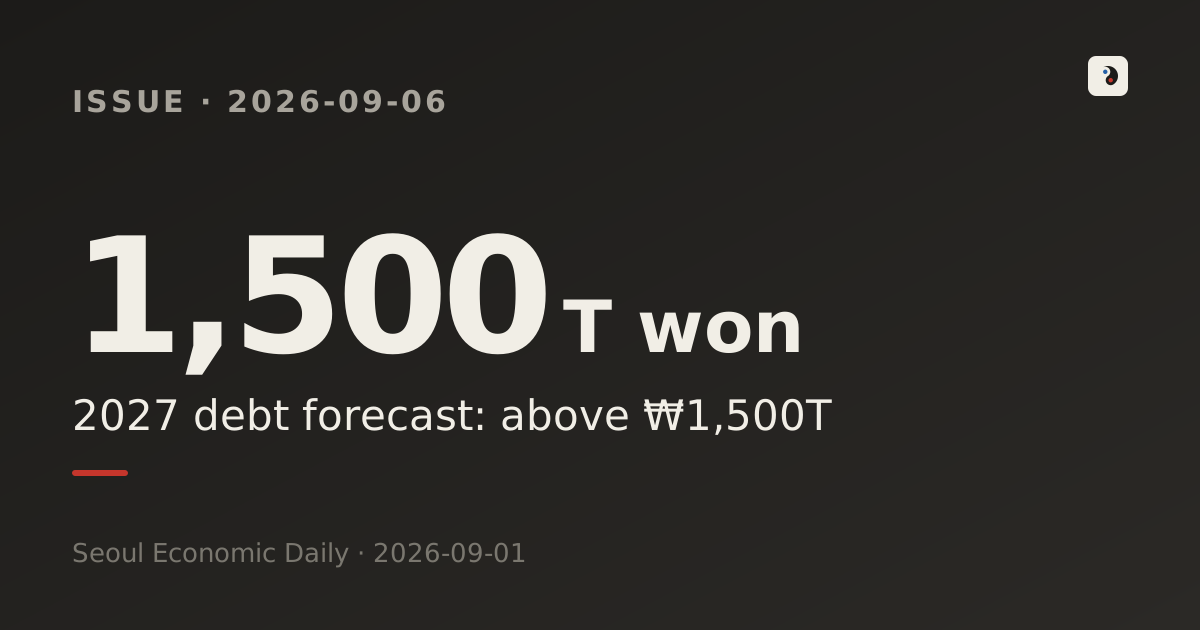
Welfare ₩148.8tn, National Debt ₩1,519.8tn — What Is the 48.3% Ratio Divided By?
We separate the two ways of counting the welfare ministry's budget, and correct the denominator of the national debt ratio to nominal GDP. We hold back judgment on why the ratio falls until the official GDP assumption can be checked, and we found no confirmed evidence that the future response fund caused the ₩106 trillion rise in debt.
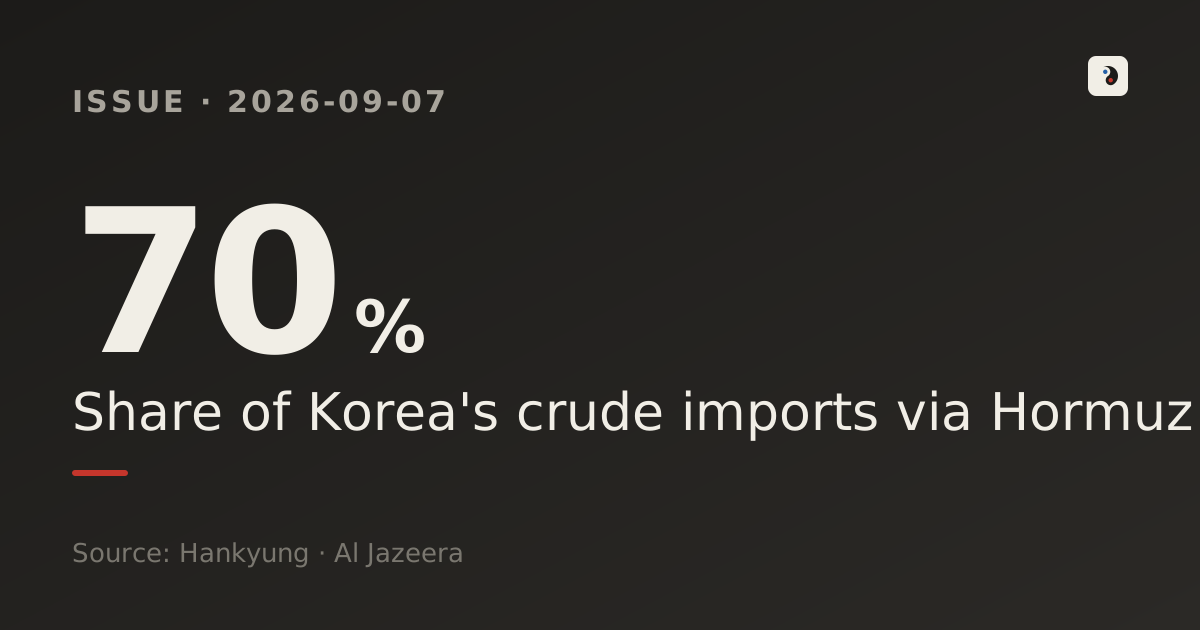
150 Troops, 70% of Oil: South Korea's Hormuz Dilemma by the Numbers
Squeezed between US pressure and Iran's war warning, South Korea is weighing sending 150 troops to the Strait of Hormuz — the route for 70% of its oil imports. Here's the dilemma in numbers.

A 5-Year-Old Text Threatens Korea's Justice Minister Pick
Justice minister nominee Kim Seung-won sent a text in 2021 asking regulators to speed up a drug trial approval. Five years on, that message is the flashpoint of his September 15 confirmation hearing.
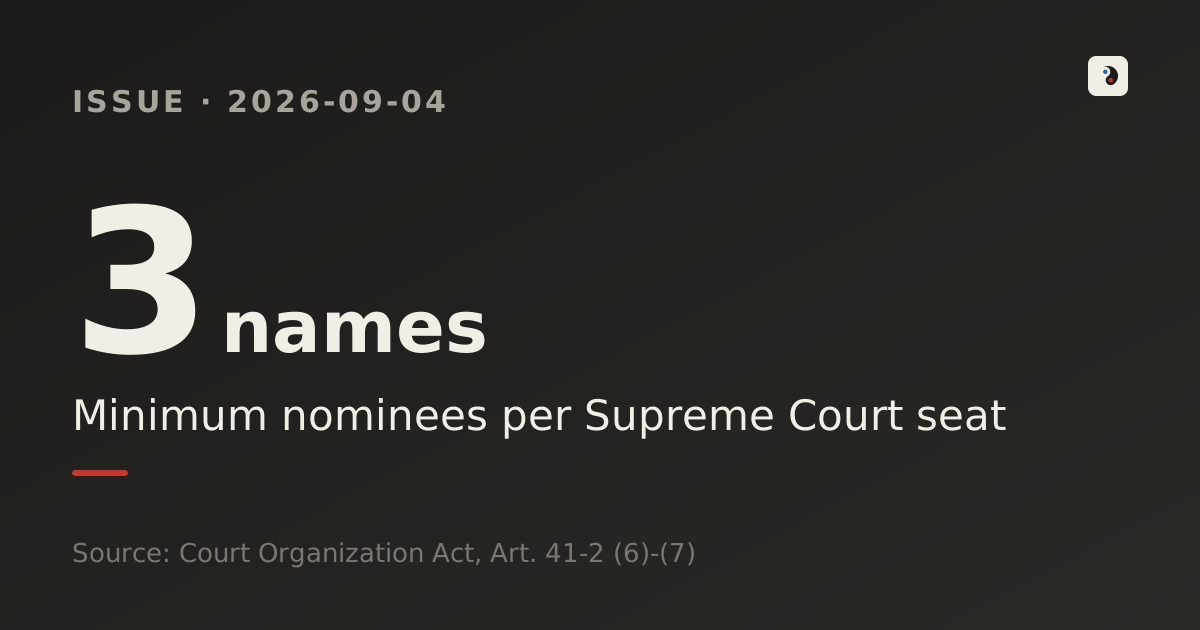
Supreme Court re-nomination dispute — what Article 104 actually sets out
We confirmed the presidential office's request for a re-nomination, and the August 18 nomination of Son Bong-gi, from the presidential office briefing. In plain words, provision by provision: which law covers candidate recommendation, nomination, the National Assembly's consent and the confirmation hearing.