Nepal Flood Kills 633, Leaves 9 Korean Workers Missing — A Glacier's Warning
Korean firms carefully price in political and currency risk when they build overseas — this disaster shows climate risk has been the blind spot.
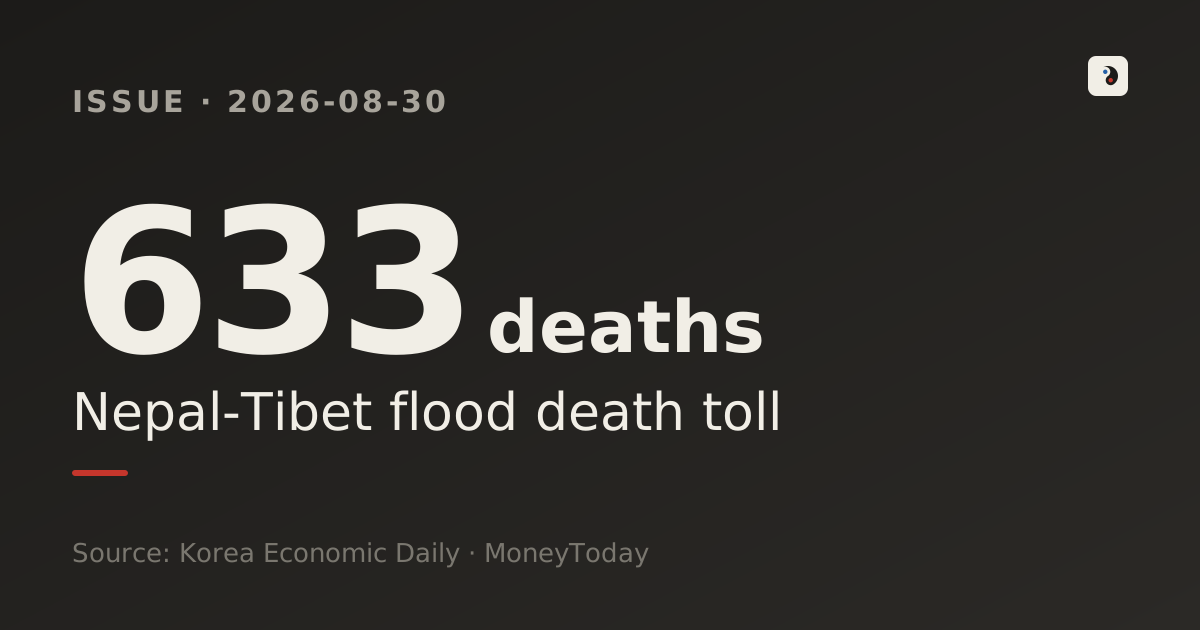
- Floods in Nepal and Tibet had killed 633 people and left nearly 3,000 missing as of August 29, with 9 workers from Doosan Enerbility and Korea Southeast Power (KOEN) still unaccounted for after four days.
- The disaster was first reported as a magnitude-4.4 earthquake, but USGS re-analysis found a massive glacier collapse was the real cause — part of a growing pattern of glacial lake outburst floods (GLOFs) driven by warming.
- With an 890-billion-won hydropower project caught in the middle of the disaster just before completion, how overseas infrastructure projects price in climate risk has become a pressing question.
What happened
On August 26, a massive flood struck Rasuwa district in north-central Nepal. It was first reported as a landslide triggered by a magnitude-4.4 earthquake, but analysis by the US Geological Survey (USGS) later found that a large glacier collapse and debris flow had produced a seismic-like signal instead.
The flood, which struck the border area between Nepal and Tibet, China, had killed 633 people as of August 29 (626 in Nepal, 7 in Tibet) and left nearly 3,000 missing (2,426 in Nepal, 554 in Tibet). Nepali authorities said they had deployed 15,000 soldiers and police and rescued 4,451 people so far.
Korean nationals were among those affected. Of 19 workers from Doosan Enerbility and Korea Southeast Power (KOEN, a state-run utility) building the Upper Trishuli-1 hydropower plant on the Trishuli River, 70km north of Kathmandu, 10 were safely evacuated by helicopter. The remaining 9 — 6 from Doosan Enerbility and 3 from KOEN — have been missing for four days.
Why it matters — where overseas construction meets climate risk
This is more than a natural-disaster story, because the missing are not tourists but workers on a state-linked infrastructure project. Upper Trishuli-1 is a $647 million (about 890 billion won) hydropower plant with 216MW of capacity, which broke ground in January 2022 and was due for completion by the end of this year. KOEN was set to operate it directly for 30 years after completion — meaning a Korean state-run utility has decades of exposure tied to an overseas asset now caught in the middle of a disaster.
The project was structured to manage political and financial risk from the start, with KOEN and the International Finance Corporation (IFC) joining as co-developers early on. Yet the disaster suggests that while political and financial risk was carefully assessed, climate-driven hazards like glacial lake outburst floods may not have been adequately factored into the project's design.
By the numbers
The death toll nearly quadrupled in three days — a sign both that the initial scale of the disaster was underestimated in real time, and of how slow rescue and counting are in such rugged terrain.
The debate — unforeseeable disaster, or manageable risk?
Experts are divided. Some argue the disaster was such an unusual, compound event — initially mistaken for an earthquake — that it was effectively impossible to predict. Even USGS first classified it as seismic before revising its assessment to a glacier collapse.
Climate scientists offer a different read. Himalayan GLOFs have already been observed at a rate of about 1.3 per year, and research estimates roughly 15 million people worldwide are exposed to this risk. In other words, this particular event was unusual, but this type of event has long been anticipated in the literature — which is why some argue climate risk assessment should have been built more rigorously into the project's design.
Views on the corporate response also differ. Doosan Enerbility moved quickly, with its CEO traveling to the site and setting up an emergency task force. But whether the emergency evacuation and communication systems at a remote mountain construction site were adequate in the first place remains unverified.
What's next
The immediate priority is confirming the fate of the 9 missing workers. The government has dispatched 20 members across two rapid-response teams, searching high-altitude terrain by helicopter and drone — work made slow by washed-out roads.
In the medium term, how overseas infrastructure projects assess risk is likely to come under scrutiny. Expect louder calls to quantify climate-disaster risk in feasibility studies and insurance design, the same way political and currency risk already are. As Korea keeps expanding overseas orders in nuclear power, energy and plant construction, this disaster may prompt a different question than simply how much more it can win — namely, what risk it is carrying when it does.
- Nine Koreans at Nepal construction site lose contact in "great flood" — Seoul Shinmun (서울신문) (2026.08.27)
- Helicopters, drones deployed to search for 9 missing Koreans in Nepal — Herald Corp (헤럴드경제) (2026.08.29)
- Nepal flood death toll surges past 580; Korea among four nations to accept aid — Money Today (머니투데이) (2026.08.29)
- Nepal-China flood death toll climbs to 633, missing near 3,000 — Hankyung/Korea Economic Daily (한국경제) (2026.08.29)
- What is the Nepal UT-1 hydropower plant the missing Korean workers were building? — SBS (2026.08.27)
- Doosan Enerbility and KOEN set up emergency task force for Nepal flood; CEO travels to site — Businesspost (비즈니스포스트) (2026.08.27)
- Glacial lakes and GLOFs in a warming Himalaya-Karakoram region — npj Natural Hazards (2026)
- Nepal-Tibet floods: What is a glacial collapse, how common is it? — Al Jazeera (2026.08.27)
This piece is nuloq's own analysis, compiled with the help of AI tools from the public reporting and research listed under Sources above. It is for information only — not investment or legal advice — and reflects the situation as of when it was written (August 29–30, 2026); we will correct it if the facts change.
Related posts
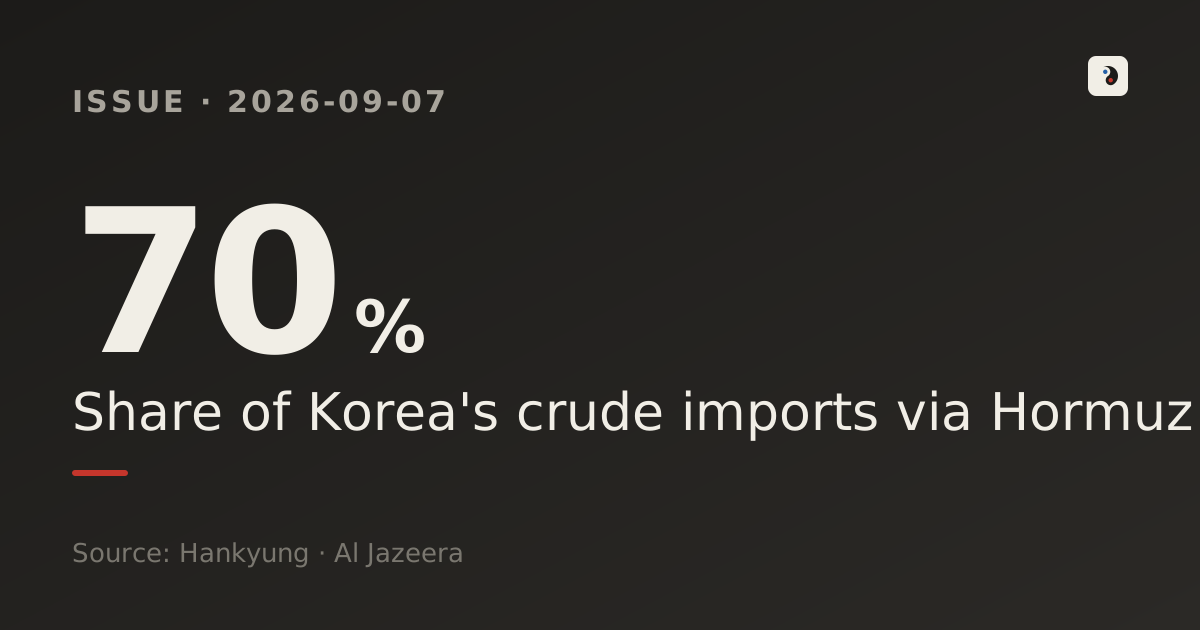
150 Troops, 70% of Oil: South Korea's Hormuz Dilemma by the Numbers
Squeezed between US pressure and Iran's war warning, South Korea is weighing sending 150 troops to the Strait of Hormuz — the route for 70% of its oil imports. Here's the dilemma in numbers.
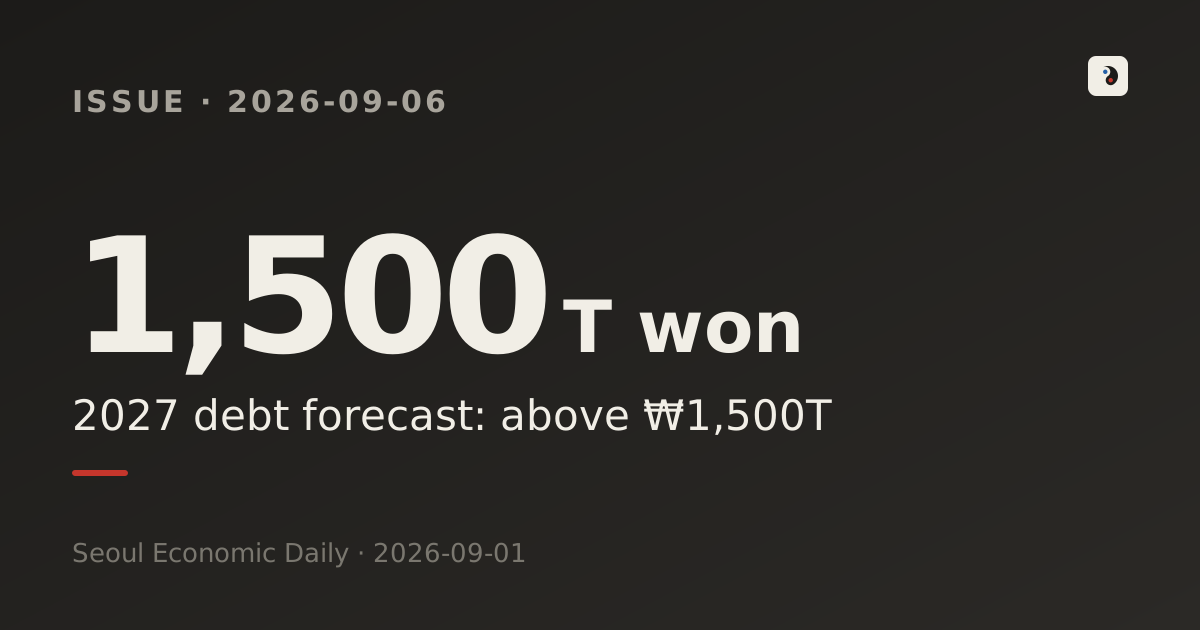
Welfare ₩148.8tn, National Debt ₩1,519.8tn — What Is the 48.3% Ratio Divided By?
We separate the two ways of counting the welfare ministry's budget, and correct the denominator of the national debt ratio to nominal GDP. We hold back judgment on why the ratio falls until the official GDP assumption can be checked, and we found no confirmed evidence that the future response fund caused the ₩106 trillion rise in debt.

A 5-Year-Old Text Threatens Korea's Justice Minister Pick
Justice minister nominee Kim Seung-won sent a text in 2021 asking regulators to speed up a drug trial approval. Five years on, that message is the flashpoint of his September 15 confirmation hearing.
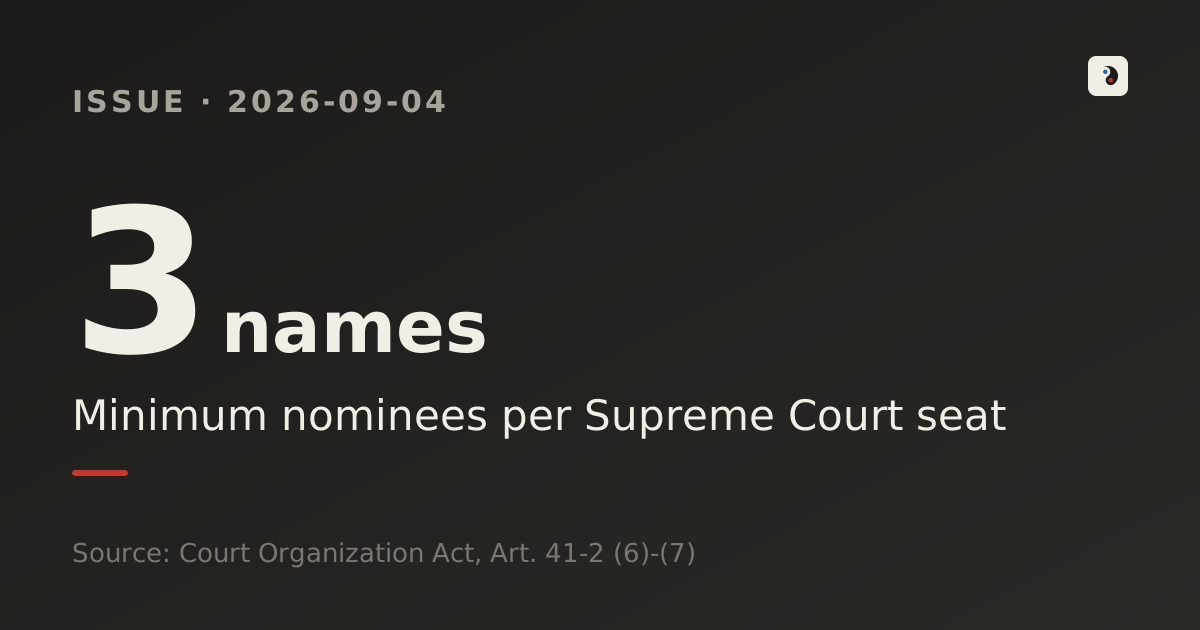
Supreme Court re-nomination dispute — what Article 104 actually sets out
We confirmed the presidential office's request for a re-nomination, and the August 18 nomination of Son Bong-gi, from the presidential office briefing. In plain words, provision by provision: which law covers candidate recommendation, nomination, the National Assembly's consent and the confirmation hearing.